The Ministry of Health has commented on the situation with hazardous medical waste in the West Kazakhstan region. The department has taken special control of the investigation into this incident. This was reported by Qazaqyia.kz citing Kursiv Media.
Inspections are being conducted at the site with the participation of the sanitary-epidemiological service, law enforcement agencies, and environmental units.
"As part of operational actions, representatives of the individual entrepreneur 'Kemel' in the presence of police officers collected the discovered medical waste totaling 144 kilograms. All materials have been seized, placed on the enterprise's territory, and sealed as physical evidence. To assess the possible impact on the environment and the sanitary-epidemiological situation, specialists took soil samples. Laboratory tests are being conducted for microbiological and sanitary-chemical indicators," the ministry noted.
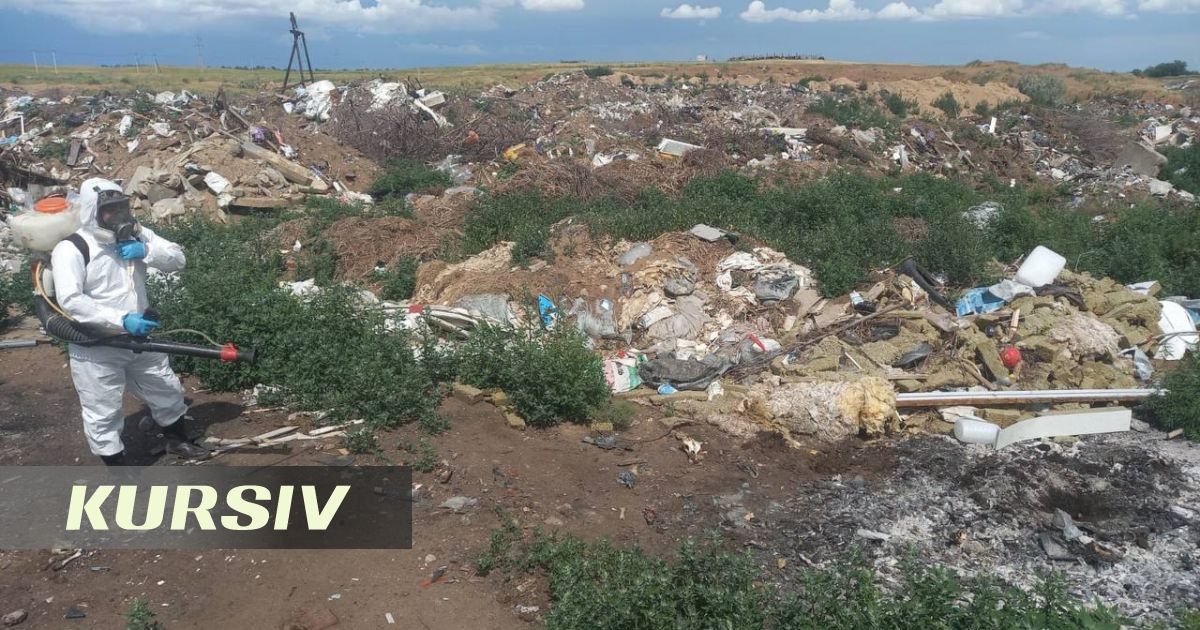
At the same time, disinfection work was carried out in full at the site of the identified violation and the adjacent area.
The Ministry of Health emphasized that facts of improper handling of medical waste are considered a serious violation of sanitary-epidemiological requirements and pose a potential threat to public health.
Based on the results of the investigation, those responsible will be held accountable in accordance with the law.
Preliminary results of laboratory tests are expected within 3–7 days.
Earlier, Kursiv reported that medical waste, including used syringes and test tubes with biomaterials, was found at a rural dump in the West Kazakhstan region.
The district akimat reported that on the evening of June 4, law enforcement officers detained a person while unloading waste at the landfill. According to preliminary data, among them were test tubes for medical and veterinary analyses. Currently, an investigation is underway into the incident.
Later, all discovered waste was collected and removed, and the area was treated with disinfectants. The total volume of seized waste was 144 kilograms.
Such waste cannot be disposed of with ordinary garbage. Used syringes, needles, and test tubes may contain bacteria, viruses, and other dangerous microorganisms. If such waste ends up in an open dump, there is a risk of infection for people and animals, as well as contamination of soil and water.