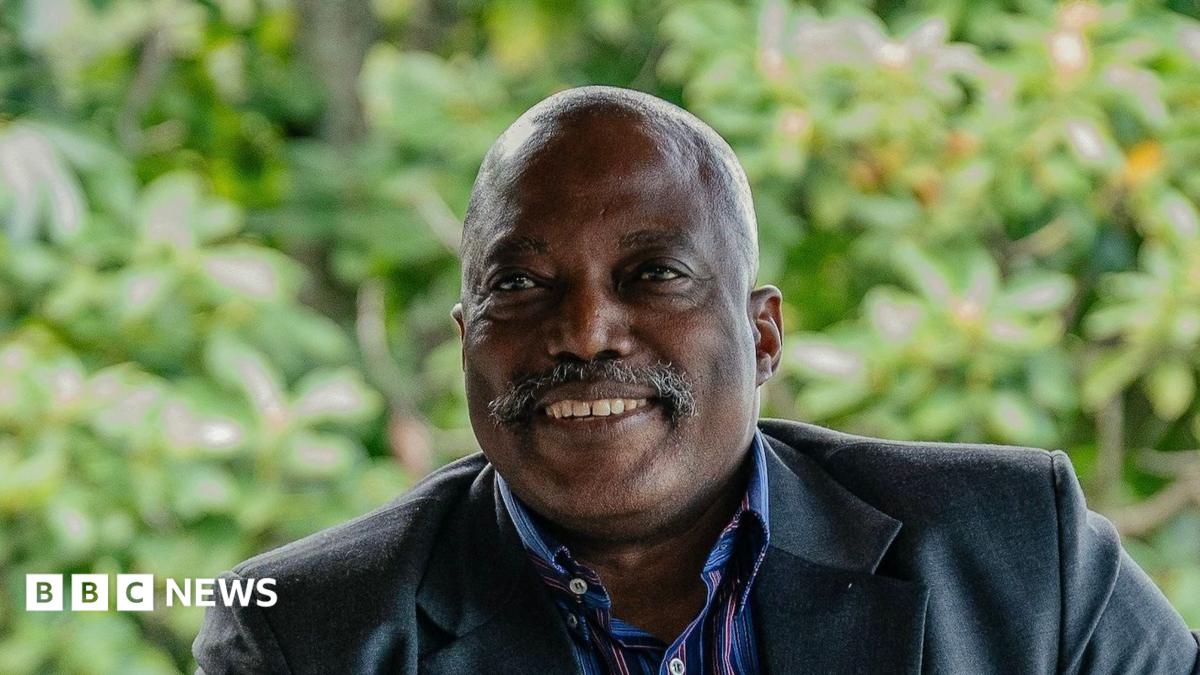
Joseph Kabila was a commander in the rebel alliance that brought his father to power in the Democratic Republic of Congo in 1997, went on to succeed him as president and now, at the age of 55, he is a rebel leader once again. This was reported by Qazaqyia.kz citing BBC News.
In an even stranger twist, the man he has sworn to topple is the very man he handed power to after 18 years at the helm, and with whom he had formed a coalition government after stepping down. While one of the rebel groups he had fought against as president is part of his new alliance. His career reflects the ever-shifting nature of politics in DR Congo, where alliances are ephemeral, with the use of force a constant threat.
When Kabila was named leader of the Front for the Refoundation of the Nation (FRN) earlier this month, it confirmed what many Congolese had long believed – that the former president was working with the M23 rebels, who last year seized much of eastern DR Congo, including the region's main cities of Goma and Bukavu. Nevertheless, the confirmation sent shockwaves through DR Congo – a vast country two-thirds the size of western Europe, with huge deposits of gold, diamonds and even more importantly minerals used to make everything from mobile phones to batteries for electric vehicles.
For Kabila, the alliance offers a possible route back to the power he had lost. For the M23 rebels, his involvement brings the experience and networks of a former head of state to a movement whose military advances have yet to translate into broad national legitimacy. But it is far from certain that they can achieve their stated goal of ousting President Félix Tshisekedi.
Policy analyst Henry-Pacifique Mayala told the BBC that Kabila had been left with few options for regaining political influence. "He actually was left with no other choice," he said. Facing a death sentence after being convicted in absentia of treason, as well as US sanctions over his alleged support for the M23, Kabila may have sought assurances that the partnership could serve his interests, Mayala suggested. "I'm not sure that he is making this huge leap in the dark without having received considerable assurance," Mayala said, adding that the M23's military strength could give Kabila greater leverage in any future negotiations with the Congolese government.
Kabila's involvement also raises questions about whether the conflict could spread beyond the east. The M23's territorial gains have been concentrated in the country's eastern provinces, some 1,500km (1,000 miles) from the capital, Kinshasa. Kabila's political networks could give the rebellion a broader reach, but that does not necessarily mean it has the capacity to extend its military campaign across the country.
And it is not clear how far Kabila's national reach extends. While he was in power, after being named following the mysterious assassination of his father Laurent in 2001, he was often seen as something of an outsider in Kinshasa. He was far more at home speaking Swahili, the lingua franca of eastern DR Congo, as well as east Africa, rather than the Lingala spoken in Kinshasa. His father's rebel group actually walked across the country to Kinshasa, also starting in the east, over a period of seven months, before eventually seizing power in May 1996 and ousting long-time ruler Mobutu Sese Seko, who had governed the country as his own personal property for more than 30 years.
There is little suggestion that Joseph Kabila's FRN would try to repeat that feat but earlier this week, he likened Tshisekedi to Mobutu. "You have a tyrant who wants to impose and dictate what he thinks is right and not necessarily follow the constitution, which is the supreme law of the land," he told Conspiracy Trackers Great Lakes (CTGL), a research group which campaigns against disinformation in that part of Africa.
Kabila accused the government of using the death penalty, ending the moratorium introduced during his own presidency, to intimidate civilians, politicians and members of the military, as well as himself. He framed his confrontation with Tshisekedi as a fight against authoritarianism, invoking Section 64 of the constitution, which calls on citizens to resist anyone who seizes power or exercises it in violation of constitutional provisions.
Tshisekedi is rumoured to be planning to change the constitution to allow him to seek a third term in office, with the C64 coalition of opposition parties named after that same section of the constitution, campaigning against such a move. But in a sign that he may not get everything his own way, the C64 coalition this week refused to back Kabila's rebellion, saying that Congo's multiple security crises cannot be resolved by military means alone. Instead, it announced plans to seek direct talks with both Tshisekedi and Kabila in pursuit of what it called a "genuine and inclusive national dialogue".
Richard Moncrieff, a Great Lakes analyst with the International Crisis Group, said President Tshisekedi retained substantial advantages. "Tshisekedi has strong American backing. He has a lot of money. And he generally controls the political system and, as far as we can see, the military system," Moncrieff said. In his first public reaction to Kabila being named FRN leader, Tshisekedi was damning: "In my view, it's simply proof that he has never loved this country, and even less its inhabitants," he said last week.
And yet Kabila is widely believed to have helped ensure that Tshisekedi succeeded him, rather than Martin Fayulu, who was the true winner of the 2018 elections, according to leaked results provided by the Catholic Church, which had observers around the country.