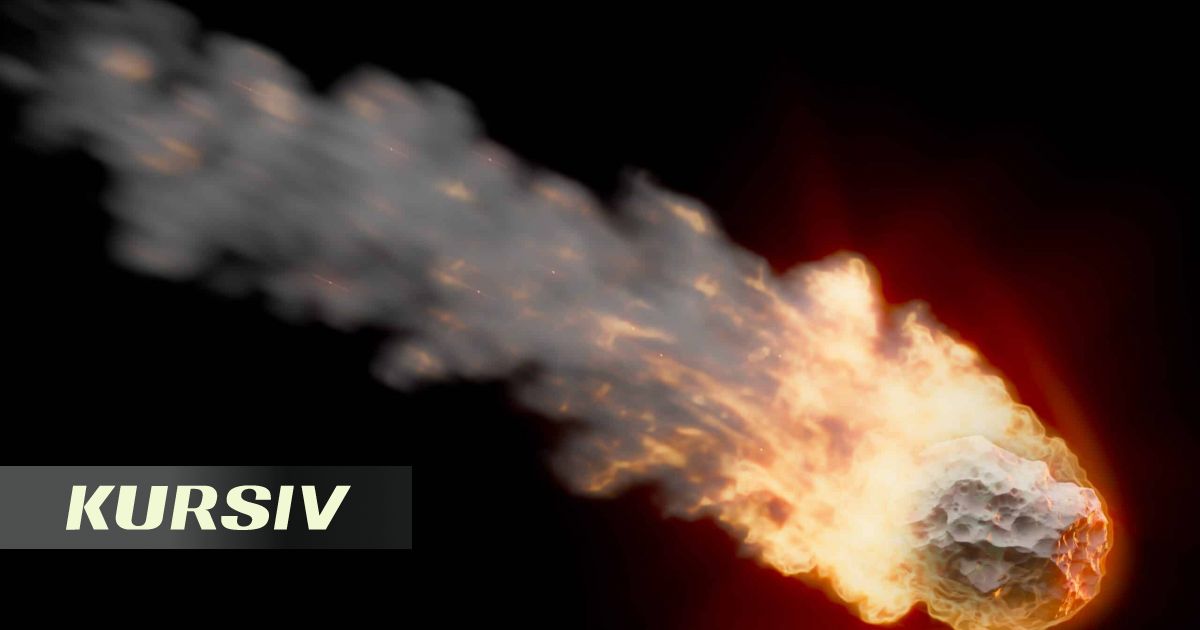
On August 10, the potentially hazardous asteroid 2019 NY2, 330 meters in diameter, will fly past Earth. This was reported by Qazaqyia.kz citing RMF24.
2019 NY2 will pass at a distance of about 2.5 million kilometers from our planet. This is approximately 6.5 times greater than the average distance between Earth and the Moon.
The space object belongs to the Apollo group — asteroids whose orbits cross Earth's orbit.
Scientists note that although the object is officially classified as potentially hazardous (PHA), experts are quick to reassure. There is no real threat of collision with our planet.
Earlier, Kursiv wrote that on August 12, the sky will gift earthlings a parade of planets, a meteor shower, and a solar eclipse.
What is known about asteroid 2019 NY2?
Asteroid 2019 NY2 is a near-Earth object first discovered in 2019. Its diameter is 330 meters, placing it in the category of large asteroids. For comparison, the Chelyabinsk meteorite had a diameter of about 20 meters, making 2019 NY2 16 times larger.
The asteroid's speed is approximately 14 kilometers per second, but this figure may vary depending on its orbit. Scientists are closely monitoring its trajectory.
What is the Apollo group?
The Apollo group is a group of asteroids whose orbits cross Earth's orbit. These asteroids have a semi-major axis larger than Earth's, but their perihelion (closest point to the Sun) is close to Earth's orbit. They are classified as near-Earth objects (NEOs) and are of particular interest to scientists.
Most Apollo-group asteroids do not pose a threat to Earth, but their orbits can change over time, so they require constant monitoring.
What is a PHA (potentially hazardous asteroid)?
A PHA (Potentially Hazardous Asteroid) is a near-Earth asteroid whose orbit approaches Earth's orbit to within 0.05 astronomical units (about 7.5 million kilometers) and whose diameter exceeds 140 meters. Such objects may pose a collision threat, but this does not mean they will necessarily collide.
2019 NY2 meets these criteria, so it is classified as a PHA. However, according to scientists' calculations, the probability of its collision with Earth in the next hundred years is extremely low.
Monitoring of space objects
Observatories around the world constantly monitor near-Earth objects. Space agencies such as NASA and ESA calculate asteroid orbits and determine whether they pose a threat to Earth. 2019 NY2 is also part of this monitoring system.
Scientists use radar observations to refine the asteroid's trajectory. This method allows precise determination of the object's distance, speed, and shape.
Conclusion
Asteroid 2019 NY2 will pass by Earth on August 10 at a safe distance. This event may be interesting for those interested in space exploration, but it poses no threat. Scientists will continue to monitor celestial bodies and report any changes.