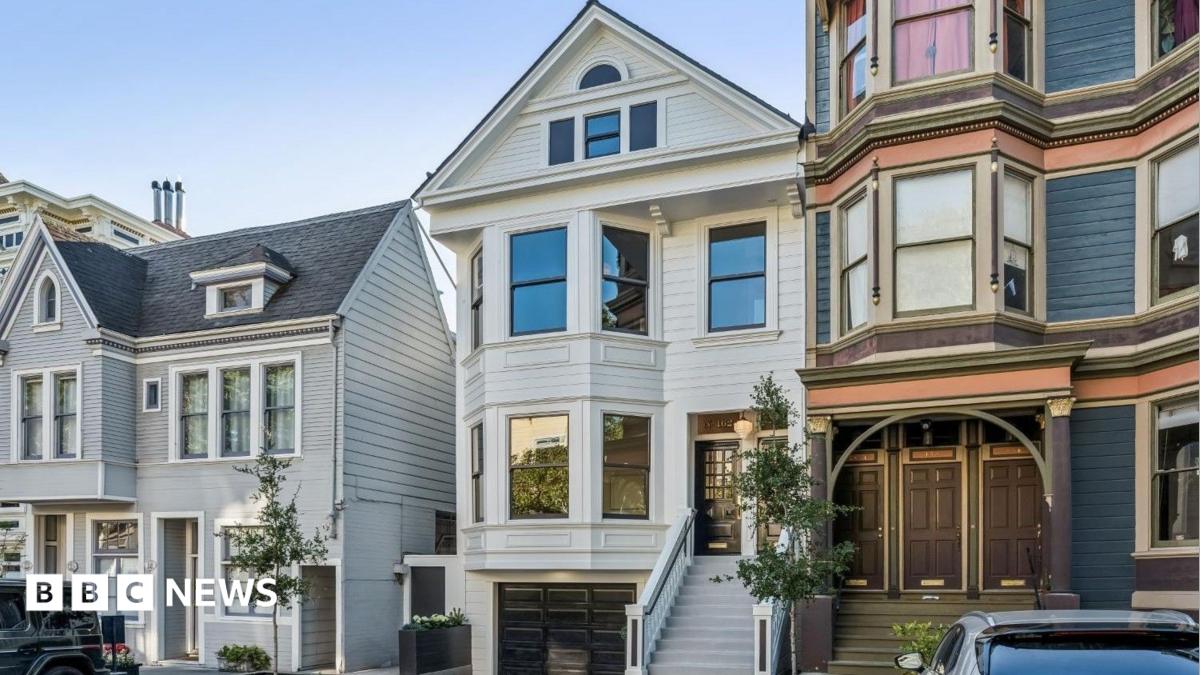
On a tree-lined street in the affluent Duboce Triangle neighbourhood of San Francisco, the top half of a white, Edwardian-era, detached house was drawing visitors from prospective buyers. The opulently renovated three-bedroom apartment was on the market for almost $3m (£2.3m). And it had been attracting increased attention due to an unusual payment possibility - the seller would consider shares in artificial intelligence companies OpenAI or Anthropic instead of cash. This was reported by Qazaqyia.kz citing BBC News.
A young OpenAI employee who has just viewed the flat with his partner says: "The value [of the property] is questionable, but I would like to buy." The worker, who moved to the Californian city two years ago for a technical job with the San Francisco-based company, is currently renting. He plans to ask his bosses about the stock transfer possibility.
San Francisco is ground zero for the AI revolution, and its property prices have risen dramatically this year. "They are just astronomical," says Daryl Fairweather, chief economist at Redfin, a real estate company. "People are flush with cash and ready to buy."
In March, San Francisco regained its title as the most expensive city for homebuyers in the US, overtaking rival San Jose. That month, the median house price in San Francisco rose 19% on the year before, and that trend has continued, up 14.5% and 14.1% in April and May respectively. The median sale price in the city as of May 2026 is a record high of $1.76m, compared with nearly $400,000 for the US as a whole.
The prevailing view is that AI money is the driver of the red-hot San Francisco property market. Fairweather highlights the steep jump in prices in the wider San Francisco Bay Area's luxury zip codes since OpenAI launched ChatGPT in late 2022.
The high salaries and signing bonuses being paid to top AI staff can be extraordinary, even by Silicon Valley standards. Yet even more generous are the stock options. Last October, more than 600 current and former OpenAI employees sold combined shares worth $6.6bn, an average of $11m per participant. At Anthropic, workers were also recently said to have been allowed to sell shares totalling some $6bn.
With both companies due to have full stock market flotations later this year or next, minting more multi-millionaire employees, many see no end in sight to San Francisco's real estate rises. "Today's bidding wars are going to be seen as bargains, and they already are," says Rachel Swann, the listing agent for the Duboce Triangle property.
Enrico Moretti, a professor of economics at the University of California, Berkeley, says it is still "very early" in the AI boom. The city's population and employment levels remain below pre-pandemic levels. Big tech firms such as Meta have recently seen large layoffs. As the AI industry moves from its fast-growing innovation phase to one of established companies, it is likely to require less specialized workers.
San Francisco estate agent Matthew Goulden, with more than 20 years of experience, says the current situation is "crazy". He first noticed an uptick in prospective buyers – many from the world of AI – late last year. The upward trend is not just confined to luxury properties but extends across the market.