They were the killings that changed Britain, paving the way for working-class people’s right to vote, as well as leading to the founding of the Manchester Guardian. In the Peterloo massacre of 1819, peaceful protesters were shot and trampled to death by the Manchester and Salford Yeomanry at St Peter’s Field in the city. This was reported by Qazaqyia.kz citing The Guardian.
A study by Global Threads, a public history project, has examined how the exploitation of Africans enslaved in the Caribbean was linked with the struggles of cotton workers at Peterloo. Though these workers were divided by thousands of miles and led different lives, they were exploited by the same forces – as Robert Wedderburn, a Black abolitionist in London, said at the time.
Wedderburn's story
As well as looking at Wedderburn’s story, Global Threads’ research looks at the life of Hugh Hornby Birley, the yeomanry commander who led the fatal charge on the crowd at Peterloo. It found Birley’s family fortune was intimately linked with transatlantic enslavement.
Meanwhile, the story of Sir George Philips, also examined in the project, reflects the contradictions of 19th-century liberal politics. While Philips helped fund the Manchester Guardian as a liberal reaction to Peterloo, he was personally invested in the exploitation of enslaved Africans in the Caribbean, as owner of the Success plantation in Hanover, Jamaica.
The Portico Library
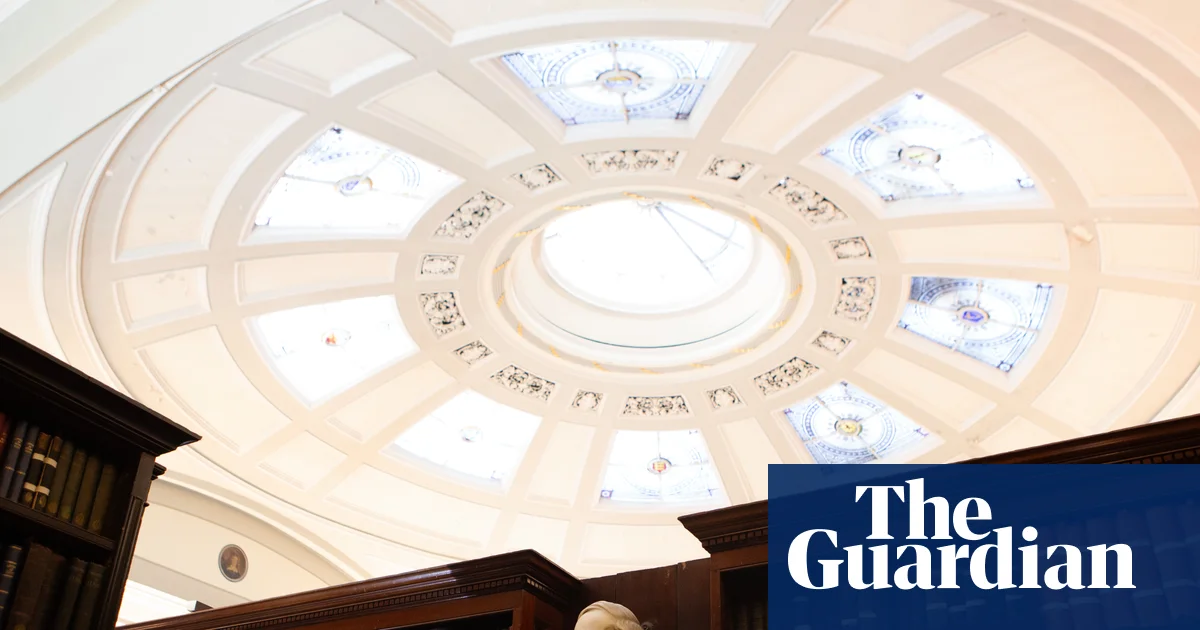
Birley and Philips were members of the Portico Library, Manchester’s historic members’ library. In the 19th century it was a centre of information exchange for Manchester’s business elite, helping ensure their place at the apex of global capitalism. The Global Threads project is part of research into the history of the Portico, which stands a few yards from where the Peterloo massacre took place.
Introducing the study, Global Threads said: “Drawing together just three of the thousands of threads connecting Peterloo with Africa and the Americas, we can see how the leaders of each wing of Manchester’s elite – Hugh Hornby Birley and Sir George Philips – owed their positions and power to their family and business activities drawing on colonialism and slavery.
“They actively described the system they had created as a transatlantic one. It was not just profit that connected Peterloo … Birley and his reactionary colleagues brought colonial-style coercion more akin to the putting down of uprisings of enslaved people, working people themselves were connected to transatlantic people and places, and slavery hung like a spectre over the Mancunian struggles for justice and equality.”
The Peterloo massacre
On 16 August 1819, 60,000 people converged in the centre of Manchester to campaign for political representation. Conditions for those workers were better than those endured by the trafficked and enslaved African workers at the other end of the transatlantic commodity boom, who were classed as property. But Britain’s working class were disenfranchised. Only 10% of men in the country could vote, and while landowners were enriched by the tariffs placed on foreign grain by the Corn Laws, workers could barely afford bread.
The protest at St Peter’s Field ended in tragedy when the yeomanry – a militia of Tory businessmen – charged the crowd. In the aftermath, the authorities blamed protesters. But Wedderburn, a Jamaican-born Unitarian preacher, was quick to challenge the official narrative.
In September 1819, at a meeting at his Soho chapel, he described Peterloo as “an act of murder … committed by the magistrates and yeoman”. In his preaching and writings, Wedderburn had long argued Africans and English labourers were being denied by the same forces.
Birley's family history
The backstory of Birley shows how. Ella Sinclair, writing for Global Threads, found Birley’s family’s business financially benefited from the estate of Daniel Backhouse, an enslaver who funded and profited from 103 voyages that set out from Liverpool between 1773 and 1807, trafficking more than 27,000 Africans.
In the late 18th century, three of those voyages exported people to St Lucia, where Backhouse’s company funded and profited from the Rabot sugar estate. Early 19th-century records reveal that workers there included families trafficked from Guinea and Cape Verde.
After the emancipation of enslaved Africans in the British empire in the 1830s, the Birley family supported the enslaving US confederacy, which was integral to their cotton interests. Birley was closely involved with the development of Manchester institutions, including “the Liverpool and Manchester Railway – designed to more easily transport slave-produced cotton”, Sinclair found.
Wedderburn’s family was also embedded in the plantation economy. His uncle, John Wedderburn, owned the Blackheath, Blackness, Bluecastle and Glen Islay plantations in Westmoreland, Jamaica. Workers on those plantations included people trafficked from Old Calabar, in modern-day Nigeria, to Montego Bay in 1773, on a ship carrying textiles woven in Manchester.
Robert Wedderburn’s mother was an enslaved woman called Rosanne, while his fath