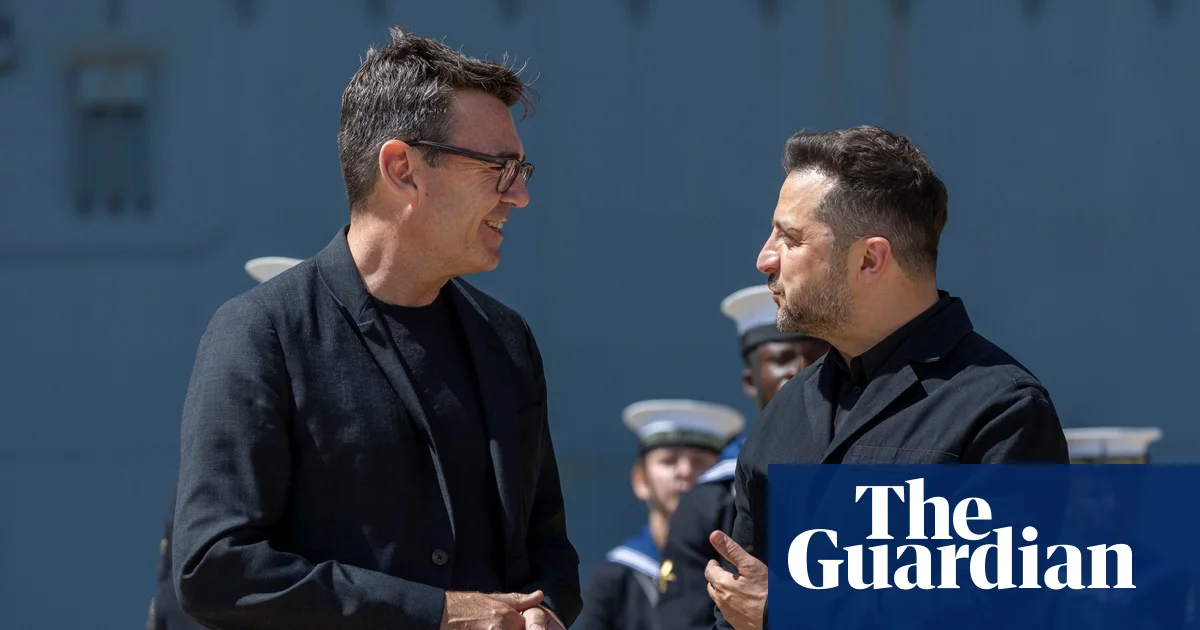
Another set-piece for Volodymyr Zelenskyy as he meets Andy Burnham looking for renewed support. On Monday, his first meeting with Andy Burnham as PM confirmed continuity in the UK's steadfast support for Ukraine. "We've got your back," Burnham said as the pair spoke in Portsmouth. Yesterday, in Washington DC, after attending the funeral of Lindsey Graham – a once supportive Republican senator – Zelenskyy and Trump held a "positive and productive" meeting, as per the White House. Overnight, the US Senate advanced a sweeping Russian sanctions bill. This was reported by Qazaqyia.kz citing The Guardian.
This was reported by Qazaqyia.kz citing The Guardian.
At home, however, Zelenskyy's grasp of statecraft appears less comprehensive. Today, he returns to Kyiv to face another political crisis, with daily protests continuing in Ukraine, after the dismissal of popular defence minister, Mykhailo Fedorov. And it's not the first time one of his domestic decisions appears to have involved serious miscalculation.
Since taking up the Ukrainian defence brief in January this year, Fedorov proved himself effective. The 35-year-old former digital transformation minister and deputy PM hit the ground running. "Fedorov is seen as a young, modernising tech-savvy reformist," Luke Harding, the Guardian's senior international correspondent, tells from his apartment in Kyiv. "Here in Ukraine, Fedorov is believed to have cleaned up a defence ministry plagued by Soviet era practices and alleged corruption."
Fedorov upped pay and modernised contracts for infantry, and introduced more transparent processes for procurement. There have been reports he identified significant murky military overspend. He messaged Elon Musk on X to request Starlink be switched off for Russian soldiers, and Musk obliged. It was a coup for Ukraine, and massively impactful on the battlefield.
The contrast between Fedorov and Oleksandr Syrskyi – Ukraine's 61-year-old erstwhile old school army chief – couldn't be starker. "The culture around Syrskyi was extremely deferential and rather Soviet," Luke says. "His reputation is that of a micromanager who hadn't adapted to the changing nature of the war, fighting with infantry in the traditional way which comes with heavy losses."
While the details remain unclear, Fedorov and Syrskyi clashed. Earlier this month, Zelenskyy announced a government reshuffle. Among the top tier changes was the removal of Fedorov, while Syrskyi remained in post. Polling found 72% of respondents were against Fedorov's dismissal, with only 5% for. Last week, under mounting public pressure, Zelenskyy attempted to change course. Syrskyi was sacked, and Fedorov invited back into government. Only, Fedorov has since turned down alternative senior ministerial posts, while Zelenskyy is yet to re-offer him the defence gig. "Only three positions in the state … determine the course of the war: president, defence minister and commander-in-chief," Fedorov said in a statement.
"There's a standoff between Zelenskyy, Fedorov and civil society," says Luke, "and it shows no signs of resolving." It's not the first time Zelenskyy – a highly skilful diplomatic operator – has made what appears to be impulsive, certainly unpopular, personnel decisions. In July 2025, a wave of protests erupted in Kyiv and other major cities.