Ukrainian President Volodymyr Zelenskyy has said that Russia's airspace is becoming unsafe for commercial airlines. This was reported by Qazaqyia.kz citing The Guardian.
Zelenskyy said there was no intention to directly threaten civilian flights, but the growing number of attack drones being flown into Russia by Ukraine would have to be "taken into account" by the aviation industry.
"We want to warn every airline that uses Russian airspace, every insurer, and everyone who still uses Russia's key airports: Russian airspace is becoming completely unsafe," he said in a statement.
A rapid escalation of Ukrainian military capability in the past few months has allowed the country's forces to strike locations deep inside Russia.
Reliable figures for the number of drone flights are hard to obtain but Ukraine is already capable of launching several hundred a day, and military sources say the country is chasing a target of 1,000 drones in an effort to hurt Russia's economy.
Ukraine's commercial airspace has been closed since the beginning of the full-scale invasion in February 2022 because Russia has been able to strike targets throughout the country, making airports unsafe for civilians.
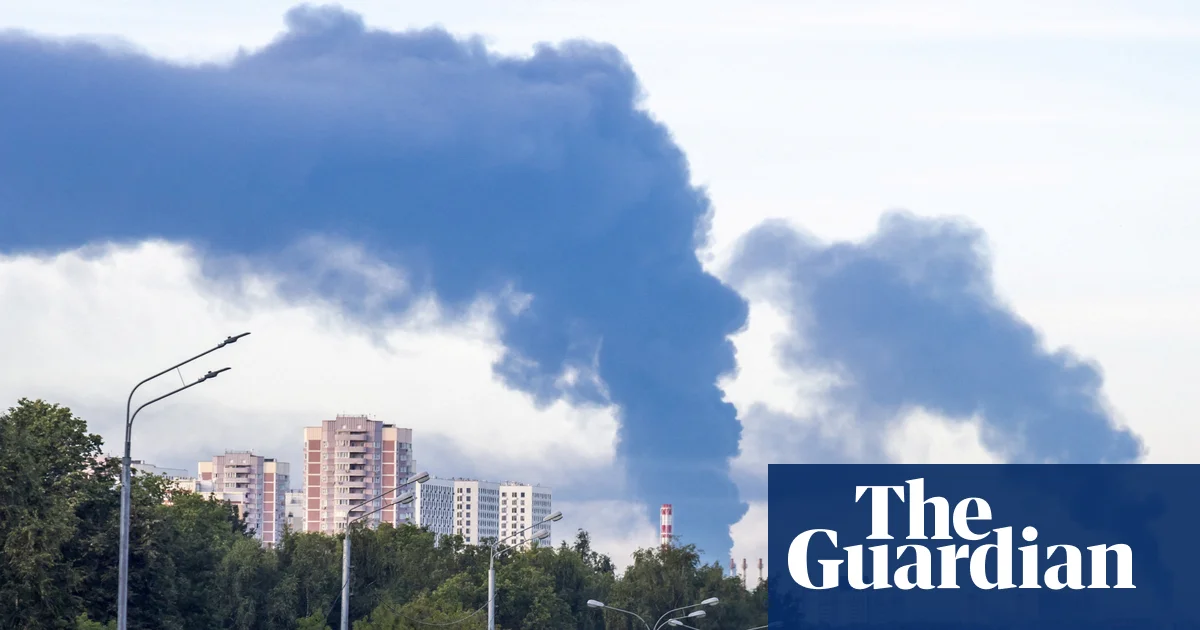
This year, Ukraine has begun bombing oil refineries and warehouses near Moscow and St Petersburg, as well as hitting military and industrial sites at ranges in excess of 2,000km (1,250 miles) from its border.
Concerns about the safety of civilian aviation in the war zone linger. A Malaysian Airlines plane was shot down as it flew over eastern Ukraine in July 2014 by Russian separatists operating a surface-to-air missile launcher. All 298 people onboard were killed.
Putin described Zelenskyy's remarks as "state terrorism", saying: "Negotiations are not conducted with terrorists."
Giving one of his most detailed updates on the war, the Russian leader told a news conference that Moscow was preparing to step up its campaign bombing Ukraine's energy facilities this winter, aiming to knock out heating and electricity supplies.
"The Russian armed forces have been ordered to prepare and carry out mass strikes on Ukraine's energy facilities. They are striking us, and they will get a response," Putin told reporters after a two-day summit in Kyrgyzstan. "I'm not saying we'll collapse the economy there, but it's a serious challenge for them."
Asked whether Russia would strike British military facilities in the UK that produced weapons for Ukraine, Putin sidestepped the question, saying: "That's a military secret."
Russia earlier accused the UK of "escalation" and threatened "consequences" after reports that British-made drones were used by Ukraine in long-range strikes deep inside its territory.
Putin sought to stress that Russian forces retained the initiative on the battlefield in Ukraine, despite Moscow's slowing progress. He appeared to push back against western intelligence reports suggesting he was being given an overly optimistic picture of the war, saying he relied on numerous sources of information that together provided him with an "objective assessment" of the battlefield.
At one point, however, Putin claimed that Russian forces had captured the Ukrainian town of Sviatohirsk in the Donetsk region. The claim was not supported by battlefield maps produced by DeepState, a Ukrainian monitoring group.
Even some pro-war Russian commentators disputed Putin's account. "This is simply a lie. Sviatohirsk has not been liberated," wrote the pro-war blogger Alexei Larkin. "The level of the president's misinformation is critical."
Russia's sluggish advance on the battlefield has fuelled widespread speculation inside the country that the Kremlin could resort to another round of mobilisation, the first since Putin called up about 300,000 reservists in September 2022.
Zelenskyy and western officials have warned that Moscow could be preparing such a move, though its diplomats do not consider it is a certainty. Addressing the speculation for the first time, Putin dismissed the prospect of a new mobilisation as "nonsense".
The Russian leader also said he was comfortable dealing with Donald Trump's special envoys Steve Witkoff and Jared Kushner as part of efforts to negotiate an end to the war in Ukraine, although he acknowledged talks were "currently frozen, to a certain extent".
The CIA director, John Ratcliffe, made a rare visit to Moscow last week and reportedly pressed the Kremlin to end the war.