Utah has spent the past year fighting measles outbreaks — a grim milestone that could affect whether the United States can keep its measles-free designation. This was reported by Qazaqyia.kz citing Associated Press.
More than 680 people have gotten sick since the state's first outbreak began on June 20, 2025. Unlike measles outbreaks in Texas, South Carolina and Arizona, the spread in Utah has been tough to contain to one region — infecting undervaccinated communities in nearly every county.
Measles popped up in healthcare settings, big-box stores and restaurants, and youth sporting events. In February, an exposure at a state high school wrestling championship sparked at least 46 cases among attendees.
Measles is one of the most contagious diseases known to medicine. It causes a tell-tale rash, high fevers, strong cough, ear infections and diarrhea. While most recover, some — including young babies, pregnant people and those with weak immune systems — are at higher risk of developing dangerous complications like pneumonia, brain swelling, blindness or even dying. Even healthy people can develop issues years down the road, including a rare but fatal degenerative brain disease that manifests about a decade after infection.
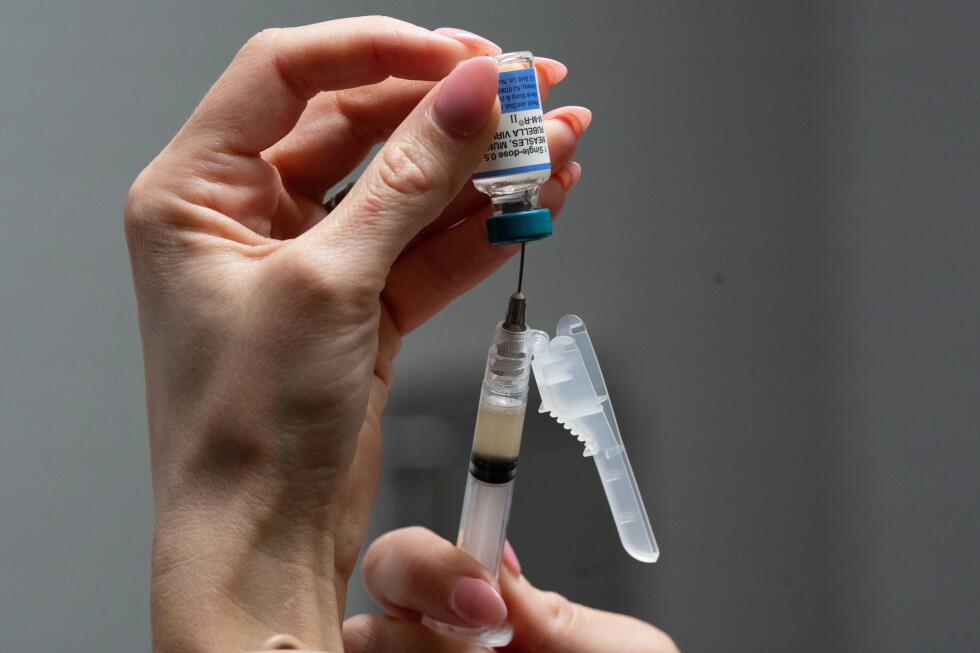
The measles vaccine is safe and 97% protective after two doses.
Though Utah's spread has slowed in recent weeks, state epidemiologist Leisha Nolen sees little opportunity to rest. She's worried the start of school and arrival of colder weather in the fall will cause measles to surge again.
"It's still here, it's still transmitting," she said. "We just need those few cases to hit the wrong community and it could flare up really big again."
The worst spread has been in the southwestern part of the state, where 265 people have fallen ill with the vaccine-preventable disease since last summer. Overall, measles infections hit 22 of the state's 29 counties.
In the state's rural northeast, the conditions were also ripe for measles to spread. Daggett, Duchesne and Uintah counties — collectively dubbed the "tricounty" health region — has seen the second-largest decline in childhood vaccination rates in the state.
More than 16% of the region's kindergarteners were missing their measles vaccines in the last school year, according to state data. Statewide, 12.8% were missing their vaccine, putting the state far short of the 95% vaccination rate needed to prevent measles outbreaks.
The TriCounty Health Department logged 74 cases of measles this spring, after people who got sick at the youth wrestling tournament spread the virus in school and later within their households.
The frontier region had seen a rise in vaccine hesitancy for some time, said Sydnee Lyons, the health department's public information officer.
Despite the large number of cases, local and state health officials consider TriCounty's measles response a success.
Health officials focused efforts on mitigating the inevitable spread. Unvaccinated students were excluded from in-person school and people who were sick were told to isolate themselves. And their appeal to care for one's neighbors led to more people coming in to get vaccinated, officials said.
TriCounty's infectious disease specialist Cyndie Mattinson recalled a parent who told a school nurse she didn't want to talk to the health department because "she was worried that we would be angry with her and be judgmental because her children were unvaccinated." The nurse vouched for the health department staff, and told the mom to let her know if she felt judged. Mattinson ultimately had a great conversation with the mother.
"The perceptions were changed that we weren't out there to police, we were there to be a help and a resource to them," she said.