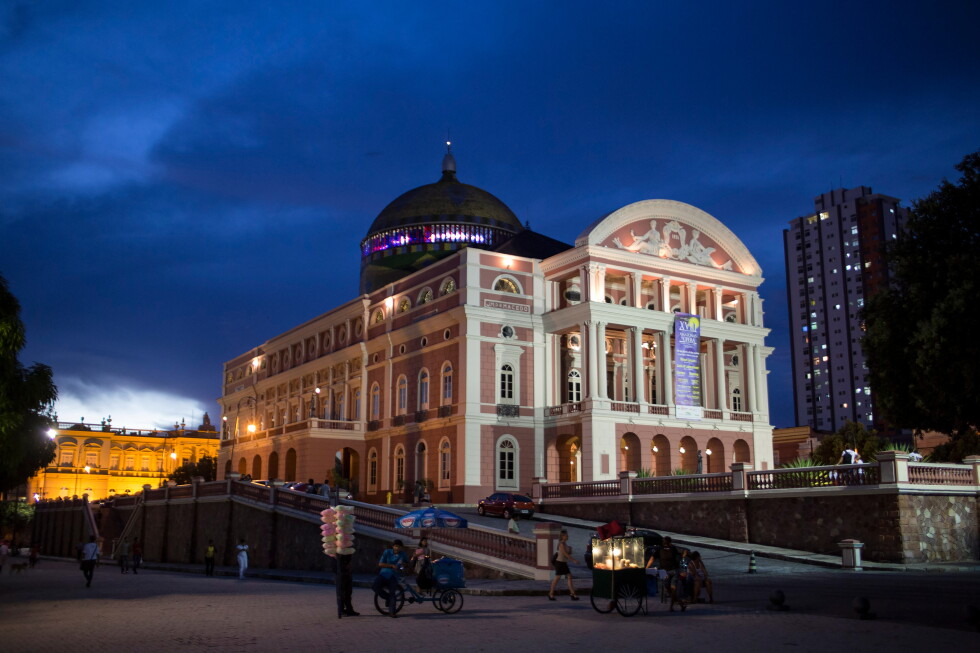
The U.N. cultural agency UNESCO on Monday added two theaters in the Brazilian Amazon to its World Heritage List. This was reported by Qazaqyia.kz citing Associated Press.
The Amazonia Theaters comprise Theatro da Paz in Belem, Para state, and Teatro Amazonas in Manaus, Amazonas state. Both were built in the late 19th century at the height of the rubber boom, and combine European architectural influences with local materials and symbols.
UNESCO said the theaters were designed as "symbols of political and urban ambition." Theatro da Paz, inaugurated in 1878, underscored Belem's role as a key port city, while Teatro Amazonas, inaugurated in 1896, reflected the rapid urban development of Manaus during the rubber boom.
Brazil said it nominated the two theaters jointly because they represented the same historical period and embodied a shared project to modernize and integrate the Amazon region into global commercial and cultural circuits.
"Architecturally and artistically, they blended imported influences and materials with local woods and forest-inspired motifs, creating a distinctive aesthetic that was at once cosmopolitan and deeply Amazonian," the government said in a statement.
Each year, the UNESCO World Heritage Committee designates places considered to be "of outstanding value to humanity." The list includes landmarks such as the Great Wall of China, the Egyptian pyramids, the Taj Mahal in India and the Statue of Liberty in New York.
The World Heritage designation is coveted because it can boost tourism, while also providing properties special protection.
The UNESCO committee is meeting in Busan, South Korea, through Wednesday. On Sunday, it added France's D-Day landing beaches and Greece's Mount Olympus, among other places, to the World Heritage List.
Brazil now has 26 UNESCO World Heritage sites. Beyond the newly inscribed Amazonia Theaters, the Amazon region is also home to the Central Amazon Conservation Complex, a protected area at the confluence of the Negro and Solimoes rivers in Amazonas state. According to UNESCO, the site contains a broad range of Amazon ecosystems, including upland forests and seasonally flooded lowland forests, and encompasses much of the region's biodiversity.