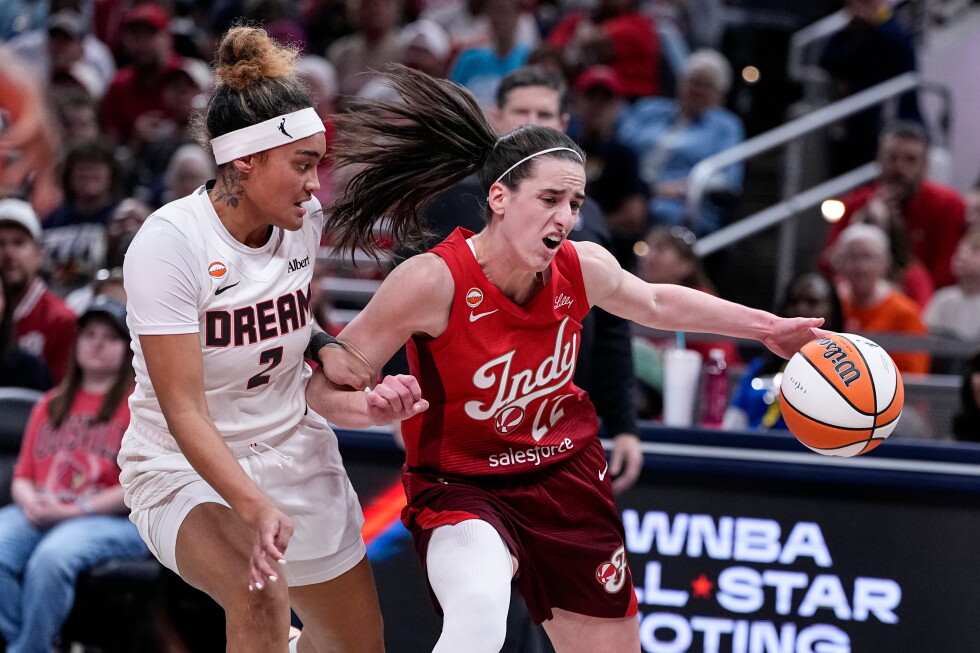
Indiana Fever guard Caitlin Clark has had enough of the social media hatred directed at her, her teammates, coaches, and opposing WNBA players. This was reported by Qazaqyia.kz citing Associated Press.
"I've said up here and said before, the harassment, the hate, none of that is OK," Clark said at practice Friday. "That goes for the opposing team we play, that goes for my teammates, that goes for my coaches. There should never be question of character. None of that is OK, and I don't want anybody to ever experience that."
The WNBA has gained more attention in recent seasons with the addition of Clark and Angel Reese. A multi-billion dollar media rights deal, million-dollar salaries, and higher attendance have been positives. An increase in social media vitriol toward players and teams has been the negative.
Social media hatred is nothing new and isn't just directed at the WNBA and its players. It has been going on for more than a decade. However, it has worsened lately, with players and coaches receiving threats for on-court incidents.
Phoenix Mercury forward Alyssa Thomas said Tuesday that she received death threats and racial slurs after her one-game suspension for making contact with her fist to Clark's throat in last week's matchup against Indiana.
WNBA Commissioner Cathy Engelbert issued a statement Tuesday condemning "any and all forms of hate."
The league has been trying to protect players and combat its social media problem. In recent seasons, security has been a major focus. Teams travel with more security on the road, and enhanced protocols are in place at arenas, hotels, and during travel. Franchises now use charter flights, which makes things easier for teams.
The WNBA has also implemented initiatives to combat online hate and threats. Some include artificial intelligence software to quickly identify and respond to threats, harassment, and hate directed at players and teams across social media platforms.
Unfortunately, nothing is foolproof in stopping online hate from anonymous people hiding behind keyboards.
"I think for the league as a whole, there's been so much more toxicity, racism, homophobia — straight-up hateful nonsense, and it is absolutely unacceptable," Fever coach Stephanie White said during a two-minute opening statement at practice Wednesday. "Most of it is coming from the online community. In my heart of hearts, I believe most of it is not coming from WNBA fans or Indiana Fever fans."
White coached Thomas in Connecticut two years ago and saw the social media vitriol there as well.
"AT is exactly right: We get to play a basketball game," White said. "Yes, that's going to come with criticism and yes, that's going to come with fans and the love-hate relationship they have with players and teams. But it's not hard to not be a jerk. And if you're one of the people who's online doing this, do not call yourself a WNBA fan."
Clark said she's been hurt by all the narratives created online and in the media about her and her Fever teammates.
"It can be really frustrating to me at times and it's difficult," Clark said. "A lot of people sometimes think I'm a robot. I'm not a robot. I have emotions, I have feelings. And it can be really difficult to go through a lot of that. I'm 24 years old, trying to navigate a lot ... there are times that it is hard, and there are times that, you know, it probably affects me a little bit more than I do put on."
To help players deal with the hate, the league has also expanded access to confidential mental health resources and support.