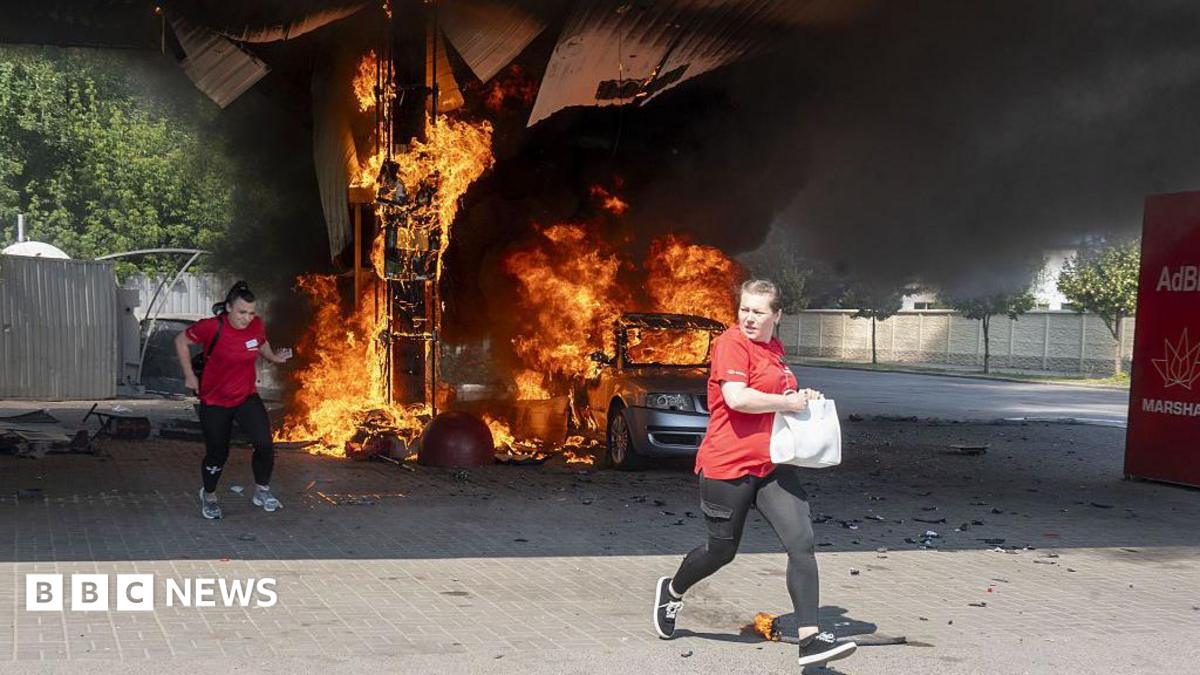
Mayor Ihor Terekhov warns drivers in Kharkiv: "Fill up quickly and move on." On Monday, two petrol stations in the city were hit by Russian drones, wounding two people. In another attack on a petrol station outside Kryvyi Rih last week, three people were killed. This was reported by Qazaqyia.kz citing BBC News.
Russia's campaign of targeting civilian filling stations with drones and missiles began in earnest in April, primarily in frontline regions, and attacks are steadily growing more frequent. At the same time, Russia has endured two waves of severe fuel shortages due to Ukrainian drone strikes on Russian oil refineries.
In total, Russia has hit at least 246 filling stations across Ukraine, says Oleksandr Sirenko, an analyst with Ukrainian energy think-tank Nafto Rynok. In July alone, the Centre for Information Resilience verified 114 Russian strikes on filling stations, compared with 66 the month before. Police have issued guidance urging motorists to leave petrol stations and, if necessary, abandon vehicles during air raid alerts. One police force in the Dnipropetrovsk region says: "You can fix your car, but you won't get your life back."
Initially, attacks were carried out with smaller, remote-controlled drones, but Russia started using larger, more expensive Iranian-made Shahed drones. One Shahed drone costs between $20,000 and $50,000. Sirenko says: "One petrol station took five Shahed hits. These Shaheds cost more than the petrol station."
Some key roads, like the one linking Kharkiv and Dnipro, have no functioning petrol stations left. All stations around Opishnya in Poltava region have been destroyed. Village chief Mykola Riznyk says: "You can see our enemy's strategy. They want to deprive us of fuel." Local authorities have begun stocking fuel in small amounts at different locations.
In Mykolaiv, resident Kateryna Stokolya says stations are stricter about not working during air alerts. She says: "Security comes first. If you can't fill up now, you'll fill up later. There are no queues or panic buying." Stokolya believes Russia's goal is "terrorising the public so we force the government to capitulate or accept agreements that do not favour Ukraine."
In Ukrainian-controlled areas of Kherson region, almost half the stations have stopped working. The others get attacked "almost every day," says deputy head Oleksandr Tolokonnikov. In Trostyanets, a town of almost 20,000, all stations have been destroyed. Authorities now dispense fuel from road tankers that change location to avoid being hit.
Ukrainians appear to heed advice. Oleksandr Melnychuk of BRSM Nafta says: "Clients aren't browsing the aisles anymore. They fill up and are keen to get on their way as soon as possible." His company lost eight stations and is rebuilding two. BRSM Nafta has built concrete shelters, installed anti-drone nets, and shortened working hours.
Despite the attacks, fuel supplies have not been dramatically affected. According to the National Bank of Ukraine, 4% of filling stations have been damaged or destroyed, but the market impact is small. The report says: "Increasing sales in regions further from the front line or border with Russia have made up for sales lost at destroyed stations." The situation in Russia is very different after Ukraine's campaign against Russian refineries.