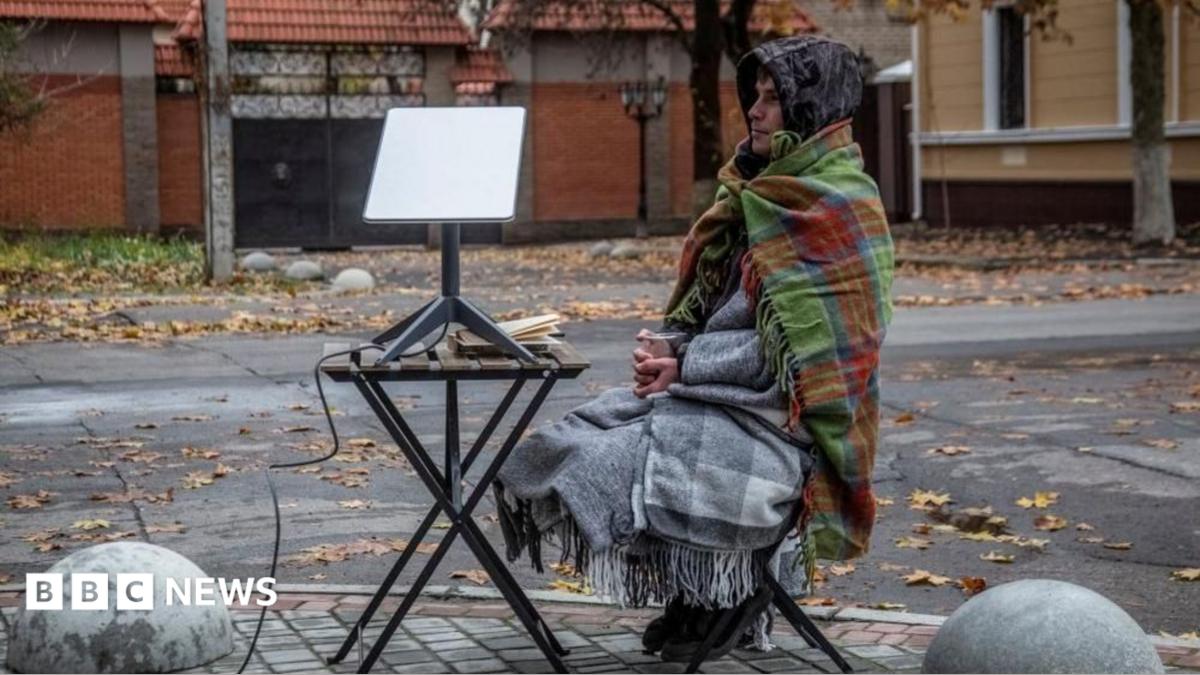
Ukraine is in desperate need of a new satellite internet service, but a fast and reliable alternative to Elon Musk's Starlink network simply doesn't exist - yet. This was reported by Qazaqyia.kz citing BBC News.
Last week's sudden slowdown of the service in Ukraine, which affected Kyiv's ability to defend itself from Russian attacks, has shown how vulnerable the country can be, and sharply increased Europe's urgency to have its own military-grade satellite network.
That vulnerability was highlighted by Musk himself on Saturday, when he accused Ukraine of violating Starlink's terms of service by using it for "drone strikes to kill people". Saying that loophole was closed last week, he wrote on X: "Violation of those terms will result in end of service." He added: "Were Starlink to be turned off, the Ukrainian front line would collapse immediately".
There are a few alternatives, but they are all lagging behind Starlink, which is the world's largest satellite constellation. France's Eutelsat, with its OneWeb internet service, is the main alternative - but it only has about 600 active satellites, compared with Starlink's 10,000-plus. The EU is working on a new network to rival Starlink, Iris², however it won't be up and running until 2029.
For Ukraine's troops on the ground, several of whom spoke anonymously to the BBC, reliable connectivity is the difference between life and death. "God forbid they shut it off completely, it would be an absolute catastrophe," said one. "I don't give a damn how much an alternative costs when our lives are on the line."
For now, Ukraine's best bet is to join Govsatcom, the EU's satellite sharing network - but it cannot be used for military warfare like controlling drones.
Starlink and its military-grade service, Starshield, are both owned by Musk's SpaceX company and have dominated the global satellite market for years. Ukraine relies on Starlink for communications on the battlefield and Starshield, which is controlled by the US government, for military purposes like drone warfare. The network is able to provide fast, real-time connectivity, which is crucial for defence and intercepting Russian attacks.
"You can't employ drone warfare without this kind of high-speed internet connection," said Vincent Tourret, a researcher at the French Institute of International Relations.
Last week's slowdown, which has only just been restored, highlighted the risks of relying on a US provider at a time when tensions between Kyiv and Washington continue to deteriorate. "Ukraine's defence cannot depend on Trump's or Musk's whims," French MEP, Christophe Grudler, tweeted.
Who authorised the Starlink restrictions is still not clear, with a confusing blame-game ongoing between the Pentagon, Donald Trump and Musk.
While Starlink has been one of Ukraine's greatest assets in this conflict, the "flipside of that dependence" has been exposed, explained Kari Bingen, director of the Aerospace Security Project at CSIS. "This is a critical military capability that Ukraine relies on, but doesn't control."
Starlink is not the only satellite network Ukraine can access, so if it goes down there are other options - but experts say they aren't as fast, and troops the BBC spoke to agree.
Starlink "gives us the upper hand when it comes to passing commands - even one or two seconds are critical when we can transfer data and orders faster, and you can really feel that advantage on the battlefield", a soldier said.
The terminals used to connect to the satellites are also an important factor. Starlink's are relatively small and lightweight, so they can be fixed to any kind of vehicle or drone. Eutelsat's terminals "are slightly larger, so they can be fitted on the roof of a car, or on tanks, but they can't necessarily sit on small drones", said Eva Berneke, former CEO of the French satellite company. They are also about five times more expensive, she added.
Rhetoric from the White House - like Trump's scathing criticism of Nato and his threats against Greenland - have given the EU "some pretty brutal alarm bells", Berneke told the BBC. She had only been at Eutelsat for a month when Russia launched its full-scale invasion of Ukraine in 2022, and said she noticed a marked change in urgency from European authorities, as they looked to her company to help plug holes left by Starlink if it could not be relied upon.