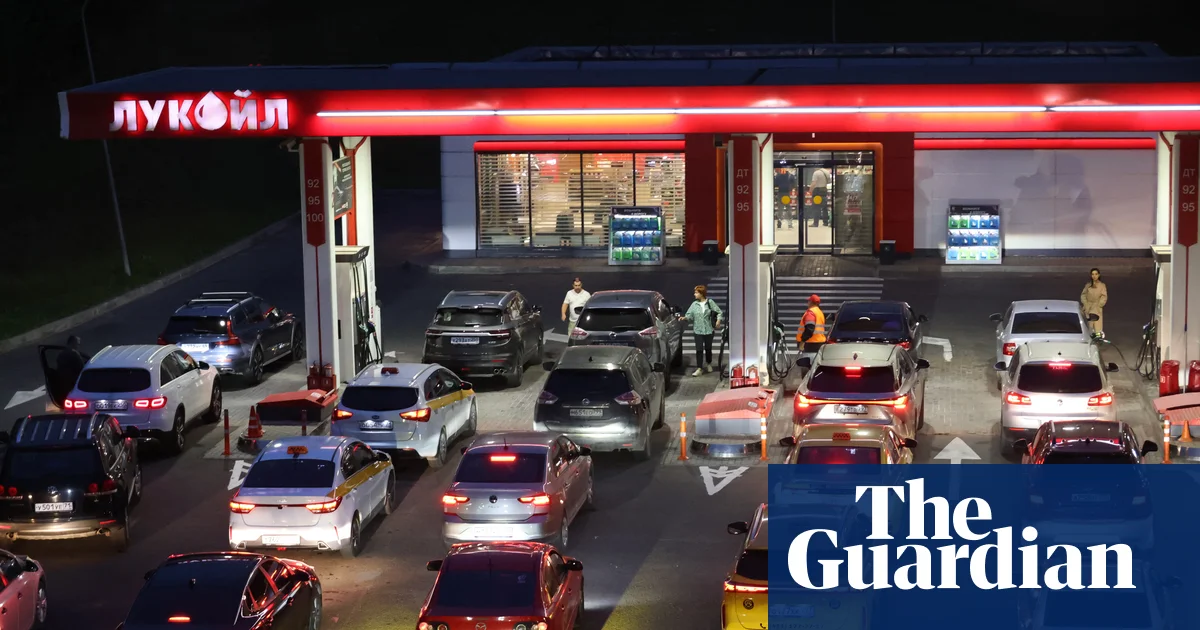
Russia, once the world's second-largest producer of crude oil, has been plunged into a desperate scramble to find sources of gasoline to plug the ever-growing holes in its refining capacity. This was reported by Qazaqyia.kz citing The Guardian.
Long-range drone attacks from Ukraine targeting oil processing plants have led to rationing at filling stations. The Kremlin has tapped into a widening number of sources in recent weeks to alleviate the energy crisis.
This week, Russia for the first time bought a shipment of 200,000 barrels of gasoline from Turkey, shipped from Mersin to the Baltic port of Primorsk via a sanctioned tanker, the Wendrix. It is the fifth confirmed seaborne delivery of vehicle fuel this summer, after previous shipments via Egypt from a refinery at Vadinar in India, amounting to 1 million barrels in total.
Russia has also signed a deal with the Kondensat oil refinery in western Kazakhstan to process Russian crude outside the country, with 70% of the refined fuel shipped back to Russia. Oil will need to be delivered by rail as the facility is not connected to a Russian pipeline.
This summer has also seen big increases in fuel imports from Belarus, Russia's ally in the Ukraine war. Imports this June increased by a factor of 141 compared with June last year.
Kremlin officials had hoped earlier in the summer that Russia might be turning a corner, but August has seen a new intensification. At least six Russian regions have reinstated or tightened restrictions on gasoline sales, and a new wave of Ukrainian strikes completely shut down the Orsk refinery.
Russia's deputy prime minister, Alexander Novak, who in July said Russia would begin importing oil products, this week described the energy situation as "constantly changing" as some refineries were back in operation. "The situation is changing every day. We're constantly monitoring it and are making decisions at our headquarters. We're gathering the federal headquarters with the regions and all of our companies twice a week," he said.
The aim of Kyiv's campaign is to bring the cost of the war back to Moscow. Ukrainian strikes on refineries, intensified in the last two months, are not only hitting a source of revenue used to pay for Vladimir Putin's war but have prompted serious domestic shortages that even the latest efforts appear unable to mitigate.
Ukraine has so far in August carried out 18 attacks on Russian refineries, matching the previous month's record. Even before the campaign intensified, output had dropped by 28%, according to industry analysts.
Writing in June, retired Australian general Mick Ryan predicted Ukraine would increase its efforts to hit Russian oil production. "Putin has never retreated, in public, from his maximalist ambition to subjugate Ukraine. The strikes are not designed to change his rhetoric; they are designed to change his calculus," he wrote.
"Strategy, in the end, is a contest of competing calculations, and Ukraine's bet is that sustained pressure on Russia's economic foundations will, over time, force a recalculation that battlefield performance could not. This will not happen quickly, and it may not happen at all. But it denies Putin his longstanding assumption that time is on his side."
That was echoed last month in a commentary for the Royal United Services Institute by Petras Katinas and Natia Seskuria. "Russia's fuel shortages are becoming a budget problem. Ukraine's sustained strikes on Russian refineries are not only damaging infrastructure and squeezing Russia's oil industry, they are forcing the Kremlin to spend more to keep fuel flowing at home while earning less from exports. That trade-off is becoming increasingly expensive."
And the biggest damage being inflicted is also likely the hardest to detect, they added. "Export restrictions prevent refiners from selling into higher-priced foreign markets, reducing foreign currency earnings while limiting companies' ability to recover costs at home."