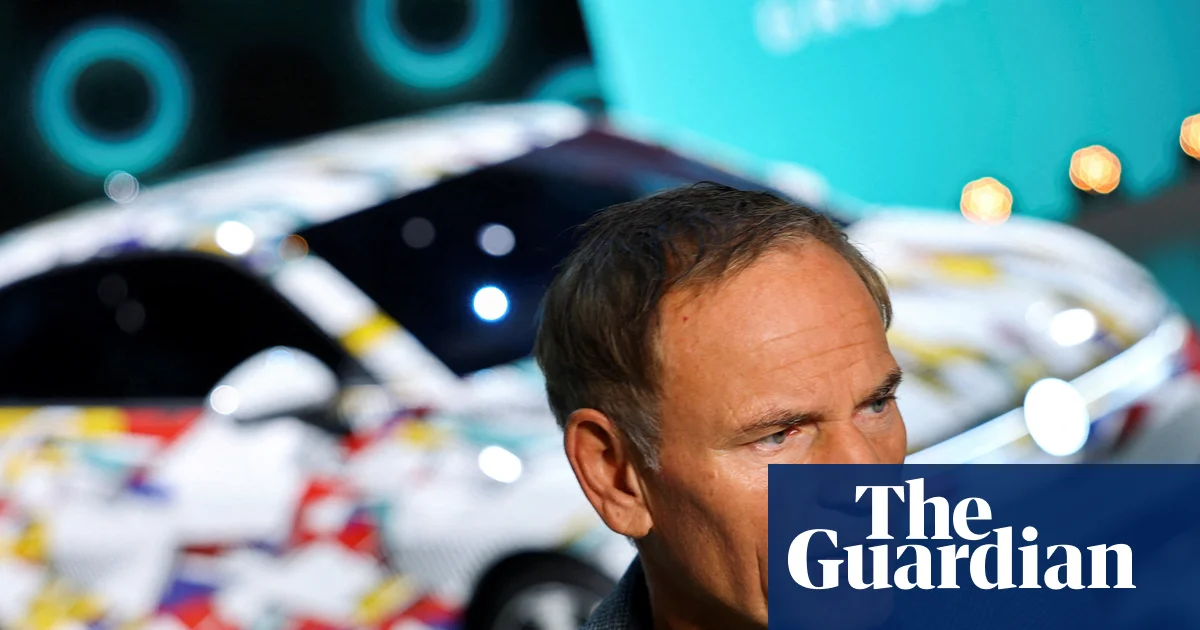
The chief executive of Volkswagen has faced boos and whistles of protest at the company's headquarters after telling thousands of workers that a comprehensive reorganisation, which could include job losses and factory closures, is vital for its future. This was reported by Qazaqyia.kz citing The Guardian.
As Oliver Blume urged more than 10,000 workers on Tuesday to "pull together", saying drastic restructuring measures at the struggling manufacturer were essential, they held up banners and shouted slogans, including: "Our jobs are not your balance sheet adjustments".
Blume said in Wolfsburg, northern Germany: "Our plan for the future is the largest transformation programme in our company's history. To make this happen, everyone needs to pull together now."
The chief executive was speaking for the first time since details about plans for mass job losses and possible factory closures were made public.
One of the goals of the proposed restructure was to guarantee a future for all plants at Europe's largest carmaker, he said at the start of a tour of VW plants. "Our aim is to create viable prospects for all locations within the next six to 12 months."
Blume's restructuring plans have yet to be approved by the VW group's powerful supervisory board, which represents the labour force, as well as the state of Lower Saxony, the home of VW, and shareholders.
The meeting, widely described by attenders as heated, was not open to the media. But witnesses – some of whom had to watch proceedings on a live stream outside the main meeting room owing to overcapacity – reported that Blume had said half of the expected job cuts, often cited at about 50,000, would take place in Germany. He reportedly said the other half would be made internationally, across a total of approximately 170 companies.
Blume stressed that the worldwide job cuts plan was not a target, but a "theoretical calculation" and that it was based on the company's costs, which he said were "about 30% above the average of comparable companies". He said the executive board was "fully behind the future plan", which involved bringing VW's costs down in line with its competitors to make it sustainable for the future.
Instead of forced job cuts, Blume said management wanted to rely on voluntary personnel measures as much as possible, including phased retirement, mutual agreements, and what he called "natural attrition and a restrictive hiring policy".
Blume described frequently proposed factory closures as the "last and most costly resort". Among the proposals to keep factories open, VW's manufacturing could switch towards the defence industry, and it could produce electric vehicles that are for sale in China, but not Europe yet, at its German factories.
The manufacture of cars at VW's plant in Osnabrück is due to end, possibly as soon as next year. At plants in Emden, Zwickau, Neckarsulm and Hanover, there are no plans for manufacturing from 2030.
Daniela Cavallo, the head of VW's works council, said opposition to factory closures was strong, calling them an "integral part" of the company. "Our trust in this company's executive board, and in particular in its CEO Oliver Blume, has been damaged, not yet beyond repair, but nevertheless damaged," she said, according to extracts from her speech shared with media by the works council. She accused Blume of being vague about the company's plans. "It's impossible to work with a CEO who doesn't tell his people what's going on," she said.
VW faces increasing pressure from rampant Chinese competition in Europe, decreasing sales in China and hefty US tariffs. Even before that, it was struggling for years with falling profits and overproduction in Europe.
Last week, Blume described the situation at VW as "more than critical". Previous cost-cutting measures, such as an average reduction of 20% in costs at its German factories last year, were insufficient. He said VW was too big, too slow and too complex. Blume is to attend eight more works council meetings over the coming days, in Braunschweig, Emden, Zwickau, Chemnitz, Dresden, Kassel-Baunatal, Salzgitter, and Hanover.