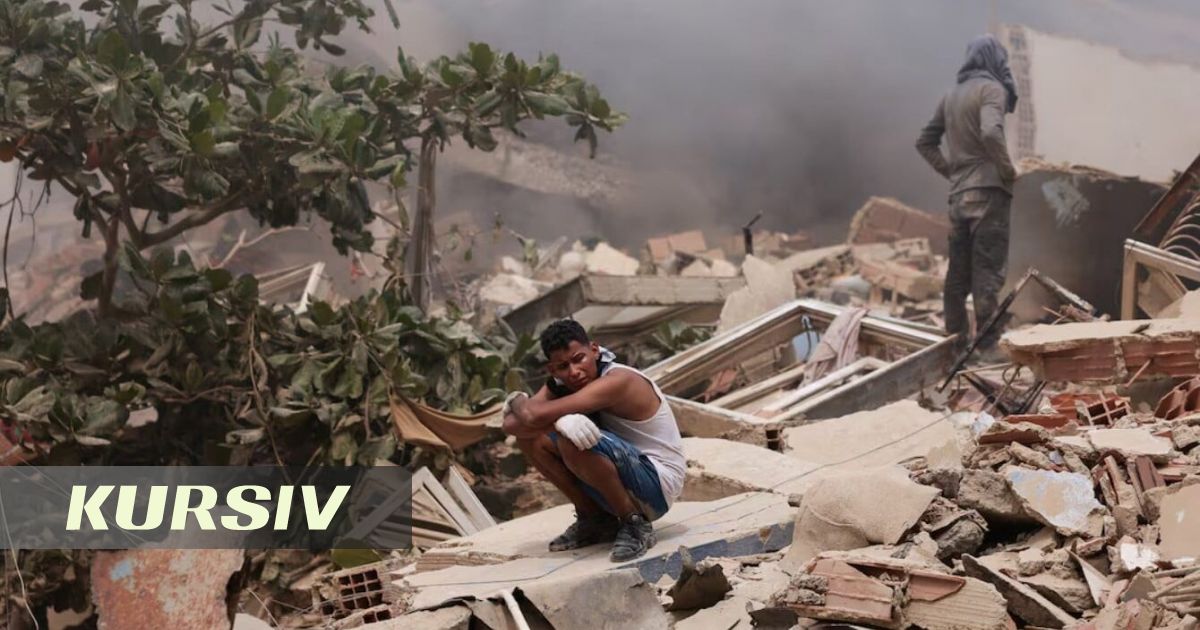
Search and rescue operations continue in Venezuela after two powerful earthquakes struck near Caracas on June 24. According to the latest data, 920 deaths have been confirmed, over 3,300 people have been injured, and hundreds remain trapped under rubble. This was reported by Qazaqyia.kz citing Kursiv Media.
The two earthquakes, with magnitudes of 7.2 and 7.5, occurred approximately 160 kilometers west of the capital. Nearly two days after the disaster, foreign rescue teams and humanitarian aid began arriving in Venezuela.
According to the government, in addition to 920 dead and 3,360 injured, hundreds are missing. A special website for locating missing persons has already registered over 50,000 requests. The head of the UN humanitarian unit gave similar estimates.
The U.S. Geological Survey considers it highly likely that the death toll could exceed 10,000. If so, the earthquake would become one of the deadliest in Latin America in the last century.
The most severe destruction was recorded in the coastal city of La Guaira, where at least 100 buildings, including multi-story residential blocks, completely collapsed.
A resident of the city, Jennifer Palacios, told Reuters that the tragedy occurred shortly after she left an eight-story residential complex to bury her six-year-old son and five relatives who died in the earthquake.
"Thanks to the efforts of local residents, we managed to pull people out alive. We need crane assistance to move debris. People are still trapped under the rubble," she said.
Reuters correspondents reported that residents continue to clear debris by hand, complaining about a lack of heavy machinery and insufficient government assistance. Volunteers are delivering food and essential items by motorcycle from Caracas and Valencia.
Acting President of Venezuela Delcy Rodriguez stated that the hardest-hit state of La Guaira will be militarized for the rescue operation. According to her, authorities have distributed about 2,600 tons of food and thanked volunteers for their help.
Nevertheless, residents of some areas claim that state services are either virtually absent or operating with limited staff.
For instance, 73-year-old lawyer Ricardo Trias told Reuters he cannot retrieve the body of his godson, who died under the rubble of a house in Caraballeda.
"We want them to give us the body. We cannot take it, and it will rot here. No one from the forensic examination has come," he said.
According to the UN International Organization for Migration, the earthquake's aftermath could affect about 7 million people.
Meanwhile, representatives of foreign energy companies reported that Venezuela's oil industry, key to the country's economy, avoided serious damage. The Caracas Stock Exchange is temporarily closed and is being used as a humanitarian aid collection center.
Before this disaster, the deadliest earthquake in modern Venezuelan history was the 1967 earthquake, which killed 240 people.