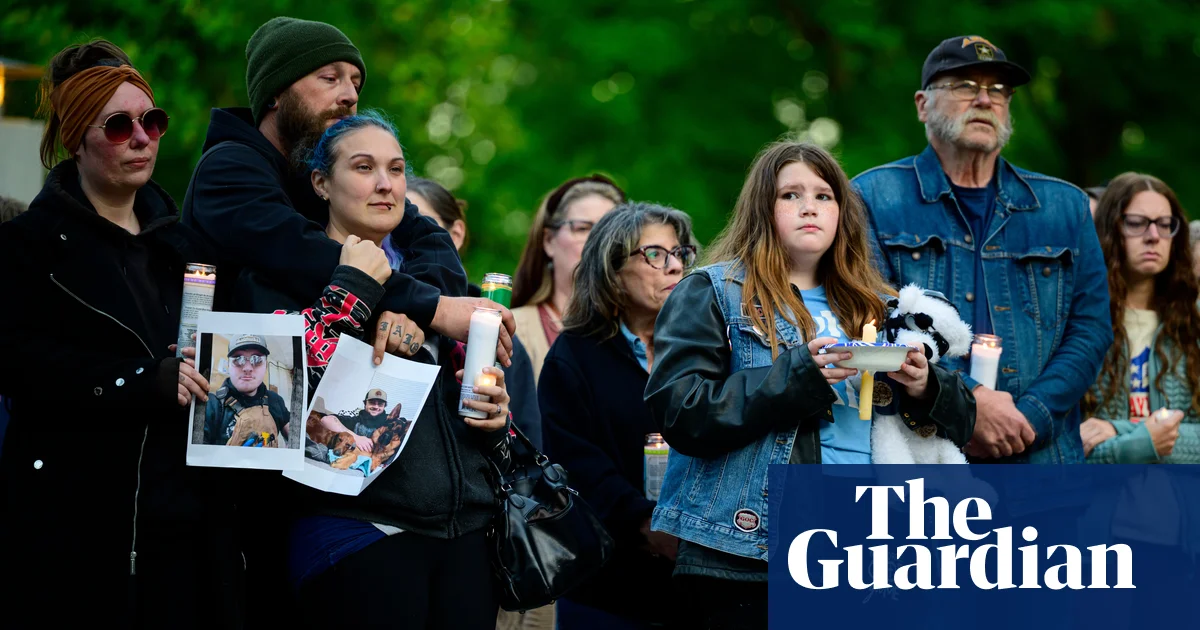
In the port city of Longview in south-west Washington state, at approximately 7.18am on 26 May, a tank of white liquor — a caustic chemical used in the paper-making process — imploded at the Nippon Dynawave Packaging paper mill, killing 11 people. This was reported by Qazaqyia.kz citing The Guardian.
It was one of Washington state's deadliest industrial accidents in nearly a century. With roughly a thousand people working at the mill, thousands more were waiting for a phone call. Parents called children. Wives called husbands. Grandparents called grandchildren.
Residents in Longview had awakened to a thunderous boom. Hours passed with no explanation of what had caused it or how it could have happened at all, and suspicion began to brew.
"For those that did not get that response," said Jeff Wilson, a Republican state senator representing Longview, who also sits as the port commissioner, "all they got was silence."
Nowhere was that impact felt more deeply than in Longview itself, a working-class city of about 38,000 people whose economy and identity have long been tied to the paper industry, shipping and logging. For generations, families have depended on the mills for their livelihoods. The disaster struck at something the city had long regarded as permanent: the mills where generations had gone to work, and helped many send their children to college or put down a down payment on a home.
The implosion rippled through nearly every corner of a community affected by mill closures and economic change. Those concerns will likely have an impact at the ballot box. As summer turned toward fall and the leaves along the Columbia River began to turn yellow, memorial services gave way to campaign rallies. The same communities that had gathered around grieving families were preparing for one of the country's most closely watched House races in November.
Nearly two months after the implosion, on 8 July, Wilson still spoke first about the workers, the funerals he had attended, the families and the co-workers who ran toward danger looking for one another. He recalled brothers Tyler and Brad Covington, 27 and 29; he said: "They went to work together. And then they died together."
Before entering politics, Wilson spent more than 23 years cleaning tanks at the Nippon Dynawave mill. In the aftermath of the tragedy, he worked routinely with Democratic congresswoman Marie Gluesenkamp Perez's office as local, state and federal officials responded to the disaster, his role in Olympia intersecting with hers in Washington.
Though he declined to endorse her re-election, Wilson credited the Democratic congresswoman with being "present and accountable" and praised her for asking questions rather than "rubber-stamping anything".
For a community divided by many of the same political forces pulling at the rest of the country, the disaster briefly created a sense of togetherness, as the whole community grieved the deaths of many of their neighbor and family members.
"Natural disasters will tend to bring people together," said Mark Alan Smith, a political science professor at the University of Washington who studies American politics and religion. "It's something people can unify around … across race and class and other divisions."
On 4 August, Gluesenkamp Perez and Republican state senator John Braun advanced from a field of nine to face off for the district's congressional seat in November. Braun finished first with about 39.7% of the vote to Gluesenkamp Perez's 36.4%. Brent Hennrich, the progressive Democrat who argued that Gluesenkamp Perez no longer represented many of her party's voters, took 16.7%.
The results exposed the competing pressures facing Gluesenkamp Perez heading into the general election. Braun finished ahead of the incumbent, while Hennrich's showing demonstrated the size of the progressive bloc she will have to contend with in November. Many of those voters remain angry over parts of her vote on the Safeguard American Voter Eligibility (Save) Act (which would require proof of citizenship to vote), ICE funding and a bill restricting how public schools address gender identity.