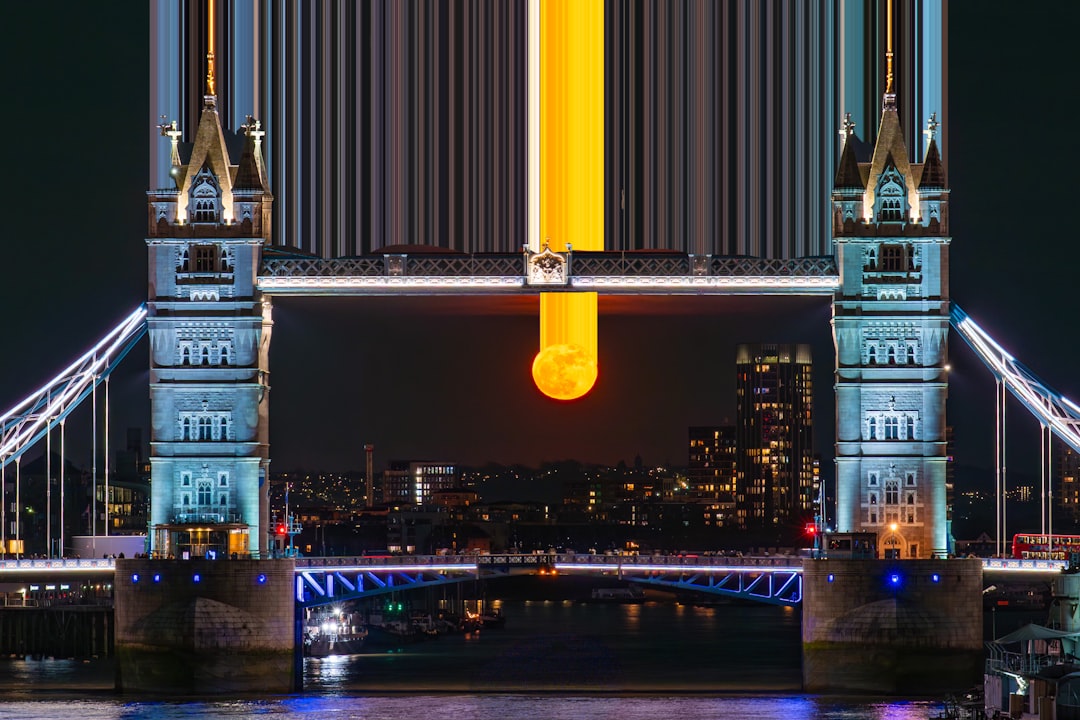
For the first time this century, people across the UK will be able to see an almost total solar eclipse in the evening sky on Wednesday. This was reported by Qazaqyia.kz citing The Guardian.
A solar eclipse occurs when the moon moves between the sun and the Earth, blocking the sun's light either partially or fully. This year, people in the UK and Ireland will see 90-96% of the sun covered by the moon for the first time since 1999 – and it's their last chance until 2081.
Across north-western Europe, people will see about 88-95% coverage, while spectators in parts of Greenland, Iceland and Northern Spain will see a total eclipse for up to two minutes and 18 seconds in duration.
In the UK, viewers in the west will see the most of the sun obscured: 95% in Plymouth, 93.2% in Cardiff, and 93.1% in Belfast. Spectators in Manchester will see 91.9% and Londoners will catch 91.4%. Farther north and east will see smaller proportions, with Edinburgh at 90.7%, Newcastle at 90.2% and the Shetland will have the lowest coverage, at 88%.
Royal Observatory Greenwich astronomer Jess Lee said that these are small differences, and all "will still be impressive sights". She recommended finding hills with clear views to the west, for example Parliament Hill, Alexandra Palace or Primrose Hill in London, or rooftop venues.
Because the eclipse takes place in August, there's a stronger chance of clear skies. Tom Morgan, Met Office meteorologist, said it was too early to be confident, but "given the summer we've had a lot of the UK will have reasonable viewing conditions".
At present, there is a higher risk of thick cloud and rain in Scotland and Northern Ireland, while the clearest skies are likely towards the south and the east of the UK. "For many it'll be quite a spectacular and rare event," he said.
For Scotland's astronomer royal, Catherine Heymans, keeping an eye on the clouds is the secret to scoring the best view, since these could partly or entirely obscure the eclipse. "I plan to check the Met Office's fantastic online cloud cover forecast as we get closer to the day. I'm ready to hop on a train north, south, east or west to find some cloud-free skies," she said.
Getting to a high point with a clear view of the horizon also helps. "I'd recommend a dress rehearsal in the days before. If you can't see the sun from your planned viewing spot at 7:30pm, because your view is blocked by a hill or a house, then you'll want to find yourself a different location for the real event," Heymans added.
The most important thing, she stressed, is to wear eclipse glasses, and avoid looking directly at the sun.
During an eclipse, the sun appears dimmer, making it easier to look at directly. However solar radiation can still reach and damage the retina, often without causing any pain, so viewers may not realise harm is occurring until it's too late.
Following the 1999 total solar eclipse, the Royal College of Ophthalmologists reported about 70 cases of people experiencing vision problems after watching the eclipse.
The UK Health Security Agency advises that there are two safe approaches: specialist eclipse viewers, or indirect viewing methods.
Eclipse glasses or handheld solar viewers must be genuine and sold by a reputable retailer, with specially designed filters that meet the international safety standard ISO 12312-2:2015(E), and no scratches, tearing or damage to the lens. Old pairs may not be reusable, and sunglasses should never be used.
Indirect view methods include viewing the sun's image projected through a colander or the gaps between tree leaves on to white paper, or using a pinhole pierced in one sheet of card and projected on to another.
Sarah Crowther, an astronomer at the University of Manchester, said it was important to remember that the solar eclipse would take place at different times across the UK.
It starts at about 6.08pm in Edinburgh and Glasgow, 6.10pm in Belfast, 6.13pm in Manchester and Liverpool, 6.15pm in Birmingham, 6.17pm in London and 6.18pm in Cornwall. Maximum eclipse follows roughly an hour later, ending around 8pm.
People may observe the surrounding area going quiet during the solar eclipse, "when animals think it is night because it is darker, which gives a sense of calm. And then there's an awakening as it gets light again, birds think it is dawn so there could be a dawn chorus," said Crowther.
She added: "I think many people feel a sense of awe when they see an eclipse. It can put the vast scales of the solar system in to some kind of perspective."