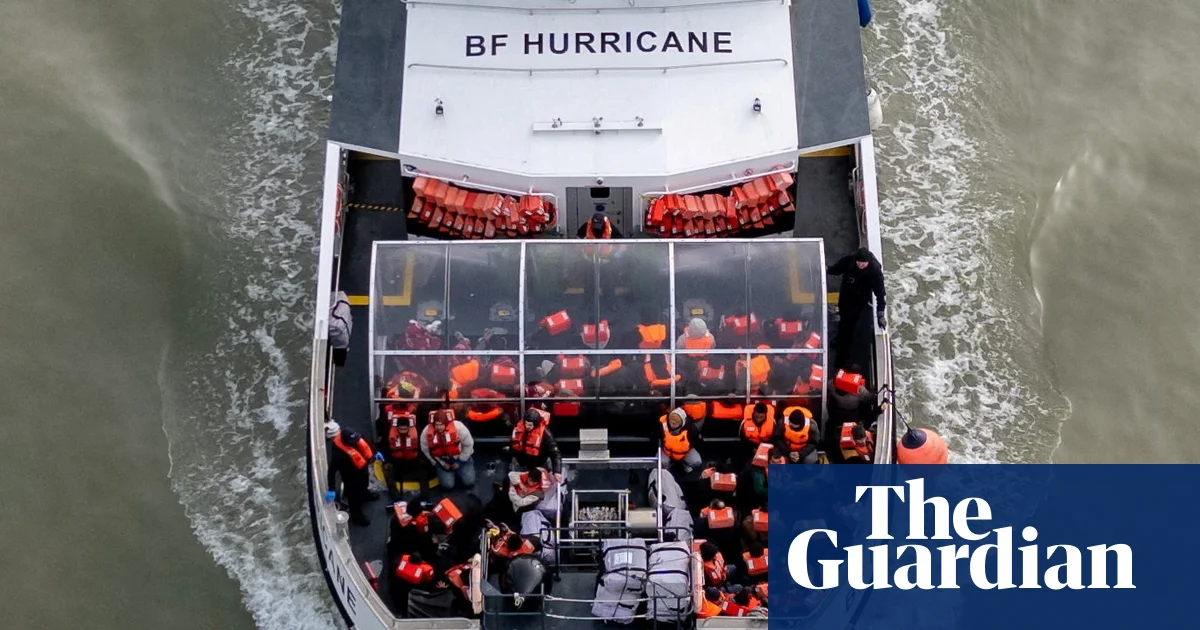
Earlier this month, the UK government quietly scrapped its "one in, one out" deal with France. This was reported by Qazaqyia.kz citing The Guardian.
The partnership was supposed to eliminate small boat crossings by deterring asylum seekers from making the treacherous journey across the world's busiest shipping channel. But the deal lasted just 423 days, was beset with problems, and had a negligible impact.
This morning, the Home Office announced that it would be doubling the number of riot police along the French coast in lieu of the deal.
Although small boat arrivals have actually decreased over the last year, the far right continues to weaponise these crossings. In its annual threat briefing yesterday, the head of MI5 warned that extremists with anti-immigration opinions are increasingly considering carrying out terrorist attacks.
What the deal was meant to do
The "one in, one out" policy, announced in a joint press conference between Keir Starmer and Emmanuel Macron in July last year, was supposed to render small boat crossings pointless. A person arriving in a small boat to the UK could be forcibly returned to France in exchange for another person who would be brought legally to the UK. "In effect," Diane Taylor wrote in a moving piece about the scheme in September, asylum seekers were "used as reluctant human shields to protect our borders from others in the same predicament."
The scheme was always limited in scale; of the 40,000 people who arrived in small boats while it was active, just 1,500 – roughly 4% – were returned to France. A report by British Future, a thinktank that championed the policy, recognised that it would have to be expanded twenty-fold to close down routes as a viable way to claim asylum. But it's doubtful that, even at this far larger scale, it would have ever been effective. Diane reported in August that nearly 50 asylum seekers deported under the scheme returned to the UK a second time, and an unknown number arrived undetected.
Why it was scrapped
The government would have liked the scheme to continue, and its official explanation was that it was scrapped because it couldn't be effectively scaled up. But it seems likely that political concerns in France also played a role. "At a time when immigration is going to be a major issue in the French presidential election, France doesn't want to be seen to be taking in more unwanted people from the UK," Rajeev Syal, the Guardian's home affairs editor, tells me.
The deal was partially founded on a recognition of the need for safer routes to claim asylum in Britain. Starmer acknowledged when announcing it that "it is right that we offer a haven to those in most dire need". But this flicker of humanitarianism was outweighed by the scheme's arbitrary cruelty. Nearly 100 children were misidentified as adults and wrongly detained under the scheme, while some asylum seekers deported back to France were beaten by people smugglers. "I've been writing about asylum seekers for 25 years and I've never seen as much suffering caused to refugees by a UK government policy," says Diane.
The impact of security measures
It was also accompanied by the government's fortification of security measures along the French border. To some extent, these security measures help to explain the drop in small boat crossings this year, together with an overall reduction in arrivals of asylum seekers to Europe. But they have also encouraged people to make even more unsafe crossings. The increased police presence in northern France has led to more trips in larger "mega-dinghies", which became a subject of panicked headlines this summer, as smugglers attempt to transport more people in single crossings.
Increased security has also encouraged people to take longer routes.