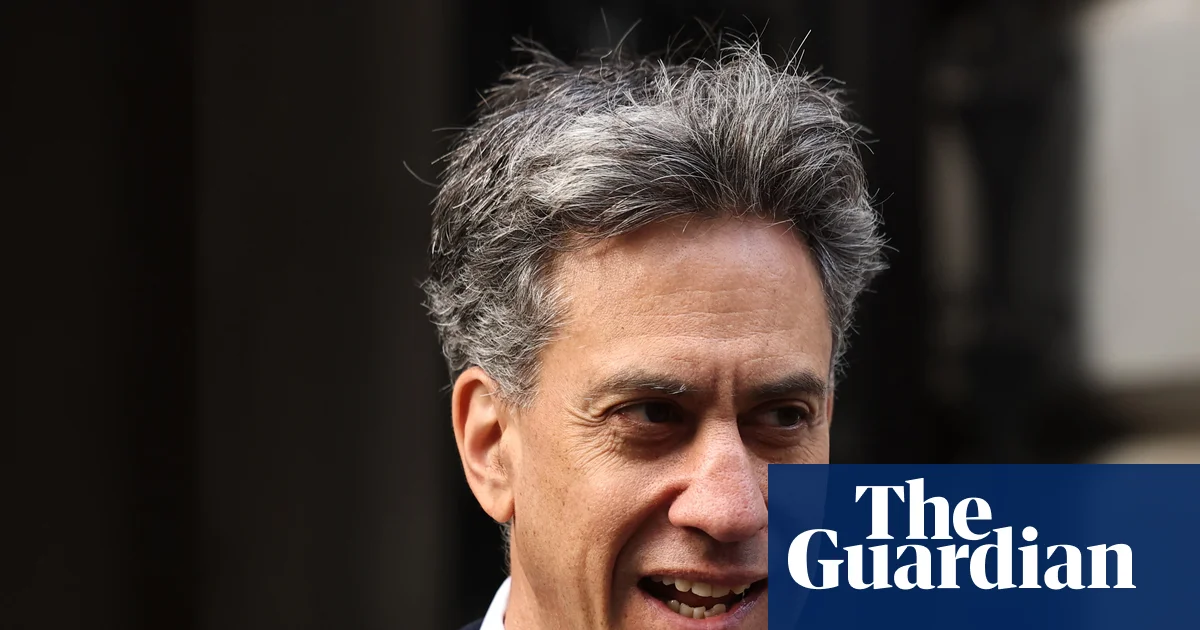
Ed Miliband will announce what he has described as a broad reset of the UK's relations with Israel on Tuesday, promising the government will take a more active approach in supporting the Palestinian cause. This was reported by Qazaqyia.kz citing The Guardian.
In an intervention that is expected to draw fierce criticism from the US and Israel, the foreign secretary will impose a UK ban on the trade in goods and some services from illegal Israeli settlements. He has also told civil society groups he is determined to reassert the call for a two-state solution to the conflict with an appeal for the protection of Palestinian rights and respect for international law.
In his statement to MPs, Miliband is expected to use firmer language than his recent predecessors in calling out the humanitarian injustices facing Palestinians in Gaza.
The steps he lays out are likely to fall short of the full set of demands made by Palestinian advocacy groups, but they will still be seen as a sign that the UK is moving beyond traditional rhetorical support for a two-state solution towards active steps to forestall the expansion of illegal settlements in the West Bank – widely seen as intended to destroy the prospect of a Palestinian state.
Israel has already threatened reprisals over Miliband's previous claim that the Israeli military has held back aid into Gaza, and the US ambassador to Israel, Mike Huckabee, has claimed the Labour government is gripped by Jew hatred. The prime minister, Andy Burnham, spoke to Donald Trump and key Gulf allies such as Qatar on Monday to brief them on his plans in the region.
Miliband's intervention comes as polling released to the Guardian shows Britons across the political divide strongly favour banning trade with illegal Israeli settlements by a margin of more than two to one.
The polling, conducted by Opinium and published by the European Council on Foreign Relations, shows that only 18% of UK adults oppose a ban on trade in goods with Israeli settlements, compared with 46% in favour. Support rises to nearly three-quarters when those who did not express an opinion are excluded.
Miliband's statement will stand by his claim that the Israel Defense Forces, in the name of security, are placing unnecessary controls on aid entering Gaza, creating a horrific situation. It is understood, however, that he is sceptical of the UK's leverage to resolve the situation apart from calling for the restrictions are lifted.
His claim that aid had been held back was hotly denied by the Israeli foreign ministry at the weekend.
Miliband is also likely to go further than his predecessors in placing the settlement measures firmly in the context of upholding international law, including the findings of its key institutions, the international criminal court and the international court of justice (ICJ), two bodies under attack by the US.
The package is not likely to include sanctions over aid restrictions into Gaza, or to describe what has happened in the territory as a genocide. The UK has kept open the option of joining countries such as South Africa at the ICJ to claim Israel is in breach of the court's previous rulings.
But by acting decisively on trade, Miliband has set aside warnings that a polarising UK intervention might help Benjamin Netanyahu's chances in Israel's 27 October election. British sources pointed out that even Israeli military officials have warned their prime minister that the IDF will struggle to defend new settlements and outposts in the northern West Bank, because they lack basic security infrastructure and were established for political rather than security reasons.
Despite US criticism of the UK stance, Washington has also been putting pressure on Netanyahu on the settlements issue to the point that he has called for some to be dismantled saying they were not established with the necessary permits. Israel has previously demolished some outposts, but they are often rebuilt soon after.
The UK ban on trade in settlement goods, long parried by the Foreign Office as impossible to implement, is in line with the ICJ advisory opinion in 2024 requiring governments not to aid or assist an Israeli occupation of Palestinian territory, not just illegal settlements. The UK government has never formally replied to the opinion, but ministers in Sir Keir Starmer's administration said it was broadly compliant.
The measures on settlements may require primary legislation to ban the trade in goods rather than an easier statutory instrument, while the trade ban will extend to some services including financing and advertising illegal settlements.
The Foreign Office has previously argued that it was impossible to distinguish between products emanating from illegal settlements and those from Israel. The UK officially regards all Israeli civilian settlements as illegal.