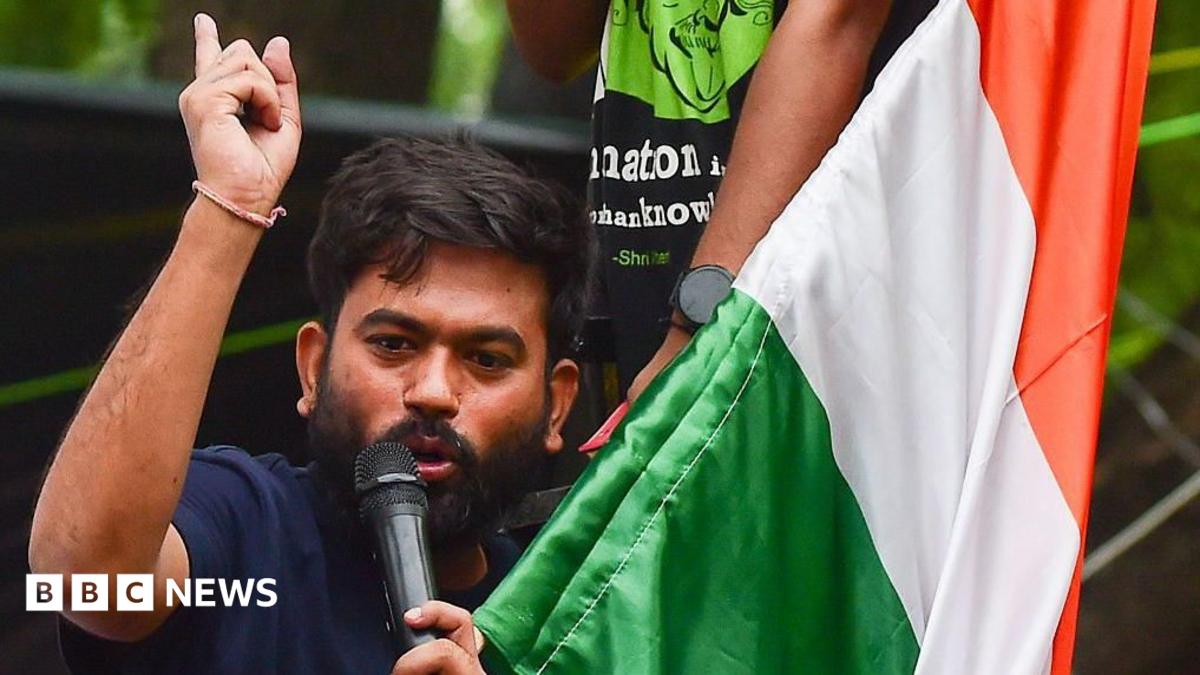
Thousands have gathered again in the Indian capital Delhi a day after a police crackdown on supporters of India's Cockroach Janta Party (CJP), a youth-led movement seeking education reforms and resignation of Education Minister Dharmendra Pradhan. This was reported by Qazaqyia.kz citing BBC News.
Tens of thousands of young men and women had turned up for Monday's protest and tried to march on parliament, defying a police ban. Central Delhi witnessed overwhelming violence, with at least 60 protesters wounded when police used batons and tear gas on them. Policemen also tore down the stage and makeshift tents at the main protest venue. Police said 118 of their personnel were also injured and 70 protesters have been detained.
Police and Prime Minister Narendra Modi's government have not commented on the use of sticks and tear gas against protesters. Opposition parties have condemned the violence. Leader of the opposition Rahul Gandhi said the students' demands were "legitimate" and described Modi "as the most anti-youth prime minister India has ever had". On Tuesday, he led members of his Congress party, including many MPs, in a march to Modi's house "to demand answers from him for the brutalities against young students yesterday".
The CJP is a satirical political movement inspired by remarks made earlier this year by India's chief justice, who used the word "cockroach" to describe unemployed young people turning to journalism and activism. After the comments sparked outrage, he said he had been referring only to those with "fake and bogus degrees".
Protesters, who have been camped for the past month at Jantar Mantar, a 300-year-old observatory in Delhi which is often the site of protests, gained global attention after activist and educationist Sonam Wangchuk joined them on 28 June and began an indefinite hunger strike in support of their demands. He was forcibly removed from the protest site by the police on Saturday and taken to hospital where he continues to fast.
The movement has broadened into one of the most visible expressions of public dissent against Modi in recent years. Wangchuk and CJP founder Abhijeet Dipke have received support from most of the major opposition parties, farmer leaders, activist and celebrities, including Bollywood actors.
The government did not engage with the demonstrators until Monday when Health Minister JP Nadda met some CJP leaders to hear their demands. The meeting took place against the backdrop of tens of thousands of people turning up from all over the country to participate in the CJP's call to march to parliament on the opening day of the monsoon session. Nadda said: "The meeting took place in a cordial atmosphere. I have requested all the protesters to end their sit-in and assist the administration in restoring normalcy." CJP spokesperson Saurav Das said the group's 10-minute meeting with Nadda ended with a promise that the government would look into the matter, but no concrete assurances.
At one point on Monday evening, it seemed like that the CJP might be willing to call off their protest following their meeting. But their stance appeared to harden after internet services - apparently blocked in the area throughout the day - were restored, revealing the scale of the violence. During the day, I saw protesters bring injured people to Jantar Mantar, including a young man bleeding heavily from a head wound as volunteer doctors bandaged him, and another student with a broken leg. Around the time the protesters were meeting Nadda, police and paramilitary forces moved in to clear Jantar Mantar. Among them were plainclothes officers, many with their faces covered, who joined uniformed police in chasing protesters and beating them with sticks.