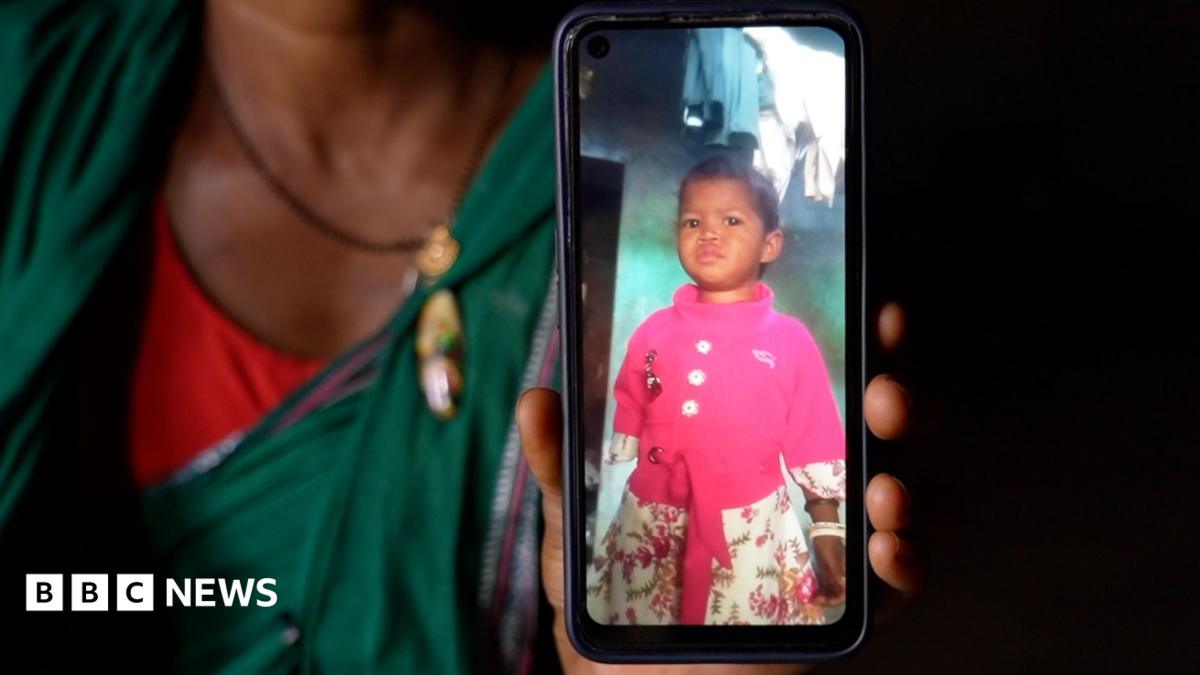
At least 32 child deaths have been recorded since May in a cluster of remote villages in Balaghat district in India's Madhya Pradesh state. This was reported by Qazaqyia.kz citing BBC News.
The victims ranged from babies just three or four months old to an 18-year-old, and most were Baiga, one of India's 75 "particularly vulnerable tribal groups".
Officials attribute the deaths to mainly measles and malaria, possibly aggravated by malnutrition and delays in treatment. They believe eight to 10 deaths were associated with measles, roughly another 10 with malaria, with several children suffering more than one infection. The precise cause of every death is less certain.
"I have never seen an outbreak like this. My father was a two-term lawmaker, and I have served three terms, but neither of us has seen so many children die in such a short time," Sanjay Uikey, who has represented the area since 2013, told me.
But disease is only part of the story. In remote, forested parts of Balaghat, where Maoist insurgency once took root, reaching a health centre can be a challenge in itself.
In the monsoon, the terrain can make that journey harder. Paddy fields glow against red earth and low, forested hills. Narrow dirt tracks wind between fields and mud homes, often becoming slippery and impassable in heavy rain.
The countryside is lush, but the homes are sparse. Most Baiga houses have low mud walls, rough timber and bamboo, and tiled or thatched roofs patched with plastic against the rain.
Some homes are accessible only by these tracks. Doctors investigating the deaths have travelled through the mud in tractors. On a recent visit, we walked nearly 2km (1.2 miles) uphill to reach some of the more remote homes. The surrounding jungle was dotted with the graves of children who had died.
The nearest state hospital, a 100-bed facility in Birsa, is about 70km away. For families without vehicles, reaching it can mean muddy tracks, a makeshift bamboo stretcher or a motorcycle - and a day's lost wages.
When Bamita became seriously ill, the family did not get her to hospital. It was raining heavily. The tracks were muddy and slippery, and the family had no way of transporting her.
"If I was able to take her to hospital she might have lived," Koushila says.
Her other daughter, Ankita, keeps asking what happened to her sister. The six-year-old has been told what many children in these villages are told: "Mata aa gayi" - the goddess has arrived.
For some Baiga families, some illnesses - like chicken pox - are seen as the arrival of a disease goddess, who must be appeased rather than treated. Families perform a seven to nine-day ritual of bathing and offering cool water and neem leaves to the local disease goddess. Many believe that treating the patient before the ritual is completed could cause death.
For weeks, such beliefs shaped how families responded to sick children. Then the scale of the deaths began to emerge.
On 21 July, Parshuram Dhurwey, a local village council chief, heard that two children in the same household in Bondari village had died. The next morning, he heard of another death. He called local officials and went to the area.
"Every other child was sick," Dhurwey says. "They had fever, they had rashes. Many were undernourished."
When government medical officer Nimish Gautam arrived, he found severely dehydrated children. The first case he saw was a teenage girl with several days of fever and rash, whose blood sugar appeared dangerously low. Her family refused to let the health team examine her properly.
"Police were brought in to persuade them to take her to a health centre. The family still refused," Gautam told me. "They said if we took her for treatment, she would die. So we kept her under observation, and she recovered."
In one village, Dhurwey says, officials forcibly entered homes and took five seriously ill children to hospital. All recovered.
By the time the outbreak became unmistakable to local authorities, children had already been dying for weeks. By September, Dhurwey says, 10 children aged about 18 months to 14 years had died across the four villages in his council - Adori, Kundekasa, Bondari and Usri.