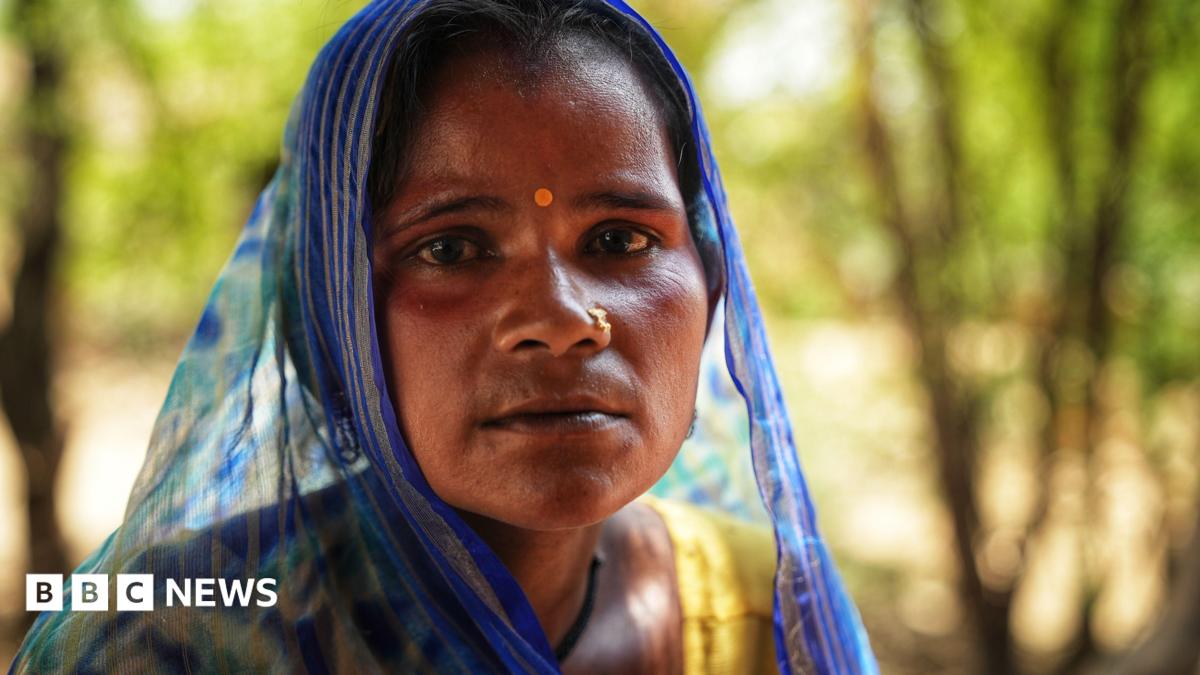
In the arid Bundelkhand region, members of the Dalit (formerly untouchable) community say access to water becomes harder in the scorching summers. This was reported by Qazaqyia.kz citing BBC News.
A couple of months ago, just after sunrise, 40-year-old Mamta began the first of as many as 10 journeys she would make that day. Carrying three empty plastic buckets, she walked a few hundred metres to the nearest handpump in her village in Jalaun district, in the drought-prone Bundelkhand region of northern India. Temperatures in parts of the region were soaring above 40C.
The taps installed under a government drinking water scheme had been dry for two years, she said, leaving most of the village's 1,000 residents dependent on a handful of handpumps. Mamta said collecting enough water for her 11-member family and their livestock took hours. But the heat was not her only obstacle.
Mamta belongs to the Valmiki community, part of the Dalits - groups once regarded as "untouchable" under India's centuries-old caste hierarchy and which continue to face widespread discrimination. She said she waited until members of the village's dominant castes finished using the handpump before approaching it. "If they are standing there, we cannot fill water. We have to wait until they leave," she said.
Afterwards, she said, some upper-caste residents poured water over the pump to "cleanse" it. Bundelkhand, a semi-arid region that spans several districts in the states of Uttar Pradesh and Madhya Pradesh, is notoriously drought-prone. It faced several major droughts between 2002 and 2016, making it almost a symbol for water scarcity in a country where several regions face similar hardships.
The rocky terrain of the Bundelkhand plateau means it can store little groundwater. Erratic rainfall and hotter temperatures have also made access to water unpredictable despite several government and community-led conservation efforts. A study of more than a century of weather records found temperatures had risen across almost the entire region, and in recent summers, parts of Bundelkhand have neared 48C.
Residents and researchers say worsening heat and water stress are putting new pressure on an old divide. As more families compete for scarce shared water, Dalits who have long faced barriers in accessing it are encountering those inequalities more often. "Conflict over water is not new," said Mitashi Singh of the Centre for Science and Environment. "What is changing is the role hotter summers are playing in making water scarcer and intensifying tensions that already existed."
Local officials reject claims that the region faces water shortages or caste discrimination at public water sources. Dominant-caste residents interviewed by the BBC also denied discriminating against others, although they acknowledged growing pressure on water supplies.
Ram Gopal Singh, who is in his 50s, pointed to several abandoned village wells. "These wells have been dry for almost 20 years," he said. Other sources had dried up or become polluted, while unreliable tap connections had pushed more families towards handpumps. Everyone tried to collect water in the cooler morning hours, he said, leading to arguments over turns and how much each family could take. "But there is no caste-based dispute at these handpumps," he insisted.
Dalit residents interviewed by the BBC described something different. There is no formal queue at the pumps, they said. Instead, families try to collect water at different times to avoid confrontations. Mamta said she usually went very early in the morning or late in the afternoon. "The fear of being targeted stays with me throughout," she said.
About 50km away in Shahjahanpur, Shiv described a similar experience. He said members of his community would not approach the handpump while dominant-caste families were using it.