In India, hunger strikes have long been used as a political tool. Potti Sriramulu's 58-day fast in 1952 led to the creation of Andhra state. Now, Sonam Wangchuk's 19-day fast demands education reforms. This was reported by Qazaqyia.kz citing BBC News.
Potti Sriramulu began his hunger strike in October 1952. He demanded a separate state for Telugu speakers. Then-Prime Minister Jawaharlal Nehru had repeatedly resisted this. Sriramulu died on the 58th day. After his death, protests erupted across Telugu-speaking regions. Nehru announced the creation of Andhra state days later. Subsequently, the States Reorganisation Commission was formed, and states were reorganised on linguistic lines.
Historian Ramachandra Guha has written that Potti Sriramulu is a forgotten man today, but he had a more than minor impact on the history and geography of his country. One man's empty stomach helped redraw the world's largest democracy.
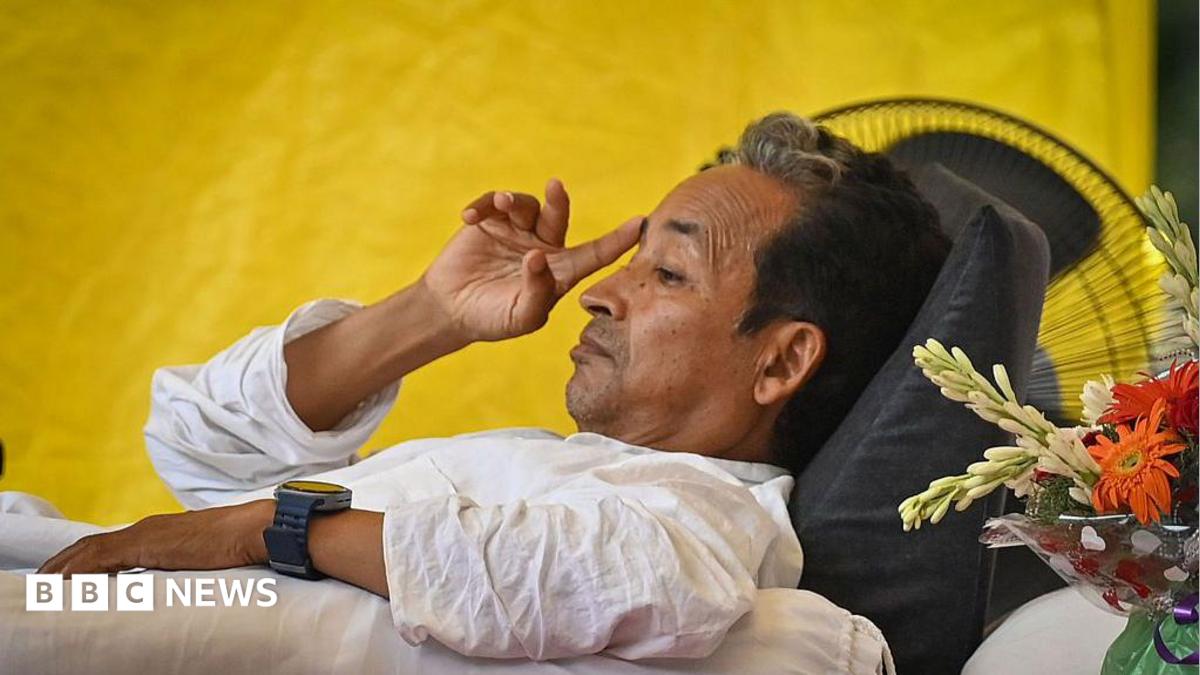
Currently, educationist and climate activist Sonam Wangchuk's hunger strike is drawing attention. The 59-year-old has survived for 19 days on salt water alone, losing more than 9kg. He is protesting in support of an online satirical movement, the Cockroach Janta Party (CJP), demanding education reforms. The Delhi High Court has ordered the government to monitor Wangchuk's health and provide treatment if needed.
No country has woven fasting into its political life quite like India. Elsewhere, protesters block roads or hold marches. Indians do those things too, but they also stop eating. The practice predates the republic by centuries. Hinduism, Buddhism and Jainism all attach moral significance to voluntary self-denial. Mahatma Gandhi transformed that ancient language into modern politics. He insisted a fast was not blackmail but an act of suffering intended to awaken rather than coerce.
Between 1918 and his assassination in 1948, Gandhi fasted repeatedly against religious violence, caste discrimination, and political discord. He undertook at least 15 major fasts. His longest lasted 21 days. His final fast in January 1948 lasted five days and helped restore communal peace in Delhi.
When Gandhi went on a fast in Calcutta (now Kolkata) to stop bloody religious rioting in 1947, the British-owned Statesman newspaper noted that never had he fasted in a simpler, worthier cause.
Independent India inherited the habit. There have been hunger strikes demanding farmers' rights, affirmative action, environmental protections, anti-corruption laws, and the repeal of controversial security legislation.
Activist Anna Hazare's 13-day fast in 2011 gave fresh momentum to an anti-corruption campaign. Irom Sharmila refused food for 16 years protesting against the Armed Forces (Special Powers) Act in India's north-east, surviving only because authorities force-fed her through a nasal tube. Medha Patkar has repeatedly undertaken prolonged hunger strikes to demand fair compensation and rehabilitation for people displaced by big dam projects.
Sayantan Saha Roy, an anthropologist at the University of Connecticut, says hunger strikes are a global form of protest, not uniquely Indian. Across the British Empire, the hunger strike emerged as a shared language of democratic, anti-colonial resistance. But in India, where governments can become deeply unresponsive, protesters often see fasting as the only way to force those in power to act.
Saha Roy says Gandhi transformed the hunger strike into an enduring moral and political act. As the protester's body weakens, moral and political pressure on those in power grows. However, that pressure depends on an audience. Hunger strikes have to be performative to be persuasive. He points to the Irish hunger strikes in the 1970s and 80s as an example.
Sonam Wangchuk's hunger strike highlights the complexity of political protest in modern India. His health has deteriorated, prompting court intervention. This case raises questions about the ability of hunger strikes to effect political change.