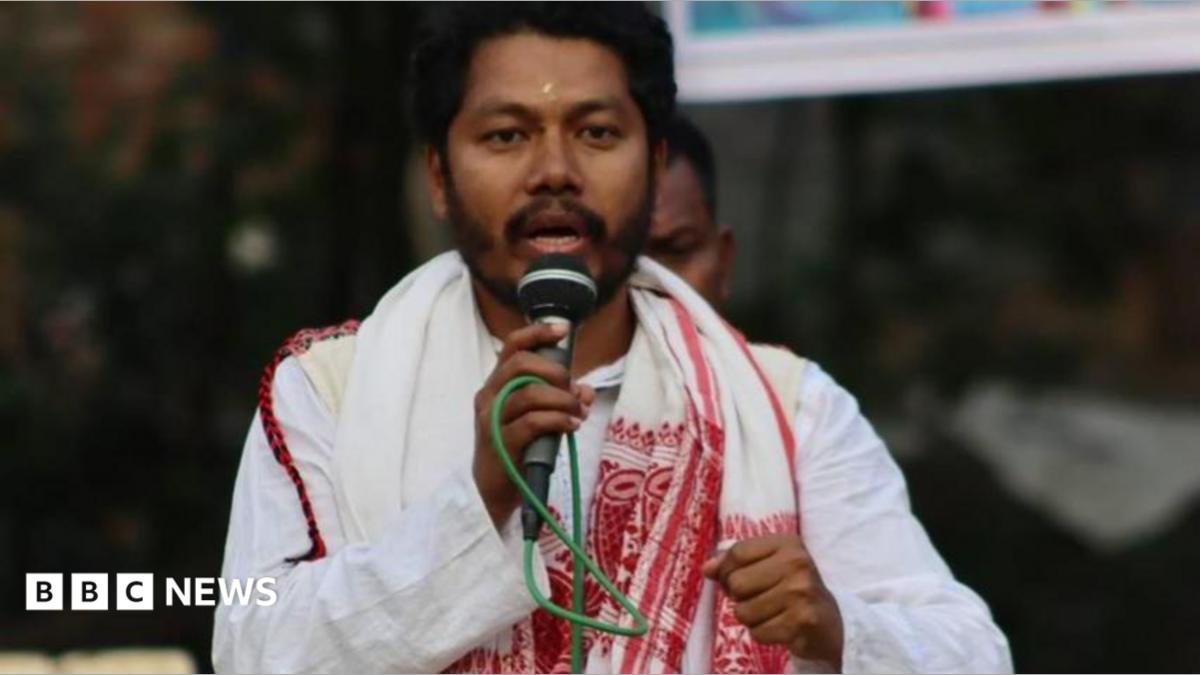
On 30 July, the day Pranab Doley was set to be released from jail, his father and lawyer arrived at the prison in the northeastern Indian state of Assam to take the activist home. This was reported by Qazaqyia.kz citing BBC News.
This was reported by Qazaqyia.kz citing BBC News.
Doley, 40, had been arrested weeks earlier after joining a June protest against a proposed luxury hotel near Kaziranga National Park, a Unesco World Heritage Site whose grasslands, wetlands and forests are home to elephants, tigers and the world's largest population of one-horned rhinos.
A court had granted him and four others bail on 29 July. But the Assam government invoked the National Security Act, a sweeping law that allows authorities to detain people for extended periods without trial, and his release was denied.
The government's grounds for detaining him, set out in an order seen by the BBC, draw on nearly a decade of allegations against Doley. It cites 13 criminal cases registered since 2017 and describes a pattern of unlawful assembly, intimidation, obstruction and violence. It also alleges suspicious foreign transactions and questions the source of funds for a series of overseas trips.
These charges sparked anger, with critics accusing the government of using a draconian law to scupper a protest against the hotel project.
His lawyer Mrityunjoy Pegu said most of the older cases had been resolved and that only two were pending before Doley's latest arrest - which he had declared in his affidavit when he contested unsuccessfully as an independent candidate in this year's state election.
"He is an activist who fights for people's rights," Pegu told the BBC. "That is why the police had registered some cases against him."
Doley's case has drawn attention to the protest he took part in - and led to a wider debate over land, conservation and development around Kaziranga.
Officials say the new five-star hotel, to be built across 10 acres, will bring investment, jobs and wealthier tourists to Kaziranga. But dozens of families say they are being displaced from land they have cultivated for generations.
The district administration says the land being used for the project is owned by the government.
Deputy Commissioner Biswajit Phukan told the BBC that most protesting families have land registered in their names or those of their ancestors, which has not been taken for the project.
"It is not disputed that some persons may have been cultivating or otherwise using portions of the [project] land. However, the land parcel in question was never allotted or settled in the names of the persons who are presently protesting against the project," he said.
Authorities, he said, had provided financial assistance and land to eligible residents after verification, and promised job skills training to help locals find work.
Phukan declined to comment on Doley's detention, saying: "We do not wish to make any observation... that could prejudice the investigation or judicial proceedings" and added that the administration remained "extremely sensitive" to local concerns.
Activists say the dispute taps into a much older question of who has rights to the land surrounding Kaziranga park.
For Doley, that question is deeply personal. He grew up in a farming family near Kaziranga, on the floodplains of the Brahmaputra, where the river routinely shifts its banks and forces families to resettle.
As the river changes course, fields can disappear faster than official records can keep up, leaving families with uncertain claims to land they have cultivated for generations.
"My village has been displaced multiple times due to floods and erosion," Doley said in an earlier interview. "My parents, even today, don't have land rights."
He also saw how this plays out in Kaziranga. When the park floods, rhinos, elephants and other animals move towards higher ground, crossing farms and settlements, destroying crops and sometimes coming into deadly conflict with people.
These tensions shaped Doley's belief that conservation could not be separated from the rights of local communities. Protecting Kaziranga also meant protecting the people living alongside it.
One of his first major campaigns challenged alleged extrajudicial killings of suspected poachers inside Kaziranga; his work later widened to evictions, land acquisition and compensation.
At the UN Forum on Business and Human Rights in Geneva last year, Doley urged governments and businesses to protect indigenous communities from the costs of development.
In recent years, much of his work has revolved around fighting against the proposed luxury hotel.
The project dates to 2023, when the Assam government announced a partnership with the Saraf Group. The resort is being developed by Juniper Hotels, backed by Saraf and American hotel group Hyatt.
"A five-star hotel is going to be built in Kaziranga. People should be happy; tourists who spend money will come," Chief Minister Himanta Biswa Sarma told the state assembly in July.