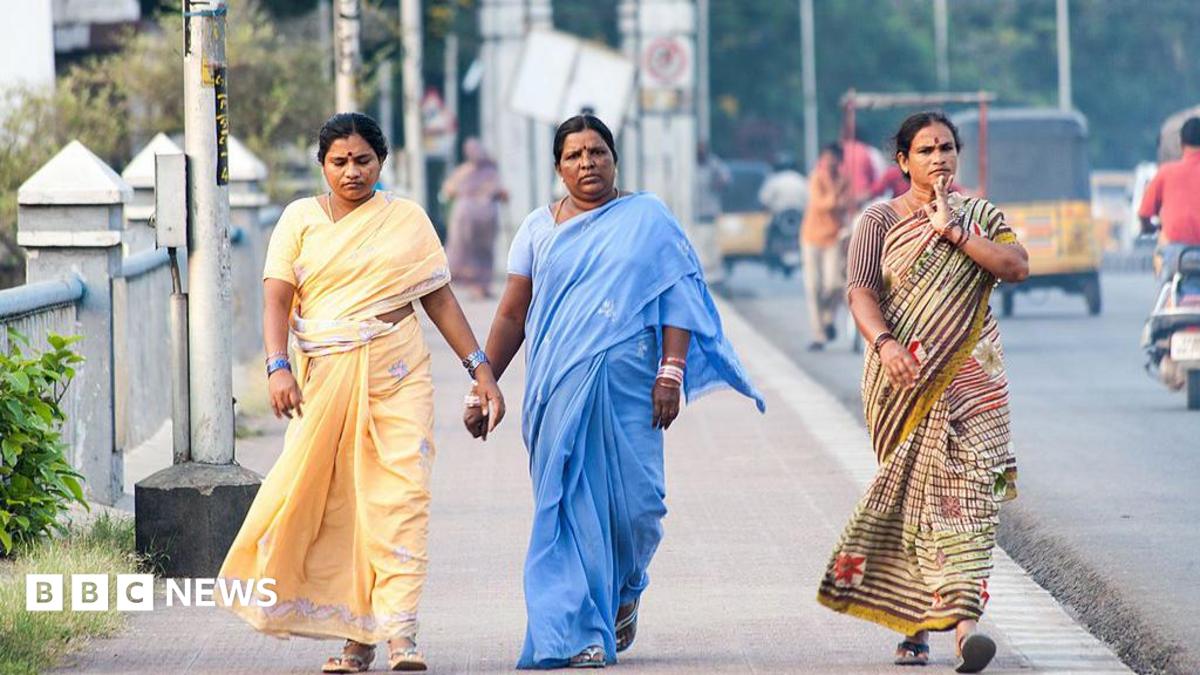
India's Supreme Court in June ruled that the right to walk safely on designated footpaths is a fundamental right. This was reported by Qazaqyia.kz citing BBC News.
The decision highlights the plight of pedestrians in Indian cities. According to census-based estimates, around 45 million people walk to work every day, compared with only about 5.4 million who commute in private cars, jeeps or vans.
Nearly a third of urban workers walk to work, and virtually every bus or metro journey begins and ends on foot. A 2019 survey found that 63% of all journeys in selected cities were made on foot, making pedestrians the largest group of road users.
However, pedestrian infrastructure is poor. Pavements are often broken, narrow, and inaccessible to the elderly, children, and disabled. They are blocked by motorcycles, parked cars, or construction. Zebra crossings are faded and ignored.
A landmark 2011 study of six Indian cities found that streets routinely fail pedestrians due to "poor and unsafe" infrastructure. The Walkability in Indian Cities report by CAI-Asia gave a median walkability score of just 47 out of 100, with the worst conditions around public transport terminals.
Geetam Tiwari, a transport scholar at IIT Delhi, says pedestrians have been "pushed to the margins of the road networks," forcing them to "jostle for space with motor vehicles." Officially, pedestrians account for about a fifth of road deaths, but independent studies estimate the share is closer to 30-40%.
Pedestrians are also the second-largest group of road accident victims after two-wheeler riders. In Delhi and Mumbai, they account for more than half of all road deaths. According to a World Bank study, crashes cost India an estimated 3-5% of its GDP each year.
The Supreme Court case arose from a tragedy: a five-year-old boy crushed by a truck while walking to school. Justice PS Narasimha wrote that walking is "the simplest of the simple human activity, inextricably connected to life." He declared, "The fundamental right to walk on demarcated footpaths shall override the privilege of a motorised vehicle."
The judgment challenges decades of Indian urban planning focused on expressways and flyovers. Rishi Aggarwal, founder of the Walking Project in Mumbai, has spent over a decade advocating for pedestrians. He says, "When people become apathetic, they stop observing the street."
In Mumbai, an estimated 15 million walking trips are made daily, yet these pedestrians are often overlooked. Rahul Goel, a researcher at IIT Delhi, points to governance issues: "Are footpaths maintained and cleaned? Does the city ensure they aren't encroached upon? In Delhi, many roads do have footpaths, but they're often unusable because of poor governance."
Poor design worsens the problem: cars parked perpendicular to the kerb often conceal footpaths, and footpaths are often too narrow or too high above the road, creating difficulties for the elderly and wheelchair users.
Indian cities still have much work to do to protect pedestrian rights. The Supreme Court's ruling is a significant step, but concrete actions are needed to implement it.