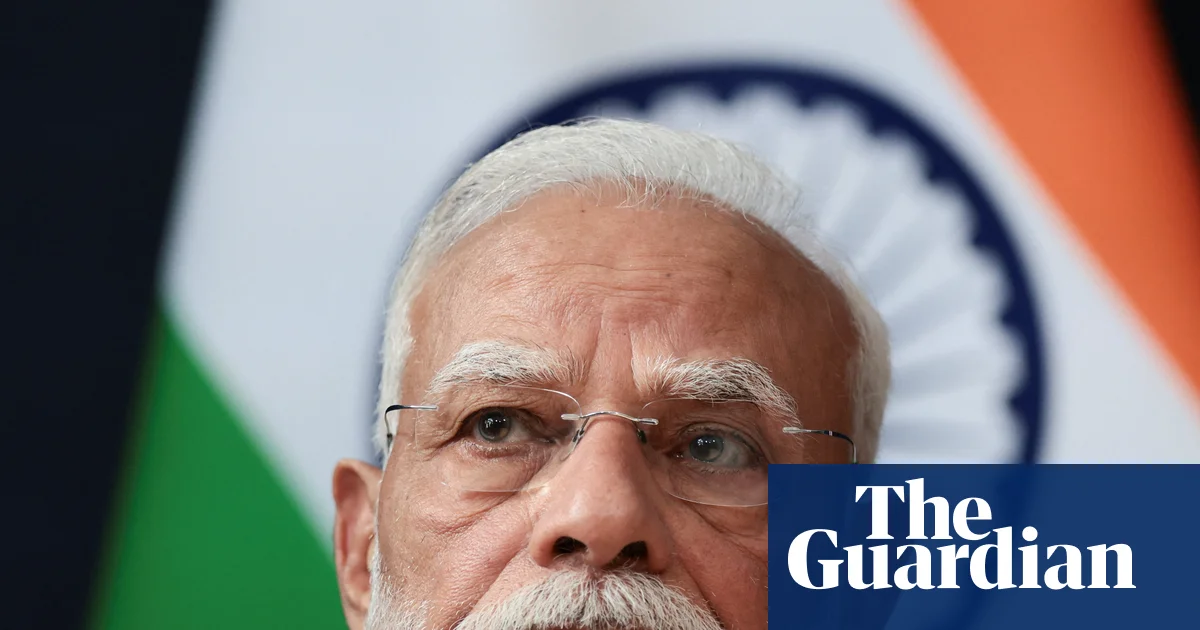
Indian Prime Minister Narendra Modi's first visit to Australia in three years has sparked calls for the federal government to raise human rights concerns, as excitement builds within the nation's Indian diaspora. This was reported by Qazaqyia.kz citing The Guardian.
Modi's visit begins on Wednesday evening and marks his third since becoming prime minister. It will see him return to Melbourne after more than a decade, with a stadium event expected to attract more than 20,000 people.
Anthony Albanese will meet his Indian counterpart in Melbourne, with the pair attending the Australia-India Annual Leaders' Summit running from 8-10 July.
Ahead of the three-day visit, the Australian federal police issued a warning to a young person alleged to have made a threat to the foreign leader, while an anti-Islamophobia organisation has pledged to take to the streets to protest Modi's visit.
Human rights organisation Amnesty International urged the Albanese government to raise India's human rights record in the bilateral talks, with a statement describing the visit as an "opportunity to reaffirm mutual commitment to human rights, democratic freedoms and the rule of law".
The statement called for Australia to encourage India to ensure journalists and human rights advocates could work free from intimidation and address discrimination of religious and ethnic minorities.
On Thursday, a community event to honour Modi at Marvel Stadium will be attended by thousands.
Pranav Aggarwal, a spokesperson for the Australia India Foundation, which is hosting the free event on Thursday, said a crowd of between 25,000 to 30,000 people was expected.
"It's a celebration of the Australia-India success story," he said.
"The event is a celebration as proud Australians to welcome the prime minister of the largest democracy in the world, a natural ally for Australia."
The "Melbourne Meets Modi" event will also feature performances representing Australia's Indian diaspora.
The non-profit organisation, Alliance Against Islamophobia, is planning to protest against Modi's visit on Thursday evening. The organisation said the demonstration would speak out against "bigotry and persecution", including anti-Muslim hate and caste oppression.
Critics of Modi, who was elected prime minister in 2014, say some of his policies are fundamentally discriminatory, including a citizenship bill which fast-tracked citizenship for refugees from some countries but excluded Muslim countries.
Modi's Bharatiya Janata party (BJP) champions Hindu ethno-nationalism, an ideology known as Hindutva.
Asked about planned protests, a spokesperson for Victoria police said it could not comment on security arrangements for dignitary visits for "operational reasons", saying the force "works closely with our law enforcement partners to ensure security arrangements are robust".
Ahead of Modi's arrival in Australia, the AFP issued a formal warning to an individual alleged to have issued an online threat against Modi.
"The AFP identified the source of an online threat towards a foreign head of state and spoke with an individual last Friday," an AFP spokesperson said.
"There is no current or impending risk to the community."
During Modi's last visit in 2023, he received a rock star reception, with more than 20,000 people attending a Sydney rally.
Modi last visited Melbourne in 2014. Since then, the city has become the home to the largest Indian-born community in Australia, according to the Department of Foreign Affairs and Trade.
Deepak-Raj Gupta, the national chair of the Australia India Business Council, said the Marvel Stadium event allowed the leader to speak directly to the country's Indian community.
"He's doing a rally … what he would usually do in India, but he's doing it overseas for the Indian diaspora to update them on the economy, on what's happening in India, where India is heading," he said.
Gupta said Modi returning to Australia for a third time demonstrated a maturing of the bilateral relationship.
"There's a lot of trade opportunity, which has been identified between Australia, India, especially on clean energy, education is one and critical minerals is another one," he said.
In 2020, Australia and India elevated their relationship with a "comprehensive strategic partnership". In 2022, both countries signed an interim trade agreement, with negotiations for a broader agreement continuing.