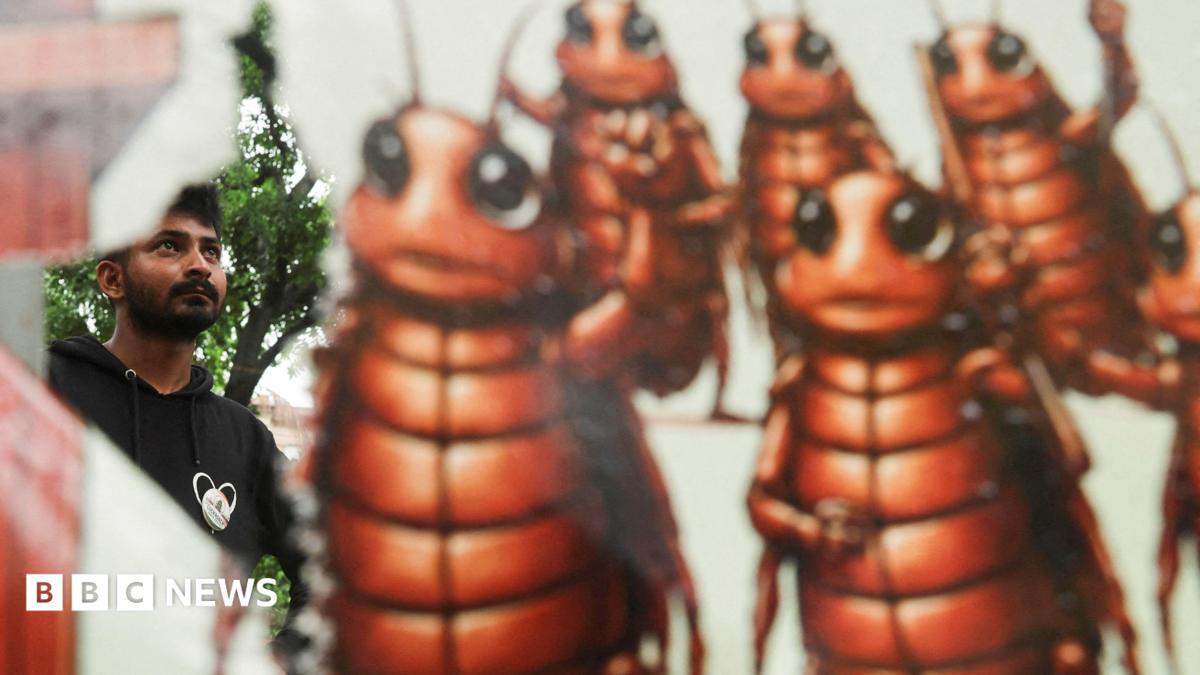
Chhavi (name changed), 20, paused outside a Delhi metro station on Monday on her way to a major anti-government protest. She balanced her phone against a railing and filmed a 'fit check' video showing her outfit. 'Going to get beaten by cops, guys,' she smiled into the camera. This was reported by Qazaqyia.kz citing BBC News.
Hours later, police fired tear gas and charged demonstrators with batons as tens of thousands of supporters of the Cockroach Janta Party (CJP) – a youth-led movement that grew from protests over exam irregularities into a broader campaign for government accountability – marched towards parliament. They demanded the resignation of Education Minister Dharmendra Pradhan over exam paper leaks and recruitment scandals. Pradhan has refused to resign, accusing the opposition of exploiting students for political gain.
Authorities suspended mobile internet around the protest site. By evening, protesters said scores had been beaten by police, while police said several officers had also been injured. When Chhavi uploaded the videos that evening, one thing stood out: she was smiling beside riot officers, flashing victory signs, filming through crowds and even interviewing an injured protester.
The clips were among thousands of reels, memes and first-person dispatches that flooded Instagram once protesters regained internet access. Some were raw with anger. Others were breathless, frightened or quietly defiant. Yet it was often the sardonic humour that drew the eye. One young woman calmly reapplied her lipstick in front of a line of riot police. Another joked she was 'serving face at the protest because the government couldn't serve justice'. One reel began as a routine outfit reveal before abruptly cutting to protesters fleeing tear gas. Another gave a deadpan 'review' of tear gas, rating its smell and sting like a new restaurant.
To many watching online, the humour seemed strangely at odds with the violence. For the young people making the videos, there was no contradiction. They described filming as almost inseparable from protesting itself. And when they turned to humour, it was almost always self-directed: joking about the kilometres logged fleeing baton charges or the absurdity of filming an outfit reveal moments before running into tear gas. The jokes did not erase the fear. They coexisted with it.
Experts say the trend hints at a broader shift in how a generation raised online experiences protest. 'Older generations separated political life from everyday life,' said Joyojeet Pal, a professor at the University of Michigan. 'Younger generations grow up with politics alongside their memes, their family pictures and their daily commutes.'
For Chhavi, documenting the protest continued once the crackdown began. Some commenters later accused her of treating the violence as content. 'But I was adrenaline-soaked, scared, petrified,' she said. 'It was either laugh in the face of fear or cry.'
Payal Arora, a digital anthropologist at Utrecht University, says the instinct to keep filming, even as the situation turned violent, has become increasingly common around the world. 'The act of capturing a protest is often an end in itself,' she said. 'Their message is more like: "This happened. We were there. We will remember."'
Nishant Shah, director of Digital Narratives Center at the Chinese University of Hong Kong, argues: 'People often mistake that humour for detachment. In reality, it serves almost the opposite purpose. Politics is everyday, emotional and experiential.'