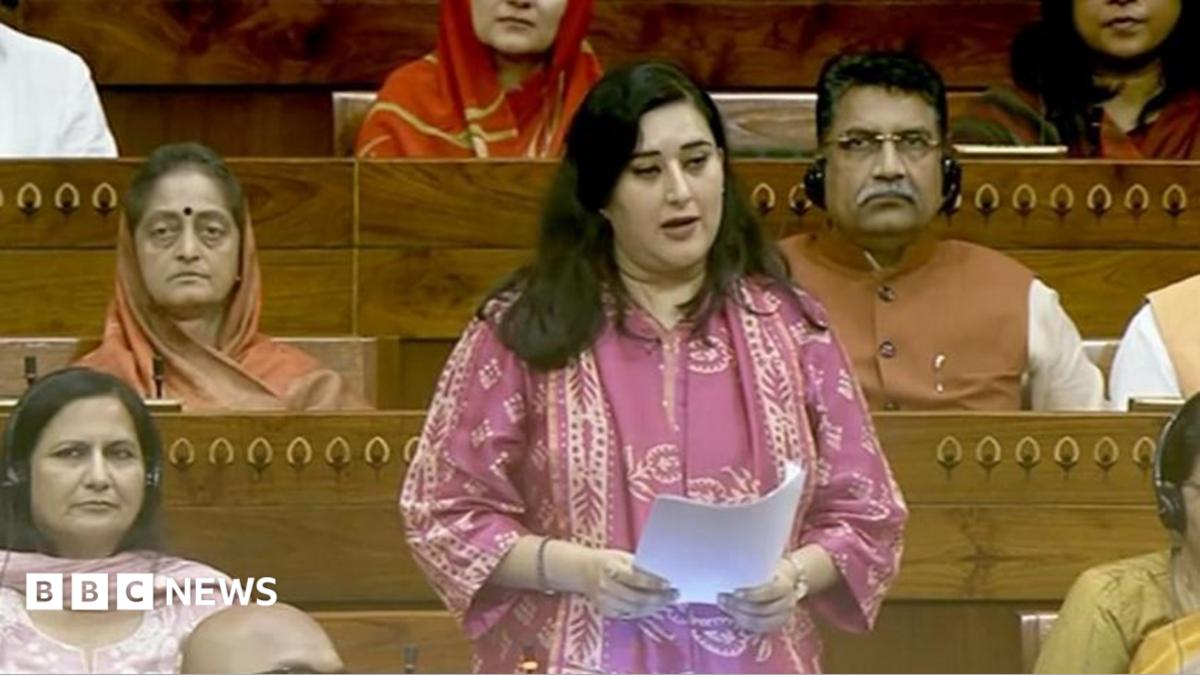
The language of India's young, perpetually-online population has finally reached one of its oldest institutions. Days after a youth-led protest movement forced the resignation of education minister Dharmendra Pradhan, India's parliament found itself speaking the protesters' language. This was reported by Qazaqyia.kz citing BBC News.
Until recently, those words belonged to Instagram comment sections, group chats and meme pages. On Tuesday, they echoed across the Lok Sabha (lower house of parliament) instead. As MPs debated a new anti-exam leak bill, introduced by the government after weeks of protests led by the Cockroach Janta Party (CJP), Gen Z slang flew freely through the chamber.
Shiv Sena party's Shrikant Shinde accused the opposition of being "MIA" - missing in action - gripped by "FOMO", or the fear of missing out, before eventually becoming "delulu", Gen Z shorthand for detached from reality. Congress leader Deepender Singh Hooda, meanwhile, invoked the viral protest catchphrase "waste-guna-huiya" - a deliberately nonsensical meme popularised during the demonstrations - to poke fun at the government.
Government lawmakers embraced the internet's lexicon too. Bansuri Swaraj of the ruling Bharatiya Janata Party (BJP) declared that Prime Minister Narendra Modi had "clocked it" - Gen Z slang for getting something right or spotting the solution - by introducing the law. Her fellow MP Tejasvi Surya accused the opposition of being "delulu" for criticising the bill after failing to pass similar reforms while in power.
Across the aisle, opposition leader Supriya Sule briefly stepped outside the debate to marvel at the absurdity of the moment. "Why are we getting into the lingo of Gen Z?" she asked. Moments later, she was using "delulu" herself.
It was an unusual moment. A movement that had begun online, fuelled by memes and Instagram reels, had not only forced the resignation of a cabinet minister but now seemed to be reshaping the language of the parliamentary debate that followed.
The CJP began as a satirical internet collective. But outrage over alleged exam irregularities soon turned it into an unlikely rallying point for broader frustrations over unemployment, failing institutions and political indifference. The movement was organised on WhatsApp, coordinated on Telegram and lived on Instagram. Its politics unfolded through "fit checks" - showing your outfit - "Get Ready With Me" videos, first-person vlogs, memes and sardonic edits. Protests became reels within hours, drawing millions of views.
The government's response increasingly unfolded on the same platforms. Modi, whose political rise has long been intertwined with social media, joined the digital battle with selfie-style videos and direct appeals to young people as the protests gathered momentum. Opposition MPs later mocked some of those efforts in parliament, arguing it was easier to change camera angles than answer students' concerns.
It would be tempting to see all this as evidence that Indian politics had suddenly discovered Gen Z. But Rahul Verma, a political scientist at the Centre for Policy Research, cautions against reading too much into a single parliamentary debate. Politicians have always borrowed the language of popular culture, he says. "They have an understanding of where their electorate is. That's their job." Parliamentary speeches have long borrowed from cricket, advertising and popular cinema. In 2019, the catchphrase "How's the josh?" leapt from Uri: The Surgical Strike into the political mainstream.
So the language may be new, Verma argues, but the instinct behind it is not. Rather than signalling a fundamental shift in Indian politics, he says it may simply reflect politicians doing what they have always done: trying to speak the language of the voters they hope to win over.
But internet slang is different. Unlike a Bollywood catchphrase or a cricketing cliché, it isn't coined by scriptwriters or sporting heroes. It emerges from millions of online users, evolving collectively, mutating at breakneck speed and often disappearing as quickly as it appears. That, says digital anthropologist Payal Arora, is what makes its journey into parliament significant. "Language is often the first thing politics borrows when it is trying to connect with a new constituency," she says. But borrowing a generation's vocabulary, she argues, is easier than engaging with the frustrations that produced it.