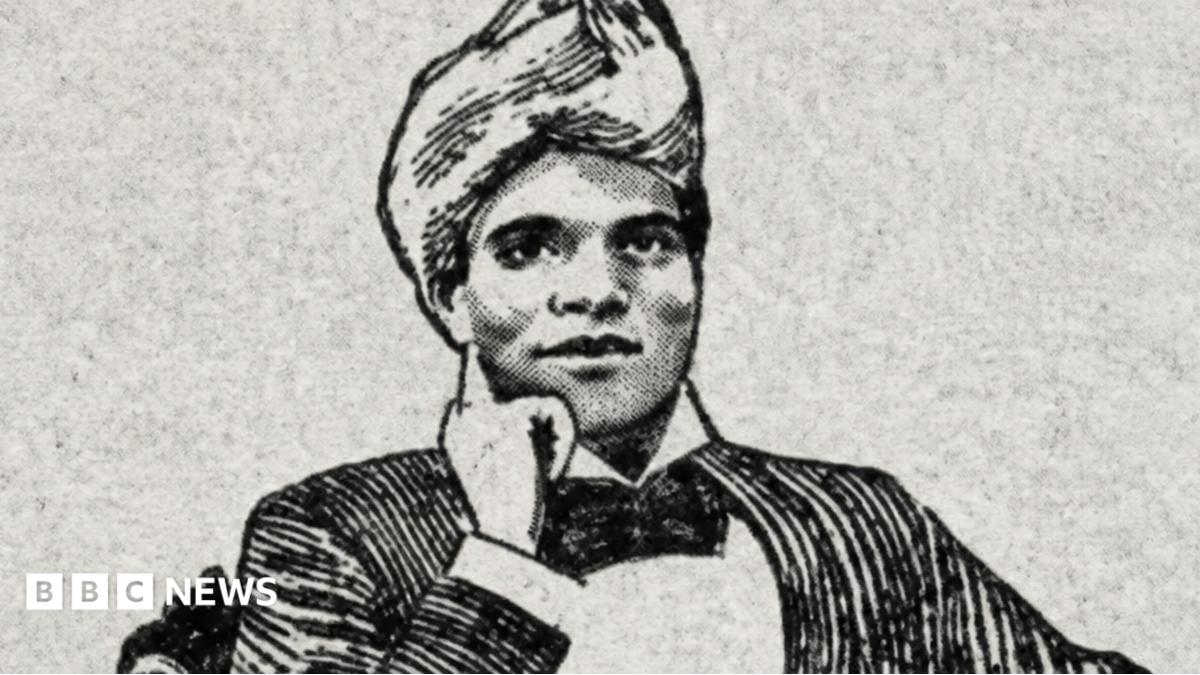
One hundred and twenty-five years ago, in 1901, an Indian chef opened what was almost certainly the first Indian restaurant in the US. This was reported by Qazaqyia.kz citing BBC News.
Ranji Smile was one of the most colourful and enigmatic figures to shape the American food scene. In the summer of 1899, Smile sailed from London to New York. We know hardly anything about his origins and early life, not even his real name.
"Ranji" was probably a nod to the Indian cricketing sensation KS Ranjitsinhji, then a star attraction at Test matches in Britain. "Smile" could have been an anglicisation of "Ismail".
Whatever his origins, Smile possessed an uncommon knack for reinvention. Once through the portals of Ellis Island, he appended a new name to his identity, something more in keeping with America's egalitarian promise: Joe.
Joe Ranji Smile arrived in New York to work at Sherry's Restaurant, a glittering new establishment on Fifth Avenue. In London, he had been a curry cook at the Cecil and Savoy hotels. Here, according to an 1899 profile in Harper's, he was noticed by Sherry's owner, Louis Sherry, who invited him to bring his culinary skills across the Atlantic.
Late Victorian London already boasted an Indian dining scene: as early as 1810, Sake Dean Mohamed, a native of Patna, had opened his Hindostanee Coffee House near Portman Square, plying customers with both curry and hookah.
Manhattanite tastebuds lacked much exposure to masala. There was, however, growing curiosity about India and its culture. Swami Vivekananda, the spellbinding orator and exponent of Hindu philosophy, enthralled audiences during his visits to the city in the 1890s. At the same time, more Indian sailors, students and professionals trickled into New York. This was probably why Louis Sherry decided to add a curry cook to his kitchen staff.
At Sherry's Restaurant, Smile joined one of the great culinary institutions of the American Gilded Age. Positioning itself as a rival to Delmonico's, New York's byword for fine dining, Sherry's catered to city plutocrats like the Astors and was famed for over-the-top dining experiences. During one such soiree, patrons marched their horses into a ballroom, saddled up and ate on horseback.
Smile, a skilled showman, thrived in this environment. Customers soon flocked to taste his preparations of Bombay duck, a glutinous lizardfish that is a delicacy along the western Indian coast, and novel creations like "Lettuce Ceylon".
Cooking and serving became a performance. Dressed in a satin coat and blue silk turban, Smile salaamed in front of customers before enquiring, "Will you have the curry hot or mild, sahib?" Pictures of Sherry's curry chef were soon splashed across newspapers and magazines. One headline said it all: "New York women go wild over him."
As his fame grew, Smile decided in 1901 to leave Sherry's and set up his own establishment, one exclusively devoted to Indian cuisine. For financial backing, he leaned on Roland R Conklin, a prominent financier and the inventor of an early version of the motorhome.
Omar Khayyam, Smile's Indian restaurant, opened in late 1901 at 325 Fifth Avenue. This was prime real estate, a block away from the original Waldorf-Astoria Hotel where, 29 years later, the Empire State Building would rise. Smile adorned the restaurant with Indian draperies and hanging lanterns.
As the New York Herald reported, a fleet of Indian waiters in "voluminous turbans" staffed the premises, as did a group of Indian musicians. Now quite the embodiment of the American immigrant success story, Smile eagerly awaited his customers and fans.
Alas, they never materialised. Within a year, Omar Khayyam shuttered. The New York Sun claimed that people had "tired" of Indian fare, dismissing it as a passing fad.
Smile's stardom, which had blazed so brightly in the Big Apple, also began to dim. Unfortunately, his showmanship and flare for theatrics shaded into deceit and criminal activity.
Smile began claiming that he was, after all, not an everyday Joe but rather a prince, the son of the emir of Baluchistan, a fictional title. And, before opening Omar Khayyam, he made a quick visit to Bombay, where he pronounced himself to be a guest at the upcoming coronation of King Edward VII in London and recruited a retinue of staff: valets, a dancing girl, and "mahouts to drive his herds of elephants".
All of this was reported in New York newspapers like the Times because, as a subsequent federal case against him alleged, Smile illegally trafficked this staff into the US to work at his restaurant. Instead of becoming a pioneer outpost of Indian gastronomy, Omar Khayyam nearly got Smile deported.
"Prince" Joe Ranji Smile evaded deportation (many in his retinue were not as lucky) and went on evolving his invented persona, all while wooing and marrying a series of impressionable young American women. He began claiming that Indian food was a secret elixir for female beauty. "The eye will grow lustrous, the complexion will be yet so lovely," Smile promised, displaying his wives as clinching proof.
Meanwhile, he honed his performing skills at Indian cooking demonstrations across the country. In Washington DC, Smile prepared dishes, including a dubious-sounding dessert called "bungalow", while a juggler and dancing girl entertained him. On his way to Chicago, as one newspaper in remote Idaho reported, he declared himself to be no longer the son of the emir but the brother of an even more fanciful figure, the "great Beglerberg of Baluchistan".