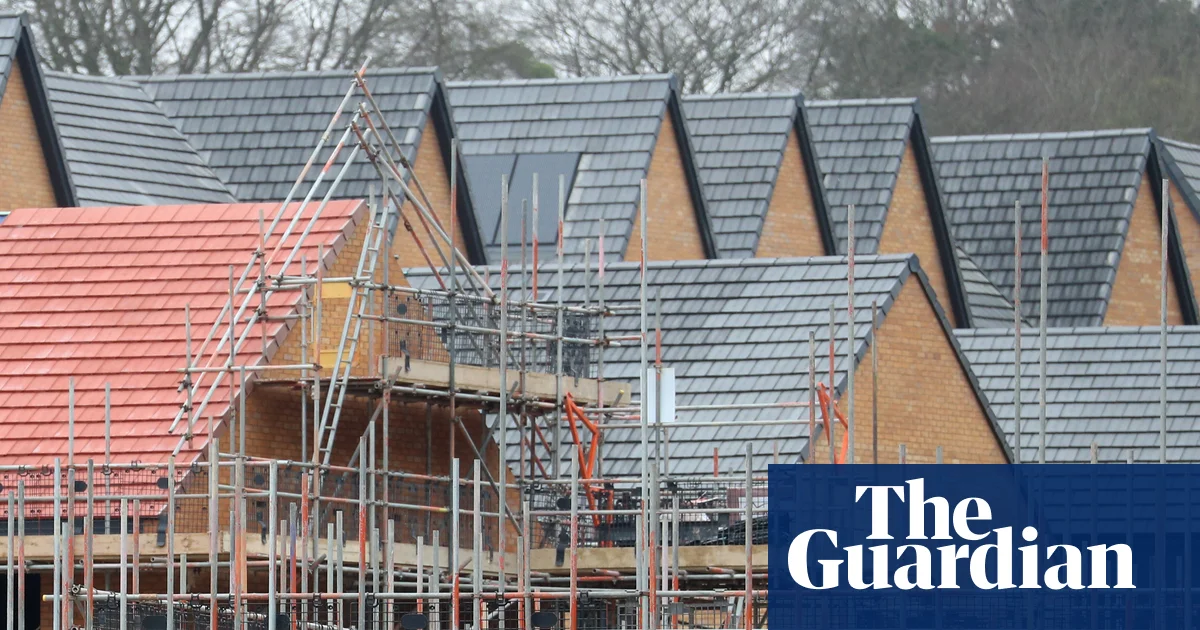
The government is unlikely to meet its target of building 1.5m homes before the next election. This was reported by Qazaqyia.kz citing The Guardian.
Angela Rayner, the communities secretary, acknowledged there was only a "slim chance" enough houses would be built. She made the statement on the BBC's Sunday with Laura Kuenssberg programme.
Manifesto pledge a "stretch target"
According to Rayner, the manifesto pledge to build 1.5m houses by the next election was a "stretch target". However, she said it was not being ditched and she was "definitely not giving up".
"It's a slim chance, but I'm definitely not giving it up. I think it's really important that we keep a target that it was always a stretch target," she said.
Inflation and construction costs hamper efforts
The government's target has been significantly hampered by inflation owing to the US war with Iran. Housebuilders have cut back the number of developments despite Labour's planning reforms, which were hoped to increase the numbers of new homes.
Rayner noted that international headwinds and construction costs are having a negative effect on the target.
Council houses take priority
Rayner returned to the role after Andy Burnham became prime minister. On Sunday she acknowledged for the first time that she could miss the target.
She said Burnham's main focus was now on building council houses, suggesting that was taking priority over efforts to increase the overall target.
"The prime minister wants us to make sure we're building council houses. He's made that absolutely, fundamentally clear," she said.
"We've just announced £10bn into a social and affordable homes programme. We're seeing home starts up by 15% last year, so we are making a difference," she added.
£10bn programme
Burnham recently backtracked on plans for cash from the 10-year affordable homes programme to be spent entirely on social homes, which he had suggested he was minded to do. Instead the £10bn will be spent on the mix of subsidised housing types in England, in line with the Starmer government's policy.
The funds will build 70,000 homes outside London, about 60% of which will be social rented houses. The rest will be other types of accommodation such as shared ownership schemes and sheltered housing. London will get another £6bn, which will be allocated at a later date.
Relaxing regulations for private builders
Ministers are keen to find other ways to relax regulations for private sector builders, including instructing councils to give a "default yes" approach to housing developments that are within a reasonable walking distance of well-connected train and tram stations.
These measures reflect the government's determination to address the housing crisis, but external factors such as inflation and construction costs are making it difficult to meet the target.