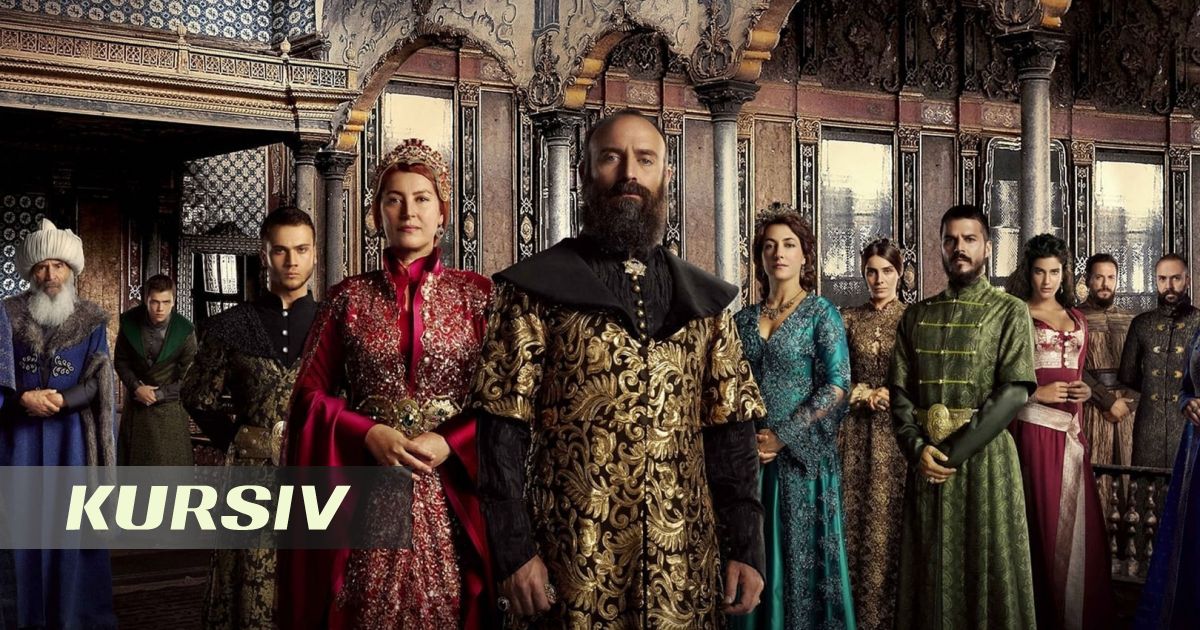
In 2001, the Turkish drama Deli Yurek ("Crazy Heart") aired in Kazakhstan. Few paid much attention—it seemed like just another foreign series on post-Soviet television. But as Associated Press notes, this broadcast marked the beginning of Turkish series exports—the dizi phenomenon now discussed in both academic journals and travel guides. This was reported by Qazaqyia.kz citing Kursiv Media.
The scale of dizi's popularity today is far from a local TV trend: a billion viewers—one-eighth of the world's population—from 170 countries, spanning Asia to the Americas, Africa to Europe.
These figures were cited earlier this year by Turkey's Minister of Culture and Tourism, Mehmet Nuri Ersoy, who announced that the government plans to incentivize series producers with subsidies of up to $100,000 per episode. With a caveat: support is promised to projects "meeting certain criteria" that adequately showcase the country's cultural and tourist attractions.
The reason for this "selective approach" is simple: such films, 20 years ago, spurred the development of not the usual beachside "all-inclusive" tourism, but series-driven tourism in the country. Today, dizi fans from around the world come to Turkey to visit the places they've seen (so many times!) on screen.
In Istanbul, behind the Galata Tower, lies Cafe Otantik—unremarkable in appearance, unless you've watched the series "Black Love" (Kara Sevda). This is where one of the most romantic scenes was filmed: lovers Kemal (a poor engineer) and Nihan (a wealthy married woman) carved their initials into a table. Now the table is covered with glass, a queue forms seven days a week for photos, and the cafe endlessly plays the series' soundtrack.
But Cafe Otantik is far from the only pilgrimage site for dizi fans—and not the main one. According to social media and guides, an approximate list of the most recognizable spots in Istanbul includes:
Topkapi Palace and Hagia Sophia—the starting point for fans of "Magnificent Century." The series route typically begins here. Topkapi Palace, the harem, the tombs of Sultan Suleiman and Roxelana, Hagia Sophia, and the Blue Mosque—this set of locations is firmly associated with the golden age of the Ottoman Empire, though the palace interiors and chambers were filmed not in the actual halls but in specially built pavilions. Tourists still come for the atmosphere: the nearby Grand Bazaar, where series characters haggled for silks and spices, is included in almost every such tour.
The Bosphorus—a universal backdrop for confessions and partings. The strait appears in virtually every Turkish series: the waterfronts serve as settings for romantic walks and loud quarrels followed by reconciliation. A Bosphorus cruise is not just a tourist classic but a chance to see dozens of familiar shots from the water. According to Turkish media, about 80% of dizi scenes are filmed in real homes, cafes, and parks, not in pavilions—explaining why almost any walk (including by water) becomes a game of "spot the location."
Bozdağ Film Studios—for those who prefer epics over melodramas. Fans of historical sagas like "Resurrection: Ertugrul" and "Establishment: Osman" should visit the vast Bozdağ Film Studios complex near Istanbul, where Ottoman and Byzantine fortresses have been recreated. Here, tourists take photos with actors in costume, watch equestrian stunt shows, and enjoy a far more staged experience than a stroll behind the Galata Tower—but that's exactly what they expect from such a visit.
Homes and Mansions—for fans of modern melodramas. A separate category of locations includes characters' residences: Korhan's mansion on the Bosphorus from "Yalı Çapkını" (The Kingfisher), Eda's house and Serkan Bolat's office from "Love Is in the Air" (Sen Çal Kapımı), and the mansion from "Black Love." Tours of some are only conducted between shoots—schedules must be confirmed in advance.
These (and many other) locations form the routes of "series guides"—a special category in Istanbul. Kazakhstani guides were among the pioneers: Asel Baikanova, a blogger and guide, came to Istanbul in 2014 for language courses and started watching Turkish series without subtitles to learn the language faster—and got hooked. She realized there were almost no Russian-speaking series specialists among Istanbul guides and decided to fill the niche. Today, Asel's dedicated Instagram page, @stambul_tureckiye_serialy, has 269,000 followers and many faces familiar to dizi fans. According to the blogger, organizing such a tour is simple: clients send a list of, say, 15 favorite series, and the agency creates a custom route of recognizable locations—from Eda's mansion to the sultan's palace from "Magnificent Century." Prices? Walking tours from €350, car tours from €700.
There are also "niche" tours—for example, exclusively "in the footsteps of Hurrem." A Kazakhstani Facebook user recounted a story about his "friend" (likely himself): after noticing that his elderly mother called less often, complained of being "useless," and saw her old ailments flare up, he sent her to Istanbul on a precise route: Topkapi Palace, Süleymaniye Mosque, Hurrem Sultan Hamam, and a Bosphorus cruise—exactly what she had seen on screen for years while rewatching "Magnificent Century." Needless to say, her health improved markedly after the trip.