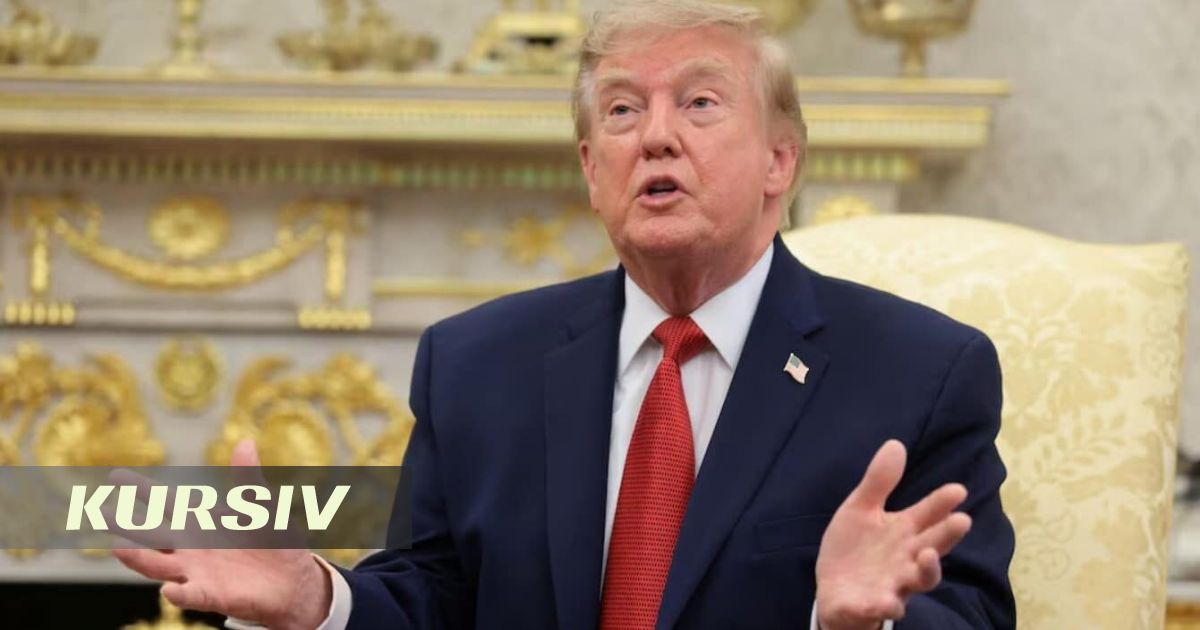
US President Donald Trump's approval rating has fallen to 33%, the lowest of his current term. This was reported by Qazaqyia.kz citing Kursiv Media.
According to the four-day Reuters/Ipsos survey, 33% of Americans approve of Trump's performance as president, while 64% disapprove. In the previous Reuters/Ipsos poll, the White House chief's rating stood at 35%.
The current figure is the lowest since Trump returned to power in January 2025. It also matches the lowest rating of his first presidential term — 33% in December 2017.
Reuters cites the prolonged US conflict with Iran as one of the main reasons for the president's declining popularity. Military actions have disrupted oil supplies through the Strait of Hormuz and raised gasoline prices, increasing pressure on American households.
About 80% of Americans believe US involvement in the conflict with Iran will last a long time. This view is held by 87% of Democrats and 71% of Republicans. Only 16% of respondents expect the conflict to end within a few weeks.
Trump himself has previously said that rising fuel prices are a justified price for preventing Iran from developing nuclear weapons. However, according to the poll, only about one in five Americans believes the war was worth the cost. Among Republicans, roughly half of respondents hold this view.
Amid rising living costs, Democrats have also begun to overtake Republicans on economic issues. About 38% of voters think the Democratic Party would handle economic policy better, while 35% prefer Republicans. Reuters previously reported that Democrats gained an advantage on this measure for the first time in about a decade.
The Republican advantage on immigration has also narrowed. About 40% of registered voters support their approach, while 38% support the Democrats'. The two-point gap is the smallest of Trump's current term. In January 2025, the Republican advantage was 26 points.
The ratings decline comes months before the US midterm elections on November 3. Republicans hope to keep their House majority, while Democrats aim to strengthen their positions in both the House and the Senate.