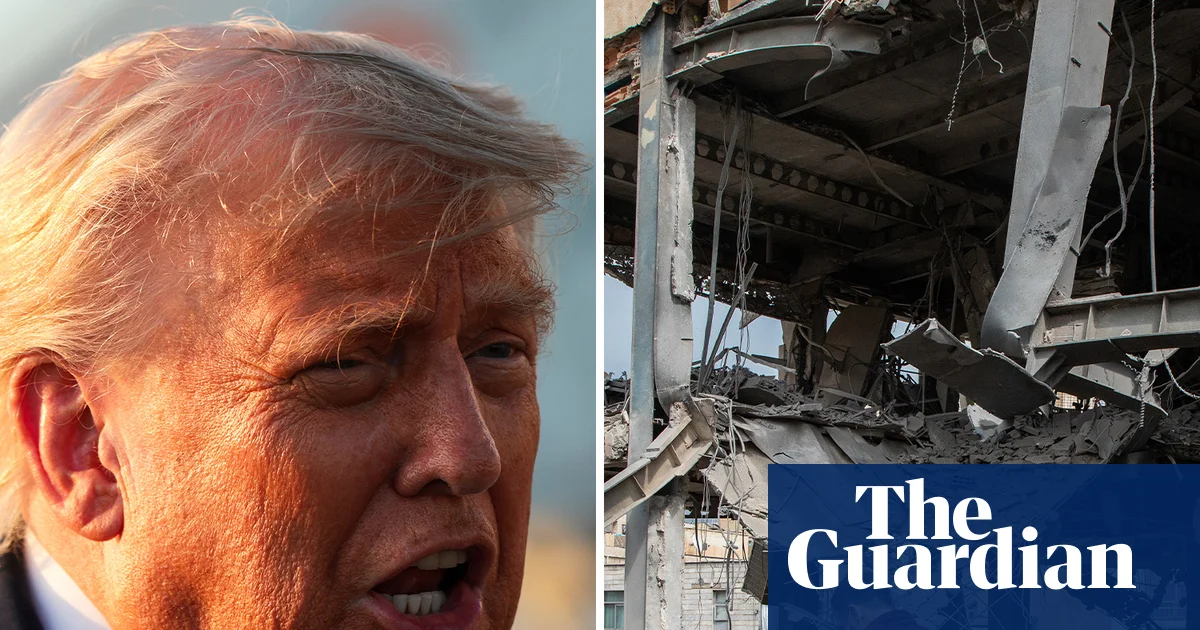
Donald Trump's first recorded foray into politics was sparked by the 1979 takeover of the US embassy in Tehran, which saw 52 American diplomats held incommunicado for 444 days. The event set the stage for more than four decades of torturous relations between the US and Iran. It may also have kickstarted Trump's long journey to the White House, which is now in danger of being defined by his decision to attack Iran's Islamic regime. This was reported by Qazaqyia.kz citing The Guardian.
This was reported by Qazaqyia.kz citing The Guardian.
In October 1980, a standoff that had started a year earlier had ballooned into a national trauma, with the hostages still in captivity and then president Jimmy Carter flailing in the face of Iranian intransigence. Trump lashed out in an NBC interview with Rona Barrett, one of the US's most noted gossip writers of the time.
"That they hold our hostages is just absolutely, and totally ridiculous," he told Barrett, arguing the crisis should have been resolved with a military invasion. "That this country sits back and allows a country such as Iran to hold our hostages, to my way of thinking, is a horror, and I don't think they'd do it with other countries."
Within a month, Carter – who had been rendered a symbol of US powerlessness as Iranian revolutionaries chanted "America can't do a damn thing" – was defeated in a landslide by his Republican opponent, Ronald Reagan.
Forty-seven years later, the psychic ripple effect of that searing international drama may have been uppermost in Trump's mind as he took the fateful decision to launch a war against Iran that he predicted would be finished quickly, but which swiftly spiralled out of control.
He referenced the hostage crisis on the opening day of the war, as he sought to justify a campaign for which he had done next to nothing to prepare the American public in advance.
Trump also repeatedly invoked Carter as the model of the president he would never be: a man who allowed his presidency to be defined, and ultimately ruined, by a second-rate power that should be no match for the US.
Yet three and a half months after launching a war that was meant to resolve Washington's Iran problem once and for all, Trump now finds himself in a position that uncannily resembles that of his disdained predecessor.
An array of unpalatable options – chiefly the unacceptably high political costs of deploying ground troops – have rendered American military strength moot, just as it was in Carter's time, when a hostage rescue attempt foundered catastrophically in the desert.
More belittling still, Trump is fulfilling the same role of foil previously accorded to the unfortunate Carter by an ideological Islamic regime unsure of its domestic standing, but determined to stay in power.
Initially staged by militant students acting without approval from above, the 1979-81 embassy siege was embraced by Iran's spiritual leader, Ayatollah Ruhollah Khomeini, as a means of safeguarding the fledgling Islamic Republic from its internal opponents.
Likewise, with its death toll of an estimated 1,700 civilians and devastating strikes on civilian infrastructure, Trump's ill-judged war is serving as a source of renewed legitimation for a regime that was facing an existential crisis after killing far more of its own citizenry in mass protests last January.
After the first military strikes that killed the supreme leader, Ayatollah Ali Khamenei, on 28 February, Trump urged Iranians in a televised address to rise up and "take over your own government".
Whether from shock at the assault on their country, or fear of a ruthless regime, Iran's population declined to heed the call. Trump, having hailed Khamenei's demise, changed tack to saying it would "be a pleasure" to meet his son and supposedly more uncompromising successor, Mojtaba.
From would-be regime changer who promised demonstrators that "help is on its way", Trump – like Carter before him – has become the theocracy's involuntary validator of its claims to rule.
That role is rendered crystal clear by the memorandum of understanding (MOU) signed on Wednesday. "The United States of America and the Islamic Republic of Iran undertake to respect each other's sovereignty and territorial integrity, and to refrain from interfering in each other's internal affairs," clause 2 of the text says, according to readout provided by US officials, in language that appears designed to satisfy the regime's desire for security guarantees.
Diaspora Iranians, many of whom lambasted Barack Obama for signing the 2015 nuclear pact with Tehran, and who embraced Trump as the last best hope for regime change, are in a state of bewilderment. Reza Pahlavi, son of the former monarch overthrown in the 1979 revolution, summarised their mood eloquently in Washington recently, criticising the White House for "mixed signals" which were, he said "confusing the hell out of everybody".
But the backlash from disaffected Iranians pales in comparison with the fissures in Trump's own base. Vocal America First-ers in the president's Maga movement were opposed to the war from the beginning, seeing it as betrayal of his promise to kick the habit of Middle East "forever wars" for which he had repeatedly condemned previous presidents.