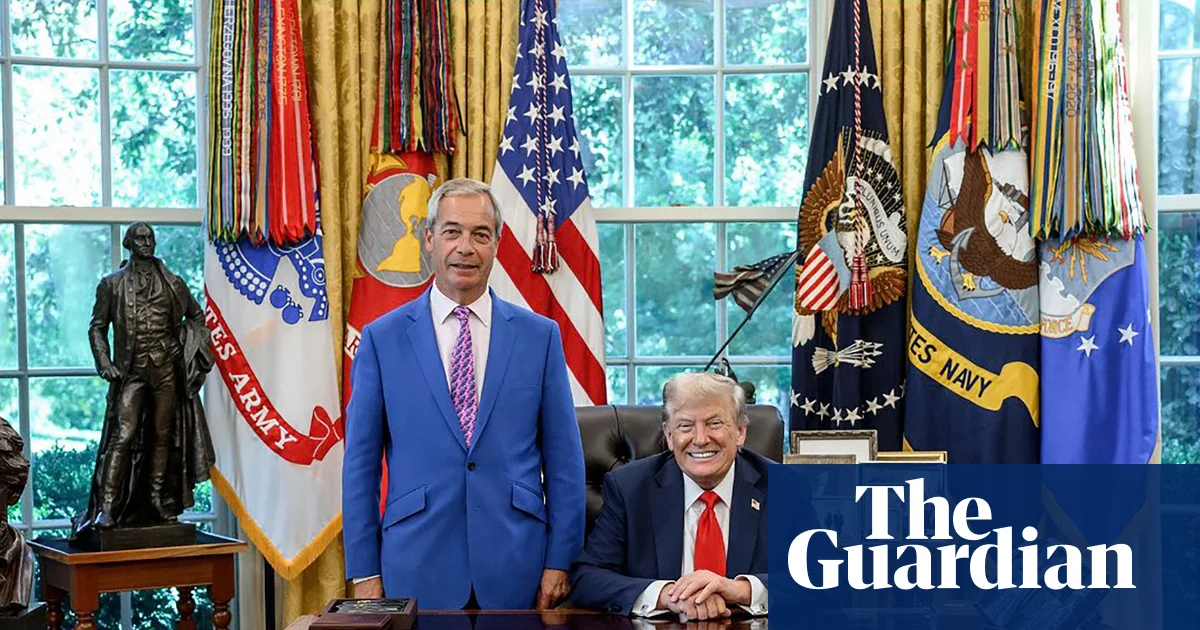
Donald Trump came to office in 2017 after decades of bankruptcies and business failures. Yes, he was rich, but his latest financial disclosure, published this week, suggests he will depart billions richer. In the first year of his second term, he made more than $2bn from Trump hotels, Trump golf courses, Trump cryptocurrency, Trump watches, Trump cologne, Trump Bibles and more. This was reported by Qazaqyia.kz citing The Guardian.
That means Trump has accomplished something none of his predecessors achieved, at least not on this scale: transforming the American presidency into a moneymaking enterprise. Politicians have always enriched themselves but the chutzpah with which Trump is doing so raises the possibility that an ethical code is breaking down. And not just in the US. Across the west, from Clacton to Queensland, a new type of leader is emerging: the political grifter.
Making public office a ticket to the high life while living standards fall might seem a hard sell to the electorate. Yet many voters seem prepared to put up with grifting, even happy to reward it. Nigel Farage has traded on his fame and influence to become the best-paid MP at Westminster while maintaining an image as the champion of downtrodden Britons. He takes flights on the private jets of a billionaire benefactor, as does the Australian populist Pauline Hanson, who has repeatedly breached rules on declaring them.
"For decades, there was an implicit understanding that using public office for personal enrichment carried political and reputational risks," says Tutu Alicante, a human rights lawyer based in the US and an expert in kleptocracy worldwide. "That restraint appears to be eroding." Alicante adds: "What feels different today is the brazenness." The shift reminds him of places like his native Equatorial Guinea, where "corruption has become aspirational" as youngsters idolise the flashy kleptocrats who drive Lamborghinis and hang out with models.
"I worry we're beginning to see echoes of the same phenomenon in parts of the west, where politicians who openly monetise public office – and the business figures and influencers who orbit them – are celebrated by some as symbols of success rather than cautionary tales."
'Brazen crypto corruption'
With an ease that was impossible before the advent of cryptocurrency, Trump supporters can buy into the bonanza, though some may wish they hadn't. Having once called crypto a scam, Trump launched his own meme coin – essentially a digital trading card bearing his likeness and name – upon returning to the White House. Many who bought them lost money when the price plunged. But Trump's disclosure indicates he made $635m.
That is only one half the president's crypto play, however. The other is what Elizabeth Warren, the Democratic senator, was referring to this week when she denounced his "brazen crypto corruption". This is the allegation that the Trump crypto ventures are a way to buy political favours.
For years, the Trump family business was real estate. Trump's sons Don Jr and Eric, formally in charge while their father is president, have struck plenty of property deals during their global moneymaking blitz. But there have been complications, as in Serbia, where protests and a prosecution thwarted plans for a Trump Tower. Even a project in Vietnam, which received a favourable tariff rate after welcoming Eric to embark on a new golf resort, is behind schedule.
Crypto deals face no such hitches. The one that has generated the greatest outcry was a three-way set of transactions involving the Trump crypto company World Liberty Financial, the authoritarian rulers of the United Arab Emirates and a convicted crypto kingpin. The upshot was that $500m of Emirati money flowed to the Trump company, the UAE gained access to powerful American AI chips and the crypto kingpin received a pardon.
Those involved say it was all just legitimate business. The White House says: "Neither the president nor his family have ever engaged, or will ever engage, in conflicts of interest." Trump himself has waved off the scrutiny. "I made a lot of money before I became president," he has told reporters. The White House has long maintained Trump's businesses are walled off from his official duties and run by his adult sons. The president was "not involved in running his businesses and has turned them over to his children, so these business endeavours do not involve him," an official said.
Farage likewise says there is no quid pro quo in how he makes his own crypto millions. He has promoted dubious crypto schemes on the Cameo video site and plugged a bitcoin venture led by Kwasi Kwarteng, who as chancellor delivered Liz Truss's premiership-ending budget. Beyond these personal money-spinners, Farage's entire political project since Brexit has depended on the largesse of Christopher Harborne, a Thailand-based crypto tycoon.