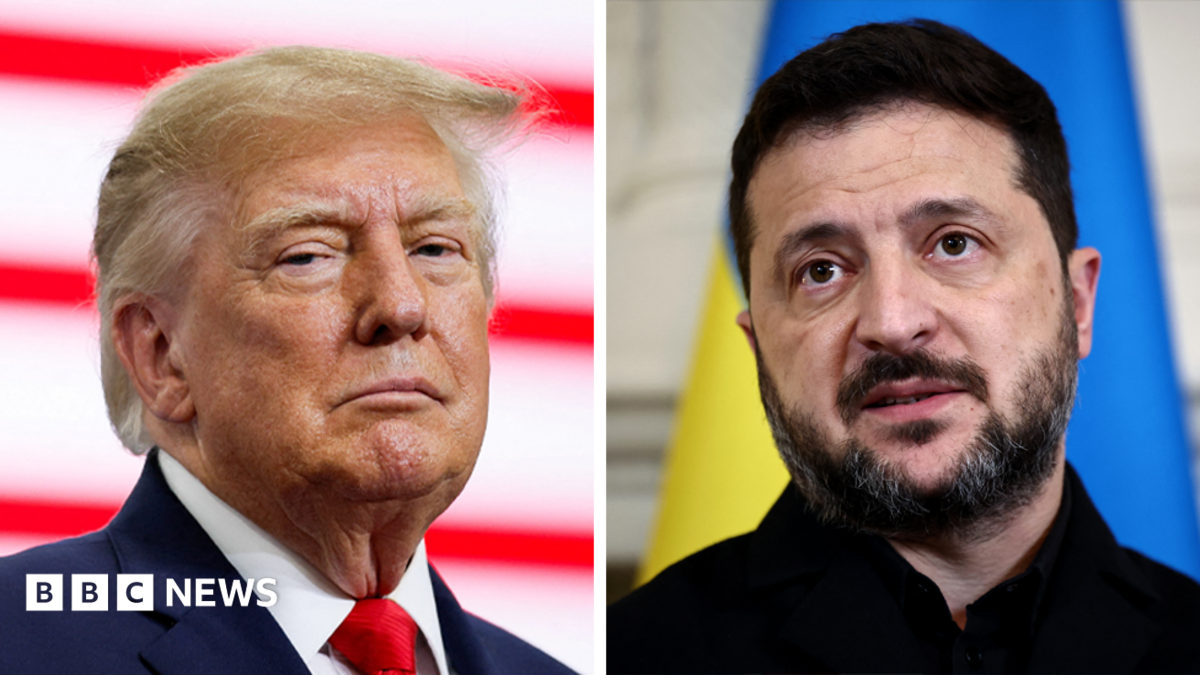
The hug that Trump envoy Steve Witkoff offered Volodymyr Zelensky ahead of this afternoon's talks in Oslo is unlikely to have dispelled the Ukrainian leader's misgivings about the current direction of US policy towards his war-ravaged country. This was reported by Qazaqyia.kz citing BBC News.
Zelensky posted a video of the moment on social media, with the message "Ukraine is working for peace. I thank our partners for their support!" But given everything that's happened this month, does the Ukrainian leader still regard Donald Trump as a partner?
The two men have never been close – that much is obvious – but have they now fallen out once and for all? Both in rhetoric and actions, the past ten days have seen evidence of a rupture as deep as any in their fractious relationship.
Just listen to the way they talk about each other. "Zelensky's not a good guy for us to deal with," Trump told Newsmax last week. The verbal assault has continued this week. "Zelensky doesn't know what he's talking about," Trump told a reporter on Monday when asked what he thought of the Ukrainian leader's suggestion that striking a diesel deal with Russia put the US on the wrong side of history.
Such personal attacks are typical of Trump's sledgehammer approach to diplomacy. It's hard to know when to take them seriously. In June, he lashed out at Israel's prime minister, saying Benjamin Netanyahu "has no f**king judgement". Four months later, he endorsed Netanyahu enthusiastically, calling him a "great warrior prime minister". "Trump can always do another U-turn," says Ian Bond of the Centre for European Reform. "But this does look bad."
For his part Zelensky has generally been circumspect in how he describes his unreliable but vital American counterpart. But this month his frustration has been clear. Addressing a US congressional delegation, he spoke of "decisions on the American side that are hard to explain between friends" and voiced the fear that "some political decision has been made to slow down support for us."
Answering Trump's charge that he represented the principal obstacle to a negotiated settlement, Zelensky sounded more exasperated than ever. "We have welcomed literally EVERY attempt by our partners to end this war with dignity," he wrote on Telegram on Monday.
But rhetoric aside, how bad is the relationship? After their notorious televised bust up in the Oval Office in February 2025, at which Trump accused Zelensky of "gambling with World War III", the US suspended military assistance and restricted intelligence sharing. The crisis only lasted a week. And when the Trump administration decided, later that year, that it no longer wanted to finance direct military assistance to Ukraine, a mechanism was put in place for European countries to pay for American equipment instead.
One exception, in the wake of this year's US war with Iran, has been badly needed US-made Patriot air defence missiles. Amid a global shortage, the supply to Ukraine has slowed to a trickle, making it harder than ever for Kyiv to shoot down Russian ballistic missiles. The Washington Post, quoting an unnamed Ukrainian official, said "only a couple" of Patriot interceptors remained in Ukraine's stockpile, and that the Trump administration had slowed down the process by which US allies seek approval to transfer their stocks. Similar concerns have been voiced in the past, but the latest reports – not confirmed by US officials – come against an increasingly difficult backdrop for Kyiv.
Earlier this month, as Ukrainian negotiators arrived in Miami for talks with Trump's all-purpose envoys Witkoff and Jared Kushner, they were blindsided by the news that the president had just struck a deal with Vladimir Putin to open US markets to Russian diesel. Experts questioned whether it would do much to drive down US petrol prices, ahead of congressional mid-term elections (the apparent motive), but as a signal of US displeasure over Ukraine's campaign of long-range strikes on Russian oil refineries and Washington's willingness to do deals with the Kremlin, it represented a stinging rebuke to Kyiv.