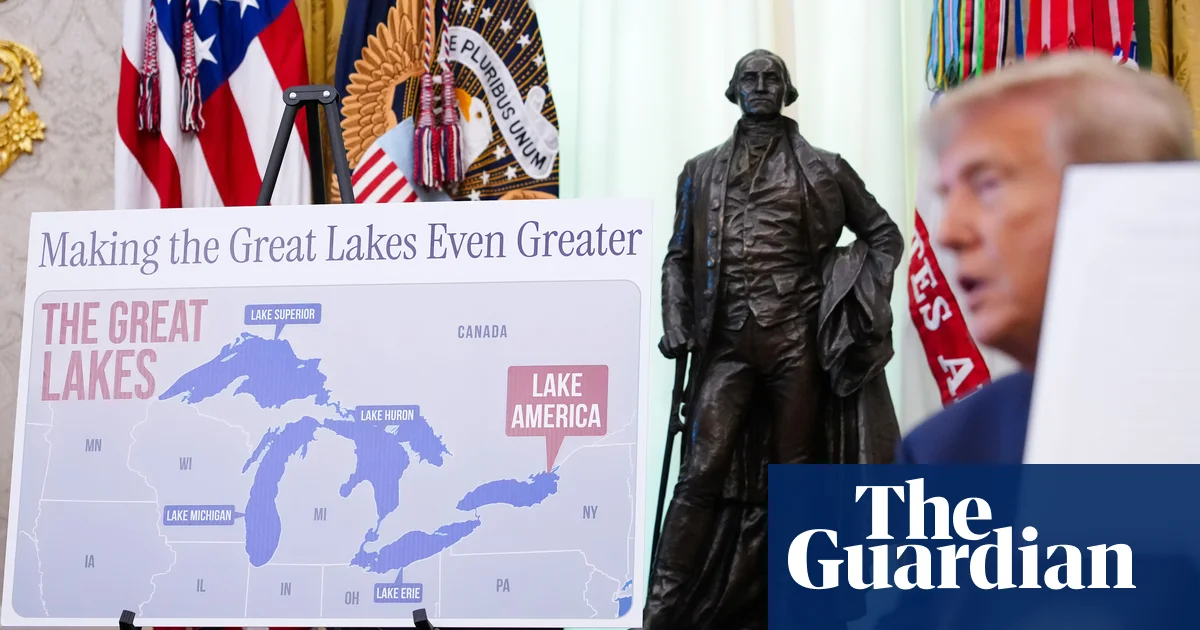
US President Donald Trump signed an executive order on Thursday directing the federal government to rename Lake Ontario, making it Lake America. This was reported by Qazaqyia.kz citing The Guardian.
The largely symbolic move comes amid an escalating trade war with Canada.
“As you know, Canada has been ripping us off for a long time on trade. Sad,” Trump said after signing the executive order updating the Department of Interior’s naming conventions. “Even the military: we defend Canada for nothing. We don’t get anything. They don’t pay us to defend Canada. But we defend Canada.”
Both Canada and the United States are Nato members and have treaty obligations of mutual defense under the North Atlantic Treaty, the Ogdensburg Agreement and numerous other treaties.
“We’ve notified all the various people we have to notify,” Trump said after signing the order. “This is official effective immediately.”
An administration official noted that the lake bordering Canada and the state of New York has most of its volume in the United States and that the deepest part of the lake is in United States territory. On his first day of his second term in office, Trump signed an order renaming the Gulf of Mexico as the “Gulf of America”.
“We have a Gulf and we have a Lake – now all we need is an ocean. Maybe we’ll have to change the name of the Atlantic and/or the Pacific,” he told reporters in the Oval Office. “Maybe we’ll change them both.”
Trump's move could further strain relations with Canada as trade disputes between the two countries continue. Experts say the decision could spark international controversy, as the lake lies on the border of two countries.
However, the White House considers the move an “internal matter” and points out that most of the lake is within US territory. Congress and international agreements may be required for the decision to take legal effect.
This action by Trump is one of the first steps aimed at changing geographical names in his second term. He previously renamed the Gulf of Mexico.
The Canadian government has not yet officially responded to the decision. However, Canadian experts call the move “provocative” and warn that it could negatively affect relations between the two countries.
The situation is drawing international attention, as changing geographical names typically requires bilateral agreements. The US action could spark a new dispute in relations with Canada.
Trump's decision could also be used in his domestic political campaign, as he often takes steps aimed at strengthening American patriotism. However, how the move will be received internationally remains unclear.