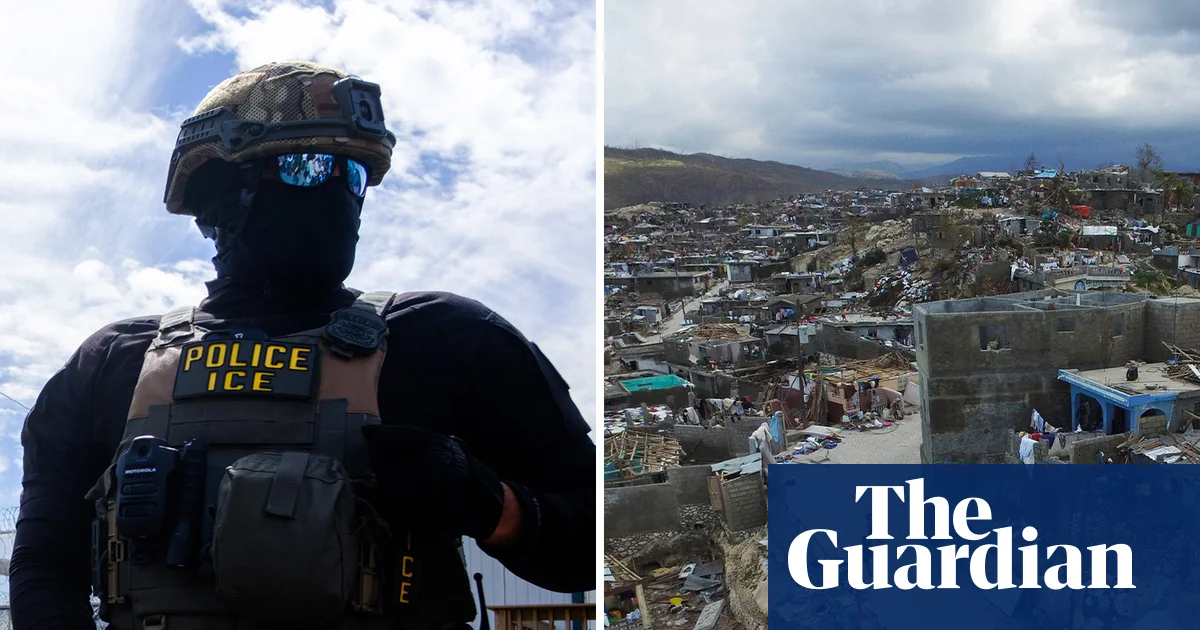
Donald Trump's immigration crackdown is largely targeting people from the countries most vulnerable to displacement from climate-driven disasters, a Guardian analysis shows. This was reported by Qazaqyia.kz citing The Guardian.
As the Trump administration pushes policies to boost planet-heating fossil fuels, millions of people are being forced to flee their homelands due to storms, floods and droughts worsened by the climate crisis.
Of the 39 countries from which the Trump administration has fully or partly restricted entry to the US, 22 are ranked within the most vulnerable quarter of nations in the world to climate impacts, according to a Guardian analysis of data from the Notre Dame Global Adaptation Initiative.
"Nearly all of the most vulnerable countries are on a ban or visa pause," said Danielle Wood, an associate professor at Notre Dame. Immigrants from Chad and Niger, the two most climate-vulnerable countries in the world according to the index, are now fully barred from the US, as are people from Sudan, Somalia and Sierra Leone, also among the 10 countries most exposed to climate impacts.
Among the most vulnerable half of countries is Honduras, which has seen stronger rainstorms, droughts, floods and coastal erosion in recent years. When Hurricane Mitch crashed into the country, killing 7,000 people, one affected family surveyed the unsalvageable ruins of their home and realized they had a lifeline – to move to the US.
Evelyn, who did not want to share her full name, was a teenager when Mitch hit in 1998 and recalls how her relatives in New York City pleaded with her mother to bring her and her sister to the US.
"There were bodies and dead animals floating in the water, the house was messed up, the furniture was all gone – doors, windows gone. It was so, so sad," said Evelyn. "I got sick because of the mosquitoes too. My uncle and aunt were just like: 'OK, just bring the kids over here, don't stay. It's dangerous.'"
Storms of the deadly ferocity of Mitch are even more likely today because our atmosphere and oceans have rapidly heated up due to the burning of fossil fuels.
Yet Trump's curbing of immigration and asylum has made it far harder for people like Evelyn to flee to the US. "Every day it's more barriers," said Evelyn, who still lives in New York and has two daughters, both studying at university. "It's sad to know that people will not be able to apply for a status or something to help their situation and also help the people back home."
The administration has also sought to terminate the temporary protected status (TPS) of people from Honduras and 13 other countries who already reside in the US, with nearly half of these countries ranked by Notre Dame as among the most climate-vulnerable places in the world.
The US supreme court is now considering an appeal to the TPS revocation for people hailing from two of the affected countries: Syria and Haiti, which have suffered recent droughts and hurricanes, respectively, as well as violent unrest. Environmental perils in these and other countries have been cited by the federal government when granting TPS status to allow people to remain in the US.
But the current administration's sweeping bans on entry to the US will "keep the radical Islamic terrorists out of our country" and resolve deficiencies in vetting people, Trump has said. The state department was contacted for comment about climate-related immigration.
Most of the banned countries are at the epicenter of an escalating climate displacement crisis, with the United Nations estimating severe heatwaves, droughts, storms and floods have uprooted 250 million people globally over the past decade, the equivalent of 70,000 displacements every day.
It's unknown how many of these people flee over borders, with most migration taking place internally – in 2025, nearly 30 million people were forced by disasters to move within their countries, recent figures show. Wildfires, such as those that incinerated parts of Los Angeles last year, were the largest cause of such displacement.
But experts agree that there is a growing cohort of so-called "climate refugees" fleeing their home countries as the planet continues to dangerously overheat. There are currently no official pathways to do so, however, with neither US law nor the UN's 1951 refugee convention recognizing environmental disasters as a reason to gain protection in another country.
"People are being displaced by climate change, the number is growing every year and, increasingly, the displacements are permanent," said Jocelyn Perry, program manager of the climate displacement program at Refugees International. Residents of developing countries now blacklisted by the US struggle to deal with the loss of crops, sea level rise and other upheavals worsened by global warming.