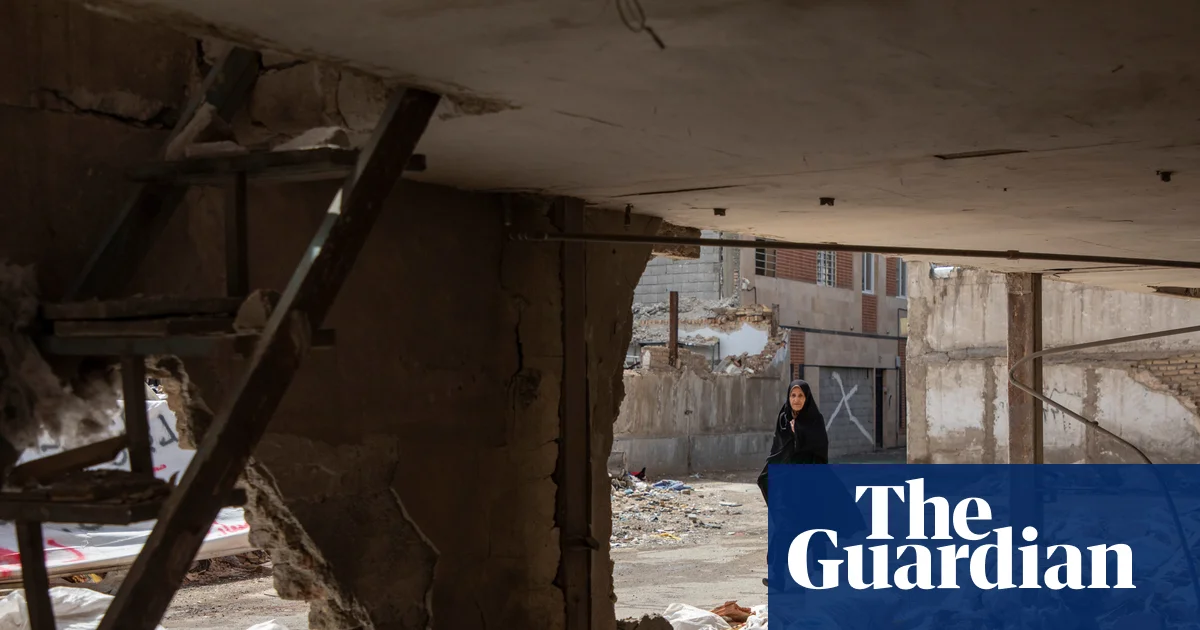
US President Donald Trump is taking a major gamble by resuming the war with Iran. This was reported by Qazaqyia.kz citing The Guardian.
For half a century, Donald Trump has performed a public high-wire act based on high-stakes risks and shattering time-honored norms to get what he wants. The approach has paid off handsomely, helping him survive multiple bankruptcies to reach billionaire status and numerous legal and political scandals to be elected US president twice.
Now a leader who once owned some of the world’s best-known casinos may be about to take the biggest gamble of his presidency by restarting a war with Iran less than a month after agreeing to a ceasefire that he hailed as necessary to stop an economic crisis on a par with the Great Depression.
In the past week, Trump has ordered a resumption of strikes against Iranian military and infrastructure targets after concluding that the memorandum of understanding (MoU) he signed in the Palace of Versailles on 17 June was dead in the water. Iran has retaliated with drone and missile strikes against US allies in the Gulf. The MoU was the subject of biting criticism from the Republicans’ neoconservative wing, who denounced it as a capitulation to Iran.
Less than four months before November’s midterm elections in which Democrats are seeking to recapture both houses of Congress, Trump appears to be flirting with electoral disaster in re-stoking a war that is already unpopular with voters – not least for its inflationary impact on fuel and living costs.
“There’s basically no timeline in which this makes any sense for preserving [Republicans’] midterm performance,” said Curt Mills, executive editor of the American Conservative, a magazine promoting isolationist foreign policy goals favored by Trump’s “American first” supporters.
“I think it’s a total loser. It’s evidence that Trump doesn’t really care about the midterms. He’s like Icarus with the sun with this stuff – it seems to be a personal vendetta with the Iranians.”
Beyond the electoral impact, experts warn that escalation could lead inexorably to a land invasion of Iranian territory – a decision which could in turn bring on the sort of long-term “forever wars” he previously foreswore and condemned past presidents for.
“My initial assessment was that this would just be another blip, some cyclical violence, and then we go back [to the ceasefire and negotiations],” said Nate Swanson, a former state department and White House adviser on Iran. “But the escalation has already exceeded what I thought was possible. I see this as an effort to re-establish leverage and try to renegotiate the MoU, but it is highly risky with potentially devastating consequences – and, in my view, likely to be a failure.”
At the heart of the renewed violence is control over the strait of Hormuz, a strategically-vital waterway which was a conduit for 20% of the world’s energy exports before the war started on 28 February and which has now emerged as Tehran’s biggest bargaining chip as it seeks to resist pressure to make concessions on issues such as its nuclear program and support for proxies such as Hezbollah, the Lebanese Shia group.
The MoU was intended to pave the way for a 60-day ceasefire during which negotiations would take place on Iran’s nuclear program. At the same time, Iran would reopen the strait – having closed it in response to the US and Israeli attacks, causing global oil prices to soar – in exchange for significant sanctions relief, including the right to sell its oil in international markets and the unfreezing of billions of dollars of assets.
Iran fired on commercial vessels belonging to neighboring Gulf kingdoms after they used, with US naval protection, a shipping lane close to the shores of neutral Oman rather than previously used routes off the Iranian coast, where Tehran’s officials could control passage and charge “service” fees that Washington DC and its allies say are tantamount to illegal tolls.
Some analysts have blamed the flare-up on poor US negotiating, supposedly leading to misunderstandings and ambiguities in the MoU, which makes no mention of shipping lanes.
But Vali Nasr, a professor at Johns Hopkins School of Advanced International Studies argued that the MoU’s collapse was a consequence of US and Iranian miscalculation. “I don’t think there was a misunderstanding. I think this is exactly what Trump intended,” he said.
He cited recent comments by JD Vance, the US vice-president, suggesting that the MoU was signed to give an opportunity to replenish strategic oil reserves, thereby weakening Iran’s negotiating hand while temporarily easing the pressure on fuel costs.
“The MoU was mainly a breather for Trump to try to get what he wants, which is to get control of the strait or take it away from Iran,” Nasr said. “Trump is trying to take it away from them before he negotiates, so they are not in a position to resist his demands on the nuclear issue or anything else. Iran also made a gamble that it could basically use the 60 days in order to get some economic relief by bringing imports into the country, while making its position stronger.”