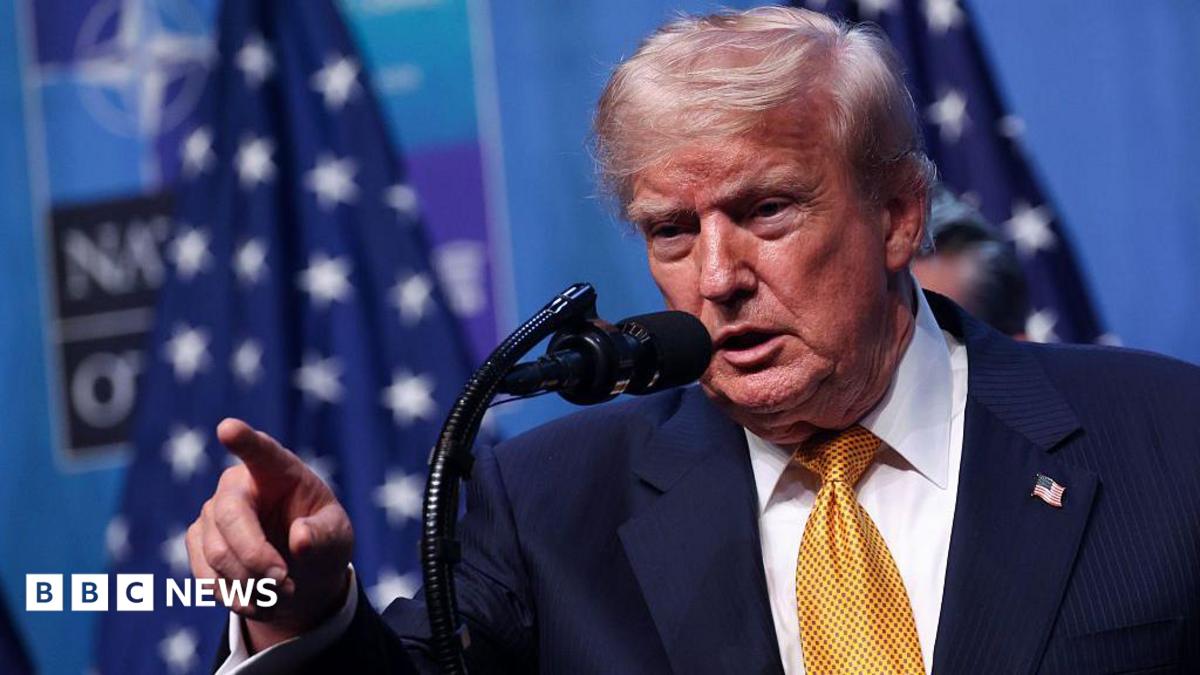
US President Donald Trump has said the US is reinstating a naval blockade of Iranian ports and will impose a 20% charge on all cargo shipped through the Strait of Hormuz. This was reported by Qazaqyia.kz citing BBC News.
In a social media post, Trump said the blockade would stop "Iran's ships or customers" from entering or leaving the key oil shipping route, but "all other countries will have fair and open use of the Strait". He insisted the strait "will remain OPEN, with or without Iran". Iran earlier said it would not allow the US to "interfere" in management of the waterway.
Tehran and Washington clashed over the strait's control after exchanging another wave of strikes overnight. The US said it carried out strikes against military targets in Iran, targeting air defence systems, coastal radars, and missile and drone sites. Iran said it responded by striking US military bases in Kuwait, Jordan and Bahrain, and radars in Oman.
In Trump's Truth Social post, he wrote: "The U.S.A. will be, from this point forward, known as 'THE GUARDIAN OF THE HORMUZ STRAIT,' but as such, and as a matter of FAIRNESS, will be reimbursed, at the rate of 20% on all cargo shipped, for any and all costs necessary to do the job of providing safety and security to this very volatile section of the World." He added that "the process and formation will begin immediately".
A spokesperson for the International Maritime Organization told Reuters that "IMO stands firmly against charging fees for passage through straits used for international navigation" and that "there is no legal basis through which to introduce mandatory tolls simply to transit through a strait". Iran's top military headquarters said any cooperation with the US will be considered an act of "war" against Iran's sovereignty.
What Trump's announcement means in practice remains unclear. UN rules allow countries to exercise control of territorial seas up to 12 nautical miles from their coastline. At the narrowest point, the Strait of Hormuz and its shipping lanes lie entirely within Iran and Oman's territorial waters.
Iran effectively shut down the strait after the US and Israel launched strikes against Iran on 28 February. Tehran retaliated by firing missiles and drones on Israel and US military bases. Iran's Islamic Revolutionary Guards Corps also fired on commercial ships attempting to go through the strait without its permission, and seized two vessels. Maritime traffic dropped dramatically, triggering a rise in oil prices.
The US first imposed a naval blockade of all Iranian ports in April, eventually lifting it in June. Now, many US allies are likely to baulk at the prospect of paying 20% of all cargo shipped. The announcement could also become politically complicated for Trump domestically, as oil prices are inching up again.