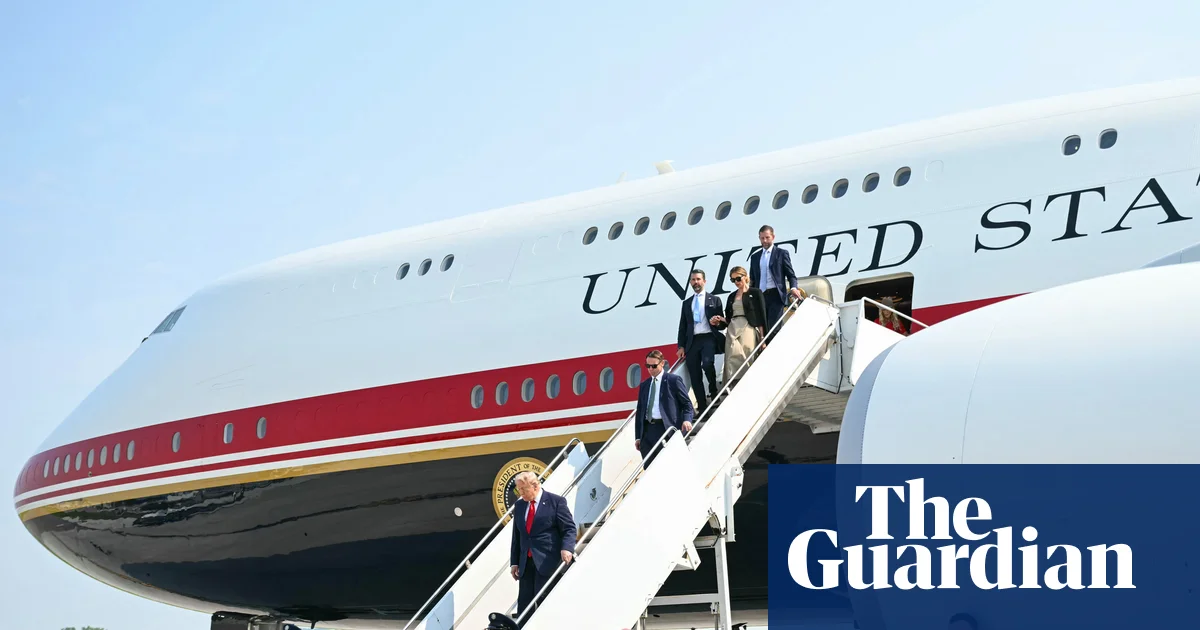
The Trump administration has issued subpoenas to several New York Times journalists after the newspaper reported on security concerns with the president's new plane. This was reported by Qazaqyia.kz citing The Guardian.
The Times said its journalists were subpoenaed on Friday by the US Justice Department to testify before a federal grand jury in Manhattan five days later, marking the latest effort by the Trump administration to compel testimony from journalists under the threat of penalty. Agents delivered some of the subpoenas to the Times reporters at their homes, the paper added.
US Justice Department spokespeople did not immediately respond to a request for comment on Saturday about the subpoenas.
Press freedom advocates, meanwhile, expressed consternation over the subpoenas.
A statement from the Washington DC-based National Press Club said federal prosecutors' "decision to subpoena journalists at the New York Times should alarm every American because it threatens the public's constitutional right to an independent press."
"The National Press Club calls on the Justice Department to immediately withdraw these subpoenas and reaffirm a principle that has long distinguished the United States: a free and independent press serves the people, not the government," the organization continued.
Times lawyer David McCraw said in his own statement that "the appearance of federal law enforcement agents on the doorstep of news reporters should shock the conscience of any American who believes in the [US] constitution and the press freedom it protects."
The airplane at the center of the Times report was provided by Qatar as a $400m gift. It took Donald Trump to North Dakota on its 1 July maiden voyage, and it more recently flew the president to a Nato summit in Turkey.
But Trump then flew part of the way back to the US on an older-model Air Force One presidential jet. That happened amid the collapse of a ceasefire with Iran, which shares a border with Turkey and which the US and Israel launched war against in late February.
Amid speculation that the president's Qatari-gifted jet lacked certain security systems, the Times – citing anonymous sources – then reported that the new Air Force One lacked antimissile capabilities as well as other protective features that older models are equipped with. The Times further reported that Trump flew some of the return trip from Turkey on an older Air Force One at the request of the Secret Service.
Trump subsequently denied any security concerns, telling reporters who were accompanying him that no safeguard-related worries factored into the decision to fly only part of the way home in the new Air Force One.
The president also brushed off a question about whether Iran had subjected Air Force One to any credible threats.
"I have a threat all the time," Trump replied. "I'm number one on their list."
The White House also denied that the new Air Force One had any shortcomings in terms of security, calling it "state-of-the-art."
"The new Air Force One … has been fitted with high-level security protocols that ensure the safety of the president and his staff," White House spokesperson Steven Cheung said in a statement. "As the president has said recently, there are many enemies of America who have their sights on him, and we use every tool at our disposal – including distraction and misdirection – to address those threats."
After the reporting on the new Air Force One, Julian E Barnes, Eric Lipton, Tyler Pager and Eric Schmitt were among the Times journalists who received subpoenas for grand jury testimony, according to the newspaper.
Reports in June indicated that Justice Department officials purportedly investigating national security leaks had similarly subpoenaed journalists from the Wall Street Journal and Washington Post. However, the Justice Department withdrew the subpoenas after the outlets contested them in sealed court filings.
In the US, grand juries are one of the methods by which prosecutors can criminally charge defendants.
There have been other instances of the Trump administration targeting news organizations as well as other media figures and institutions across both of his presidencies.
One such recent and prominent example particularly dealing with the news media involved the Trump administration's pursuit of criminal charges against journalists Don Lemon and Georgia Fort and photographer Junn Bollman for covering a protest in January at a Minnesota church where an Immigration and Customs Enforcement (ICE) official is a pastor.
Also in January, a federal grand jury in Maryland indicted a US military contractor on accusations of leaking classified documents in a case which led to an FBI raid on a Washington Post reporter's home.
The Associated Press contributed reporting.