President Kassym-Jomart Tokayev's proposal to consider Russia's possible participation in the Organization of Turkic States became one of the most notable initiatives of the 13th OTS summit in Ankara. The head of state emphasized Russia's centuries-long historical ties with the Turkic world, suggesting the use of the "OTS+" format or granting Moscow observer status. This was reported by Qazaqyia.kz citing Kursiv Media.
The summit was preceded by Tokayev's official visit to Turkey. The warm reception by President Recep Tayyip Erdogan and the leaders' talks confirmed the high level of strategic partnership between the two countries. One of the key economic targets was increasing trade turnover to $15 billion.
Tokayev's speech reflects an approach that envisions developing Turkic cooperation without opposing it to Eurasian integration processes. The President also advocated strengthening OTS institutions, developing international transport corridors and preserving the Organization's non-military character.
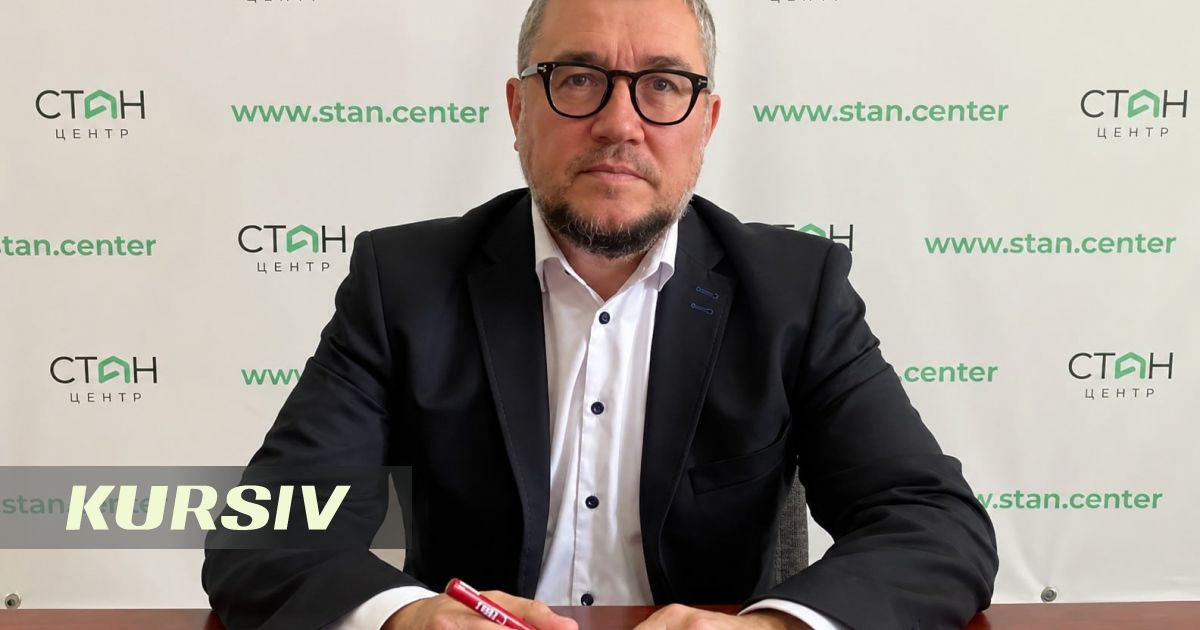
What significance does the Kazakh leader's initiative have for Russia and the Turkic world? What opportunities does it open for strengthening Eurasian cooperation, and what role does Kazakhstan play in these processes? Andrei Vypolzov, head of the Russian analytical bureau Stan-Center, commented on this.
– Andrei Alexandrovich, Kassym-Jomart Tokayev's proposal to consider Russia's participation in the "OTS+" format or as an observer became one of the most discussed initiatives of the summit. Given Russia's historical ties with the Turkic world, how significant is this step and what prospects does it open for Moscow and Astana?
– I consider Kassym-Jomart Tokayev's proposal a long-awaited and significant diplomatic initiative. The Russian expert community has long been discussing the issue of Russia's interaction with the Organization of Turkic States. At the same time, concerns are periodically voiced that the development of the OTS may contradict Moscow's interests.
In my view, such assessments do not take into account the depth of Russia's historical and cultural ties with the Turkic world.
Our country is home to many peoples with Turkic roots. These are Bashkirs, Tatars, Chuvashs, Yakuts and other ethnic groups that have preserved their own languages, traditions and cultural heritage for centuries. The significant influence of Turkic peoples can also be traced in the history of the formation of the Russian state and in the development of the Russian language.
Russia is a multi-ethnic state for which cultural and ethnic diversity is of great historical importance. Therefore, expanding cooperation with the OTS serves the interests not only of interstate interaction but also of preserving cultural ties between peoples.
In this regard, the initiative of the President of Kazakhstan has a deeper meaning than an ordinary proposal to expand international cooperation. Tokayev is in fact drawing attention to Russia's centuries-long presence in the common historical and cultural space of the Turkic world.
This approach seems natural to me. Russia is a Eurasian power in whose historical and cultural formation Turkic peoples played a significant role. Therefore, the development of its relations with the OTS has serious historical prerequisites.
Here one can draw a certain parallel with the Slavic world. Even in the presence of political disagreements, common linguistic and cultural roots retain significance for communication between peoples. Similar processes are characteristic of the Turkic space as well.
Opportunities for cultural and humanitarian interaction should not be limited by existing political differences. On the contrary, the commonality of historical heritage can serve as an additional basis for international cooperation.
Therefore, I regard Tokayev's proposal on Russia's possible participation in the OTS as an important step toward strengthening Russia's ties with the Turkic world and developing a broader Eurasian dialogue.
– The President of Kazakhstan again emphasized that the OTS should not turn into a military alliance. How fundamental is this position in the context of geopolitical competition, and how does it relate to Tokayev's initiative on Russia's possible participation?
– In my view, Kassym-Jomart Tokayev's principled position is one of the important conditions for the sustainable development of the Organization of Turkic States.
A certain wariness on the part of neighboring states, in particular Russia and China, is largely linked to periodically arising assumptions about the possible militarization of the OTS.
Such reasoning creates additional grounds for mistrust, although the Organization's officially stated goals are related to the development of multilateral cooperation.
The President of Kazakhstan has stated the position quite clearly: the Organization of Turkic States is not and should not in the future turn into a military alliance.
This statement has substantial diplomatic significance. Tokayev confirms that the development of Turkic cooperation should not be accompanied by the formation of a new military-political bloc.
I am convinced that such certainty is positively received in Moscow and Beijing, since it directly affects issues of regional security.
In this context, the possible granting of observer status to Russia acquires additional significance. Such a format would allow Moscow to participate directly in the dialogue, gain a fuller understanding of the OTS's activities and discuss issues of mutual interest.
Thus, Tokayev's two initiatives complement each other. Kazakhstan advocates expanding the OTS's international cooperation while emphasizing the need to preserve its non-military character.
In my view, such an approach contributes to strengthening trust between states that have different international obligations and foreign policy priorities.
– Kassym-Jomart Tokayev proposed strengthening the OTS's executive mechanisms and focusing on concrete economic projects. How timely are these proposals, and what role can Kazakhstan play in improving the Organization's effectiveness?