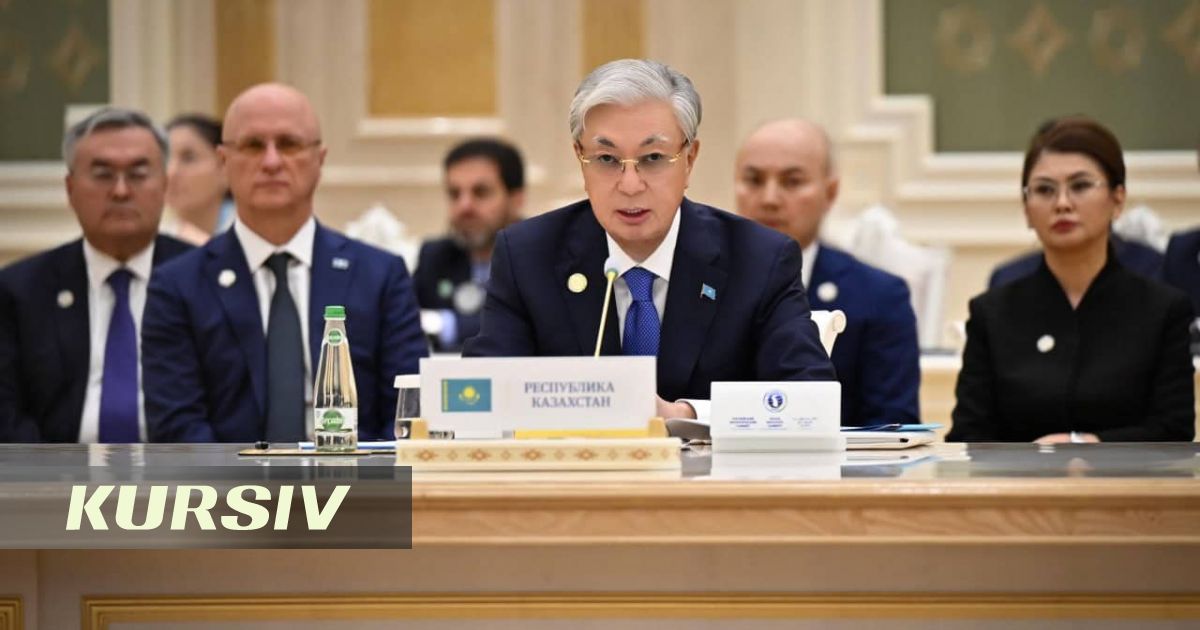
President Kassym-Jomart Tokayev proposed that Caspian littoral countries pool scientific research, consider creating a common digital platform for monitoring the sea and strengthen joint protection of its biodiversity. He put forward the initiatives at the first Caspian Ecological Summit, the Akorda reported. This was reported by Qazaqyia.kz citing Kursiv Media.
The President called for forming a common pool of projects to preserve the Caspian and the river basins that feed it. He also stated the need to complete the creation of a permanent Secretariat of the Tehran Convention to coordinate work and monitor the implementation of agreements.
According to Tokayev, from 2000 to 2025 the area of the Caspian Sea's water surface shrank by more than 16,000 square kilometers. In some sections the coastline has retreated by tens of kilometers. Over the past century the number of Caspian seals has fallen from 1 million to 270,000 individuals.
The President named reduced water inflow, climate warming and anthropogenic pressure as the main factors behind the deterioration of the sea's condition. He stressed the importance of the Caspian as a source of well-being for millions of people and a transport and energy hub of Eurasia.
Tokayev agreed with Iranian President Masoud Pezeshkian that the situation goes beyond an ecological crisis and is acquiring an economic character. Without urgent measures, he said, the consequences could cause irreparable damage to the Caspian countries and the international community.
Tokayev noted that the Caspian's problems are linked to broader climate change in the region. According to forecasts he cited, by the end of the century temperatures in some parts of the region could rise by 5 degrees. This will intensify glacier melting, water shortages, droughts and land degradation.
According to World Bank estimates cited by the President, by 2050 almost 2.5 million people in the region could face the risk of internal migration due to climate factors.
The shallowing of the Caspian threatens shipping, port infrastructure, fishing, energy, industry and the sustainable development of coastal settlements. Tokayev warned that the combination of these factors could lead to a large-scale ecological catastrophe and called for preventing a repeat of the Aral Sea tragedy.
"Saving the Caspian, which was once rightly called 'great' and 'wise,' is not just our responsibility, but also a matter of honor for the statesmen of the current era," Tokayev said.
He added that the state of the sea, which future generations will inherit, depends on current decisions.
The President proposed uniting the data, research and observations of the Caspian states into a single system for the timely identification and elimination of ecological threats.
For comprehensive research and the development of common adaptation scenarios, he proposed using the Caspian Sea Research Institute, created in Kazakhstan in 2024, together with scientific centers of other Caspian countries.
Another initiative is to consider creating a common digital platform. It could process and analyze data on water resources, changes in the coastline, biodiversity, pollution, river runoff and other parameters.
According to Tokayev, satellite technologies, artificial intelligence and modern forecasting systems will make it possible to track the state of the sea in real time and promptly identify and eliminate ecological risks. The platform could become a common base for scientists, relevant government agencies and international organizations.
Tokayev called for strengthening joint work on restoring spawning grounds, protecting delta ecosystems and the most vulnerable species of plants and animals.
In his view, the experience of the Northern Aral shows that engineering measures combined with a nature-oriented scientific approach help solve water management and environmental problems, increase the resilience of coastal areas and mitigate the effects of climate change.
To combat illegal fishing, poaching and the illegal trafficking of biological resources, the President proposed more active information exchange between law enforcement and environmental agencies, joint operational measures and the use of digital monitoring.
Kazakhstan is ready to use in this work the state nature reserve created to preserve the Caspian seal and its habitat. Tokayev proposed paying separate attention to preserving ecological corridors in order to reduce anthropogenic impact on areas important for the seals' life cycle.
The President also announced the creation in Kazakhstan of an International Biodiversity Fund. One of its areas of work will be the protection of rare species and unique ecosystems of the Caspian. Tokayev invited summit participants to join the fund and implement concrete joint projects.
The proposed pool of projects should cover both the sea's water area and the river basins that feed it. Among the tasks, Tokayev named restoring water flow, river deltas and wetlands, as well as bringing hydraulic structures into proper condition.
In his view, sources of financing could include grants, concessional loans and other climate financing mechanisms.
The President noted the importance of the Tehran Convention, whose entry into force marks 20 years this year, and the contribution of the UN Environment Programme to conservation work.
Kazakhstan supports Azerbaijan's initiative to create an Intergovernmental Commission on the shallowing of the Caspian Sea at the level of deputy prime ministers. The Caspian states also approved Kazakhstan's proposal to develop an Interstate Programme for the Conservation of the Caspian's Water Resources.
At the same time, Tokayev considers the measures being taken insufficient and calls for a transition to coordinated actions that will help mitigate the consequences of shallowing and adapt economies and ecosystems to the changes.
According to him, the permanent Secretariat of the Tehran Convention should ensure continuity of decisions, coordination of activities and monitoring of the implementation of agreements.