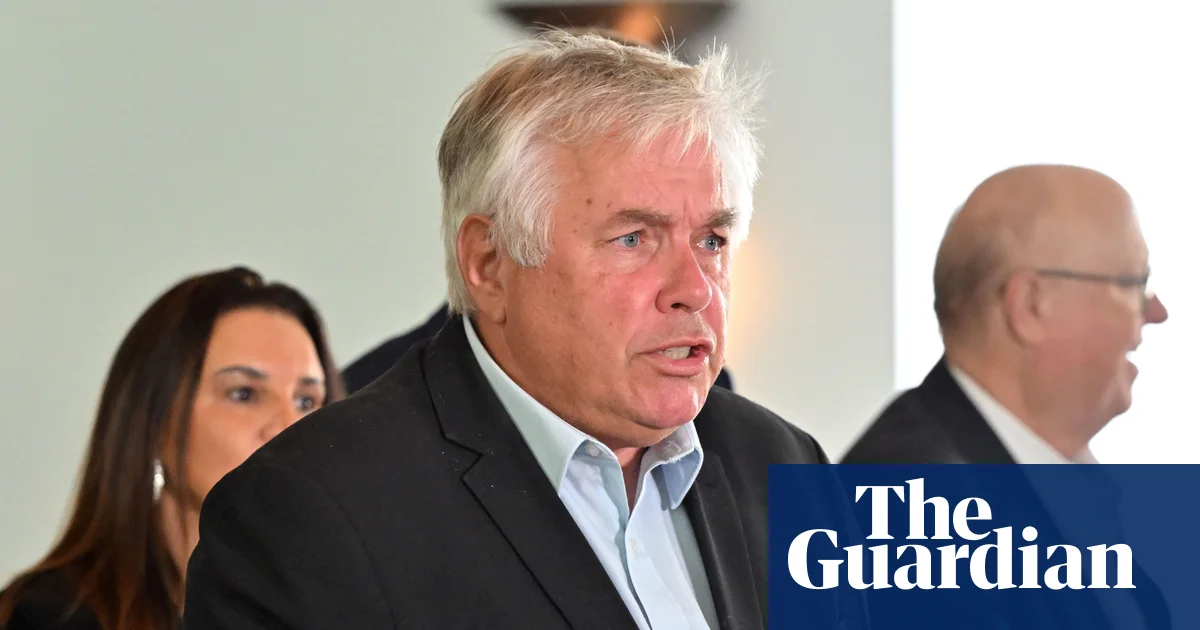
Former senator Rex Patrick has won a critical victory in his campaign to uncover any documents relating to whether Australian spies bugged Timor-Leste to gain the upper hand in sensitive oil and gas negotiations. This was reported by Qazaqyia.kz citing The Guardian.
The top-secret mission in 2004 became a public scandal years later after an ex-spy and a former attorney general attempted to mount a case in The Hague. But the Australian government stands by its Glomar response – to neither confirm nor deny first that the bugging took place and second that any relevant documents exist.
On Friday, the administrative review tribunal (ART) ruled in Patrick’s favour, forcing the commonwealth to hold unclassified parts of the three-day hearing in late November in public. Government lawyers argued the whole saga is so sensitive that even sections of the hearing open to the public should remain behind closed doors in case someone accidentally says something they shouldn’t.
Patrick told Guardian Australia the situation was a farce, arguing the bugging scandal is the “most open secret in the history of Australian spying”, maybe even the world.
Patrick’s bid to gain further insight into the affair began with a request for cabinet documents from 2004 held by the National Archives of Australia. The Australian government’s position, along with the responsible agency, the Australian Secret Intelligence Service (Asis), remains that any such documents cannot be publicly confirmed or denied. Asis contends that alone the records could undermine national security and Australia’s standings with other countries.
The documents would relate to Australia’s strategy for settling how much of the Timor Sea it could maintain control over after Timor-Leste officially gained independence from Indonesia in 2002. The negotiations determined the countries’ shared control over the Greater Sunrise gasfields, which hold resources estimated to be worth more than $50bn.
Patrick’s win on Friday means at least some of the government’s defence over why it cannot publicly reveal details of the 2004 bugging – which preceded to a commercially favourable agreement for Australia against the impoverished nation – will be heard in public.
At a preliminary ART hearing last week to rule on whether part of the hearings should remain open, lawyers for the archives argued the matter is so sensitive that even sections of the hearing open to the public should remain behind closed doors in case someone accidentally says something they shouldn’t. Parts of the hearing will already remain closed so top-secret details can be debated, but the commonwealth had argued the open hearings should also be debated in secret.
The commonwealth unsuccessfully proposed the media and the public should be barred from the open hearings but would be able to view a transcript after careful review by the nation’s foreign intelligence agency. The deputy chief solicitor, Justin Davidson, argued last Thursday the stakes are “very high” and it would be nearly impossible to mitigate the risk of an intelligence official revealing something they shouldn’t. “I’m not, frankly, beyond making a mistake,” Davidson said.
Ewan McMillan, an Asis deputy director general, and Michelle Chan, a deputy secretary at the Department of Foreign Affairs and Trade (Dfat), will offer their testimonies in late November when the case is heard in full. Davidson had argued the unclassified details they share in an open hearing might be “interesting to the public” but not necessarily in the public interest.
On Friday, the ART deputy president Peter Britten-Jones ruled against the commonwealth, noting officials were “highly qualified and experienced” enough not to let national secrets slip in an open forum. “The risk of an inadvertent disclosure of certificated material is negligible,” he wrote in his ruling.
Patrick said the whole administrative saga felt like a replay of an Austin Powers movie. “Only Asis and Dfat think the operation is still a secret,” Patrick said. “It’d be funny if it wasn’t so serious, or if the taxpayer wasn’t paying for the silk, barristers and lawyers arguing the government’s case.”
Patrick’s latest push to reveal historical documents, or at least the existence of them, comes after years of attempts.