A 73-year-old retired nurse who spoke her native Tibetan all her life but never learned to write it is now learning. Her decision offers a glimpse into how some embrace their language and cultural identity in Tibet. This was reported by Qazaqyia.kz citing Associated Press.
Tibet is an autonomous region but tightly controlled by Beijing. China's new "ethnic unity" law mandates Mandarin as the primary language for schools and government.
The AP last month joined a government-organized trip to Tibet. Government officials accompanied the foreign journalists throughout the visit, and AP journalists were not free to move around or conduct reporting independently. The AP retained full editorial control of its content. (AP video shot by Olivia Zhang)
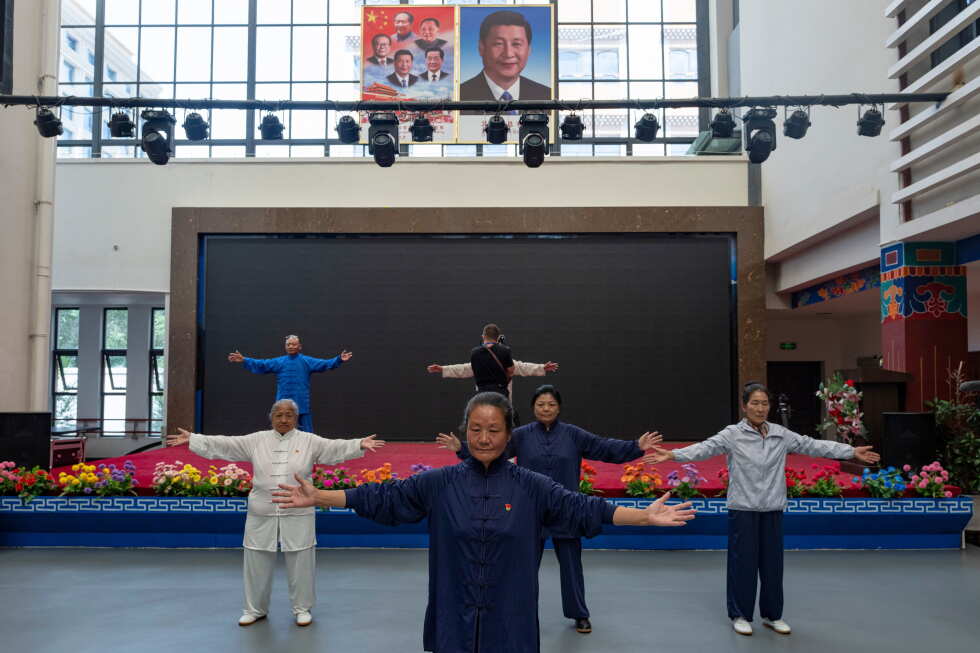
On July 20, 2026, elderly residents performed tai chi near a portrait of Chinese President Xi Jinping at the Chengguan District Day Care Center for the Elderly in Tibet. This was during a government-organized visit for foreign journalists. (AP Photo/Ng Han Guan)
Kalsang Lhamo, a 73-year-old retired nurse, practiced Tibetan calligraphy at the same center that day. (AP Photo/Ng Han Guan)
On July 21, Qongqiu Quco, a 19-year-old student, sat with her relatives outside Jokhang Temple in Lhasa. (AP Photo/Ng Han Guan)
That same day, a soldier walked on a public square where a Chinese national flag hung in front of the Potala Palace. (AP Photo/Ng Han Guan)
Tourists rested near a portrait of Xi Jinping at a public square at the base of the Potala Palace. (AP Photo/Ng Han Guan)
These events highlight issues of language policy and cultural identity in Tibet. The new law makes Mandarin the primary language in schools and government, but some residents are striving to preserve their native language.