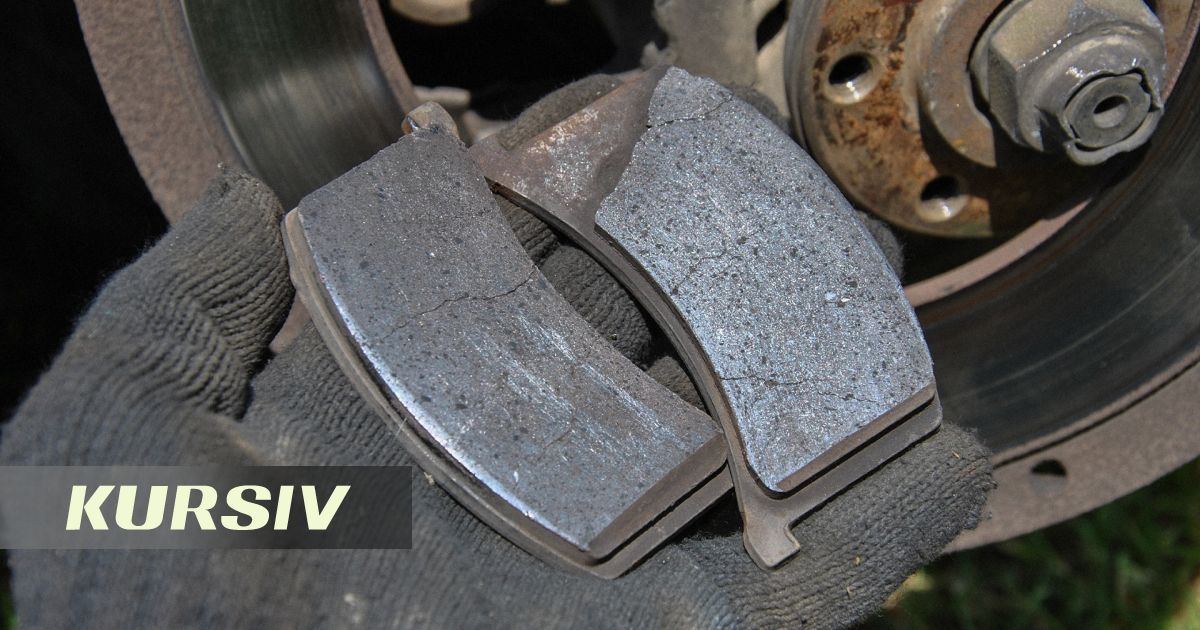
Properly functioning brakes directly affect vehicle safety. However, many drivers only notice a problem after unusual noises appear. Nikita Rodionov, technical director of the international Fit Service network, explained how to tell that brake pads are close to needing replacement. This was reported by Qazaqyia.kz citing Kursiv Media.
According to the expert, the first warning sign is usually new sounds when braking.
Many pads are equipped with a mechanical wear indicator. When the thickness of the friction layer decreases to about 3–4 mm, the metal plate begins to touch the brake disc, producing a characteristic squeal. This means the pads still work, but they should be replaced.
If a loud metallic grinding is heard, the situation is more serious. Such a sound indicates that the friction material is almost worn out, and the metal base of the pad is already working against the disc. This accelerates disc wear and can lead to more expensive repairs.
Another reason to check the brakes is a change in their operation. If the pedal becomes too soft, sinks deeper than usual, or the car starts braking in jerks, specialists advise not to postpone diagnostics. An increase in braking distance with the usual pedal effort should also be alarming.
Vibration of the pedal or pulsation of the steering wheel when braking may also indicate uneven pad wear or deformation of the brake disc.
On cars with alloy wheels, the condition of the pads can often be assessed without removing the wheel. The thickness of the friction layer is often visible through the spokes.
According to Rodionov, a safe reserve is about 3–4 mm, and when the thickness is about 2 mm, replacement should not be delayed. Another indirect sign is shiny metal particles in the brake dust on the disc. They may indicate that the pad has already begun to damage the brake disc.
The average service life of brake pads is about 30–70 thousand km, but much depends on driving style and the quality of parts.
The expert recommends selecting pads by VIN code or factory catalog so that the size, shape, and characteristics match the specific vehicle modification. For normal use, according to him, high-quality analogues from well-known manufacturers certified to the ECE R90 standard are suitable.
Specialists advise buying brake pads only from large sellers or trusted auto repair shops. Saving on brake system parts can be costly, since braking efficiency directly depends on their quality.
Earlier, Kursiv Avto reported on breakdowns of a new car that make it better to return the vehicle to the dealer.