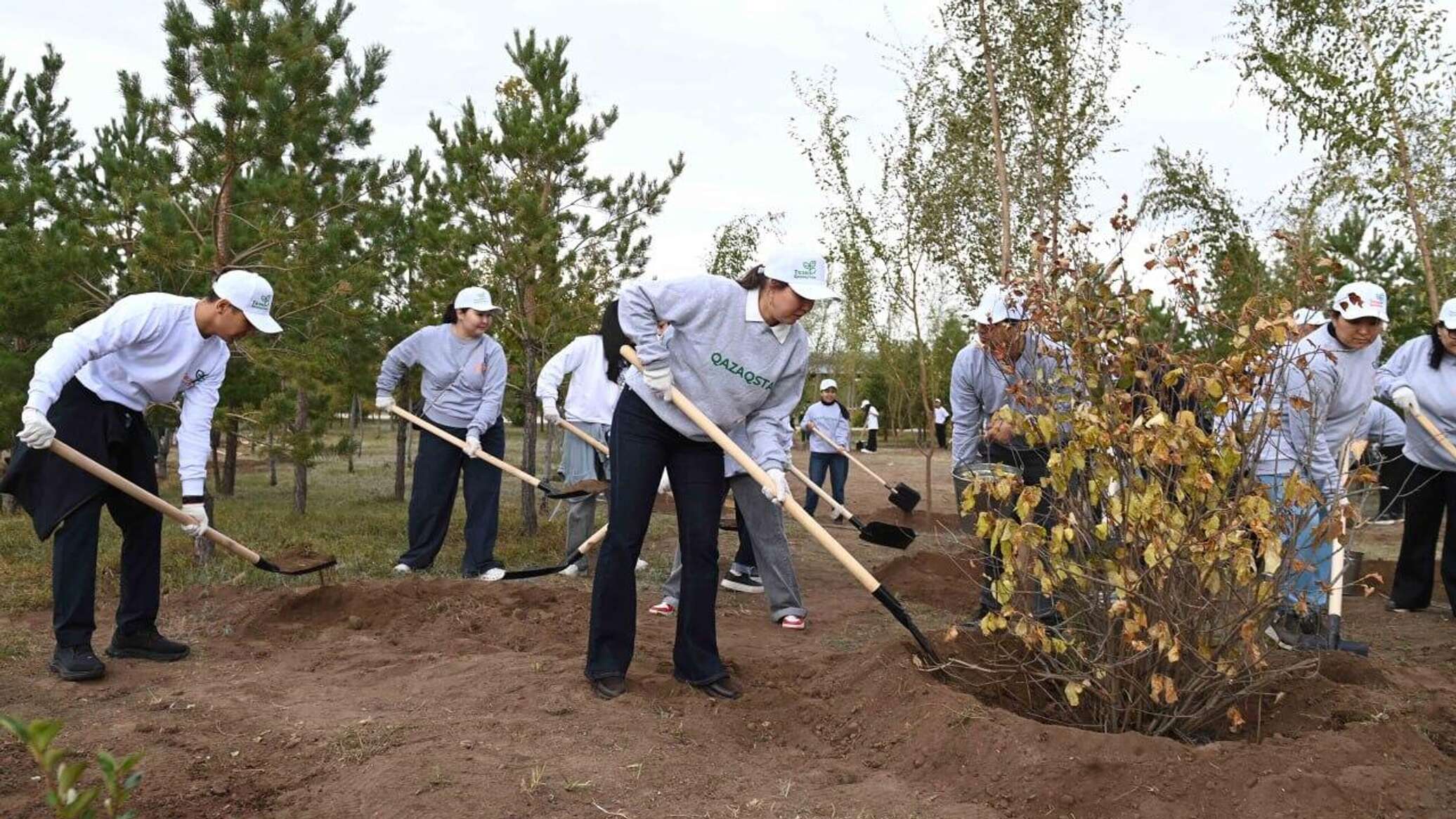
The number of participants in the Taza Qazaqstan initiative has exceeded 7 million people. This was reported by Qazaqyia.kz citing Sputnik Kazakhstan.
According to the government's press service, while 6 million people took part in the initiative in 2025, more than 7 million citizens have joined it from January of this year to the present.
Trees and seedlings planted
Since the launch of the Taza Qazaqstan initiative, more than 7 million trees have been planted in settlements, while more than 1 billion seeds and seedlings have been planted on the territories of the state forest fund.
In addition, 18.1 million trees were planted over 6 years. As part of reforestation efforts, about 1.7 billion trees were planted on an area of more than 1 million hectares during this period. The area of Kazakhstan's forest lands has reached 14 million hectares.
Environmental education and digitalization
Special attention is being paid to the environmental education of the younger generation and the digitalization of feedback. The Zhasyl Balabaqsha program has been introduced in 265 preschool educational institutions, and more than 560,000 thematic class hours have been held in schools.
The TazaQazBot Telegram channel has been launched, through which more than 57,000 requests have been received regarding the improvement of settlement territories and sanitary conditions.
Waste collection and processing
As part of the sanitary cleaning of territories, more than 9,000 unauthorized landfills have been eliminated, and nearly 3.8 million tons of waste have been collected.
Today the state has moved to a systematic solution to the waste problem, undertaking comprehensive measures from collection to deep processing and disposal.
For example, with the involvement of foreign investors, modern waste processing complexes with a total value of more than 300 billion tenge and a capacity of up to 4,400 tons per day are being built in the cities of Astana, Almaty and Zhambyl region.
The new facilities will make it possible to move from waste burial to Waste-to-Energy technology (generating electricity from non-recyclable fractions), which will help relieve landfills in the regions.
Similar projects for the construction of solid household waste disposal plants are planned in Karaganda, Atyrau, Aktobe, Pavlodar and other major cities of the country.
Financing and the EcoQoldau program
"Projects in the waste management sector are being financed from the funds of the disposal fee. Today certain results have been achieved: out of 68 projects with an approved total amount of 371.9 billion tenge, 34 projects worth 122.6 billion tenge have been financed. At the same time, 15 of them worth 9.9 billion tenge have been put into operation. In addition, under the EcoQoldau program, 5.3 billion tenge has been allocated for the collection of more than 162,000 types of waste, including paper, glass, tires and plastic," the government statement says.