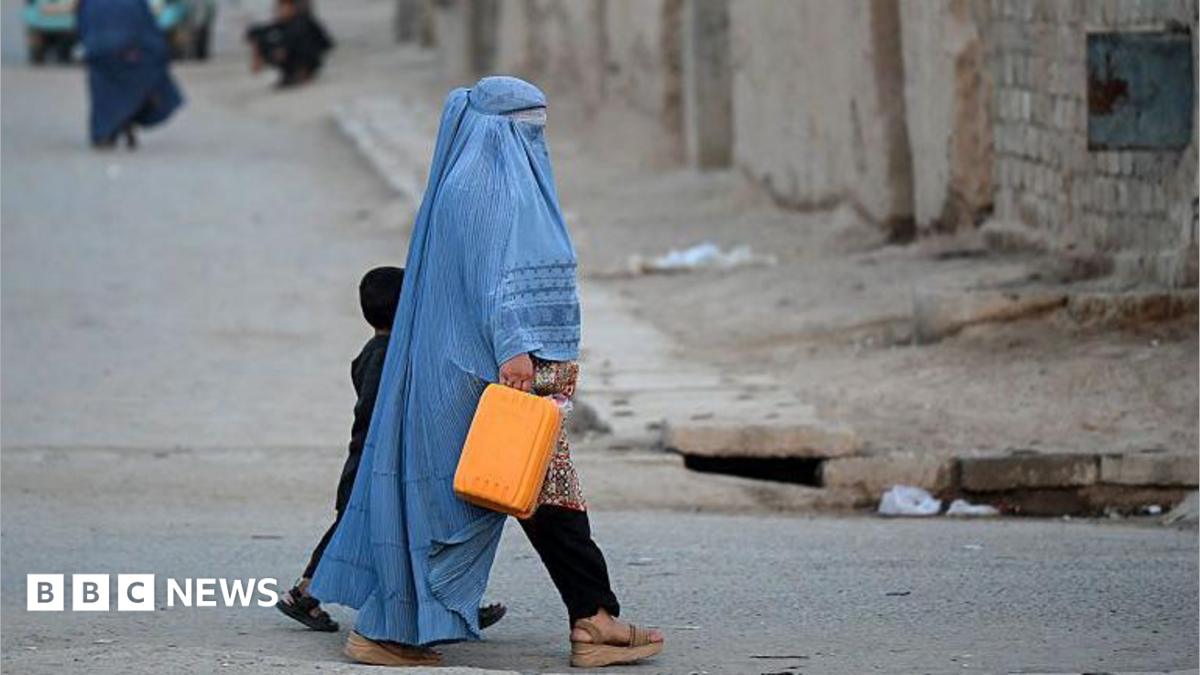
Five years after the Taliban takeover in Afghanistan, women and girls have told the BBC their lives are unrecognizable under the rule of the regime. This was reported by Qazaqyia.kz citing BBC.
The hard-line Islamist group has been eroding the rights of the 22 million women in the country since it re-gained control in 2021 — two decades after being removed from power by a US-led military coalition.
The BBC is one of the few media organizations that has been able to maintain access to Afghanistan since the takeover. We spoke to women across the country, from the heart of Kabul to the vast countryside.
They have watched on as the Taliban barred access to school for girls over 12, restricted travel without a male chaperone and brought in a law implying legal approval for child marriage.
When questioned by BBC Afghan over the constraints that women face, the Taliban's foreign minister said: "Women are not totally restricted on all walks of life".
But the restrictions impact almost every part of their lives and make it difficult to tell their stories. Many of the women have not used their real names because they fear reprisals.
"People are so overwhelmed by poverty and daily hardships that many have been forced to put their education, dreams, and hopes for the future aside," Ela from Kabul said.
"Today, survival has become the priority, and many of us no longer have the time or energy to think about the future."
This story contains distressing details.
Afghanistan is currently the only country in the world where girls are officially banned from secondary and higher education.
Shakiba recounted that "15 August, when the government fell, was the worst and most painful day of my life.
"Every year when this date comes I feel as if an old wound opens again and a new feeling of defeat fills my heart.
"That day I felt that many of the dreams I had carried inside me for years were suddenly taken away."
Though Shakiba has managed to finish her secondary education online — "a very important victory" — she says her life-long goal of becoming a pilot feels impossible.
"Whenever I looked at the sky I imagined myself flying an airplane and seeing the world from above. I wanted to fly freely and experience a world without limits," she said.
The Taliban's foreign minister, Amir Khan Muttaqi, was asked by the BBC about education for girls in Afghanistan, specifically referencing a Unicef report stating that around 2.6 million girls in the country are now unable to attend school beyond Grade 6.
Amir Khan Muttaqi replied that "it is not correct to say everything is banned for women", adding that "right now, three million girls are going to schools and madrassas [religious centres focused on Islamic teachings]".
When asked how religious schools can produce doctors in the country, Muttaqi said: "Women are not totally restricted on all walks of life... Only one small part (of their affairs) is restricted until further notice."
Only 7% of women in Afghanistan are employed, after being banned from many workplaces and fields of study, the United Nations says.
News anchor Zuhal was pushed out of her job after a series of Taliban orders.
"I was very passionate about my work and did it with love. Every time I sat in front of the camera and read the news, I felt proud and happy... it was part of my identity and life.
"The days when I used to wake up to the sound of my alarm clock and get ready to watch TV have now become days when I wake up in the morning knowing that I have to spend the whole day at home."
According to the foreign minister, Afghanistan had up to 30,000 women in business in 2020 and 2021 — which has since risen to 120,000 female entrepreneurs.
"[Women] are teachers, and civil servants and entrepreneurs. There is not a total ban on women in all forms of engagement and activities," Muttaqi said.
The Taliban has resumed the public implementation of corporal punishments, with official records saying hundreds of people have been flogged since 2021 — but the true figure is likely much higher.
Shaima told the BBC she was whipped 50 times, leaving her body badly scarred and her whole family traumatised.
"They brought a paper and forced me to confess that: 'Yes, I am an apostate woman. I am collaborating with infidels and have spoken with unrelated men'.
"They hit me so hard that my head would bend toward the ground.
"Around 200 local people had gathered, including men, boys, and children. All of them were male. I was required to say out loud that I repented."
Shaima said her eldest daughter now wakes up frightened almost every night and asks her "Mother, they are beating you," or "Mother, they are killing you".