Thailand's gun problem has become acute again. Three days after a school shooting, another incident occurred in the same province. This was reported by Qazaqyia.kz citing BBC News.
Chalong Riewrang, a 71-year-old former politician, went to the local administration office to discuss a large sum of money he said was owed to him by the administration chief, Thongchai Yenprasert, a man he called his friend. The conversation ended abruptly with Chalong pulling out a gun and firing four shots through the window of Thongchai's car, hitting him and his driver. Thongchai later died from his wounds.
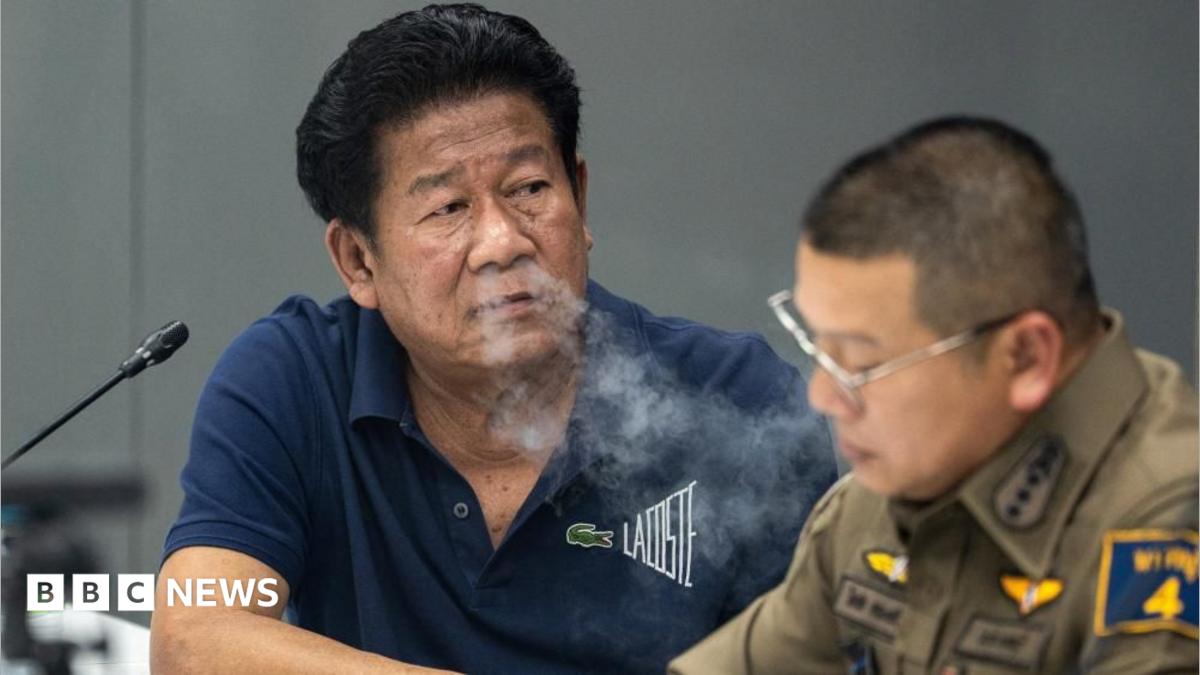
Chalong then left the scene and phoned a startled journalist he knew who was in the middle of a live broadcast on YouTube, to tell her what had happened. After the police intercepted him and took him to the station, he was allowed to speak to reporters, casually smoking a cigarette and seemingly unperturbed by what he had done. He explained that he had "not intended to shoot his friend", but opened fire when the driver also pulled a gun. The police did find two guns in the car, but said they were not in a state where they could have been fired.
This was not the only gun fatality in Thailand on that day. In Prachinburi, east of Bangkok, a police sergeant shot his wife in the head while arguing with her as she was driving their car to pick up their young son. The car crashed and the sergeant then shot himself in the head. His wife died in hospital.
The Thai police do not keep their own tally, but in recent years the number of gun deaths every year is estimated to range between 2,000 and 3,000. In Britain, which has a similar population, the number is less than 50.
Thailand has more than 10 million civilian-owned guns in circulation - 4 million of those unlicensed. So that means minor altercations over trivial issues can suddenly turn lethal.
"It's very unfortunate that Thailand has a very high tolerance for violence," says Boonwara Sumano at the Thailand Development Research Institute. "Guns are seen as a status symbol, and there are so many ways that civilians can get them. Also, showing strength, wielding power, is seen as the right thing to do in Thai society. So, when you have a norm that promotes the possession of weapons to show your strength, and access to those weapons, this is the result."
At first sight Thailand appears to have quite strict gun regulations. Anyone wishing to buy a gun must first apply for a purchase permit, then, once they have bought it, apply for a second possession permit. If they wish to carry the gun outside their homes they then need a third permit. Imported guns – most of them - are very expensive.
But there are huge loopholes. The possession permits are valid for the lifetime of the holder. There is no requirement for mental health screening. And there are no checks on how safely guns are stored. For instance, the boy who carried out the latest school shooting was able to get hold of his grandfather's legally owned gun and large quantities of ammunition.
There is also a government scheme under which police officers and other officials can buy guns at steeply discounted prices. Around 200,000 guns have been imported every year, mostly from the US, under the scheme, which started in 2009. They can then be resold after five years, which has become a lucrative business. The scheme has been investigated several times over alleged corruption. Together with weapons made locally by unlicensed gunmakers it is believed to be the source of many black market guns in Thailand.
Thai Prime Minister Anutin Charnvirakul has ordered immediate measures to tighten gun control, suspending the discount purchase scheme and the issuing of all purchase licences. He is talking about limiting the validity of possession permits, and a possible amnesty to encourage those with unlicensed guns to hand them in. He has asked parliament to work on a new law, and vowed severe penalties for those who break the rules.
After the massacre of children and teachers by a former police officer at a nursery in 2022, and then after a shooting by another 14-year-old boy at Bangkok's most popular shopping mall in 2023, Anutin, then the interior minister, ordered similar measures. The discount scheme was also suspended back then, but almost immediately reinstated. The carrying of firearms by anyone not on official duty was banned after another school shooting in February this year.
The problem is not just regulation. The sheer number of guns in circulation, endemic corruption, lax enforcement of laws in all walks of life, the glorification of guns and a decades-long military culture are all contributing factors. In the most recent asset declarations by government ministers more than a dozen owned guns: the justice minister owns 10, the minister for the environment and natural resources said he had 12, and one female MP has declared ownership of 48 guns.