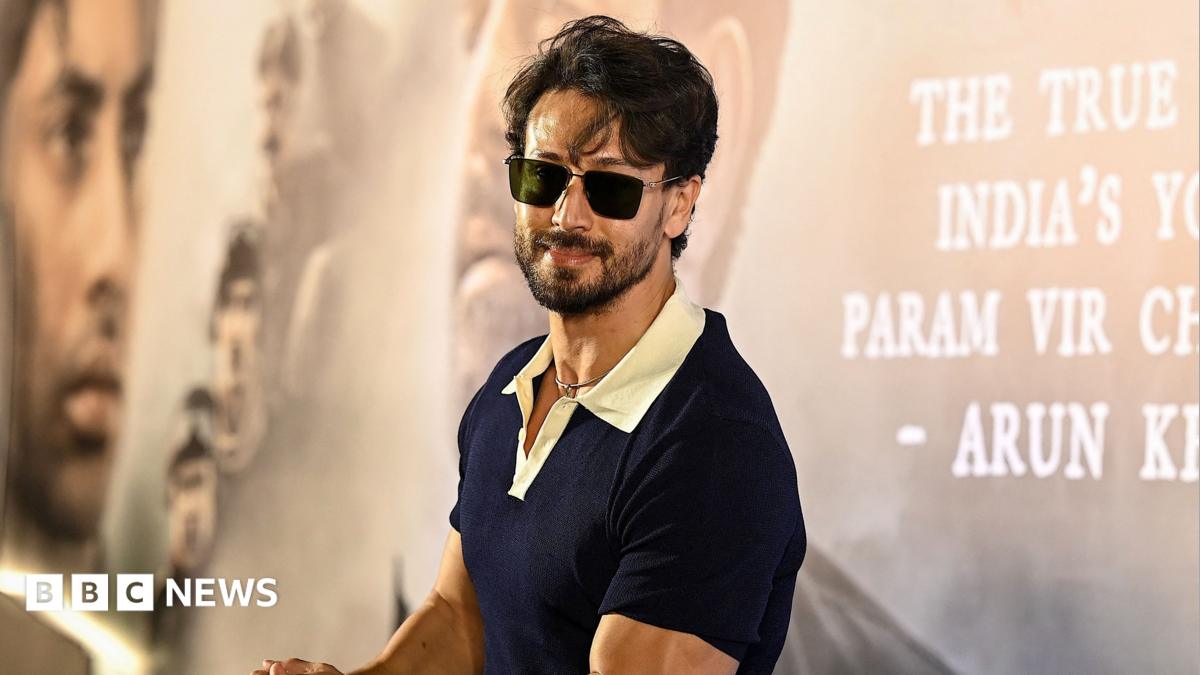
On Sunday evening, Bollywood actor Tiger Shroff went to play football in Juhu, a leafy, affluent Mumbai neighbourhood where film stars live. But as the 36-year-old was leaving the ground in his BMW, shots rang out. His driver was wounded, as was a vlogger who had come to film the actor. This was reported by Qazaqyia.kz citing BBC News.
Shroff, whose films usually include elaborate action sequences and choreographed escapes, had just survived an actual shooting attempt.
Four days later, the case still dominates headlines in India. Police have detained or arrested 10 suspects, with investigators tracing alleged weapon deliveries through several states and examining payments made to the alleged attackers.
The attempted shooting has also brought the name of Lawrence Bishnoi, one of India's most notorious gangsters, back into the headlines. Soon after the attack, a screenshot of a social media post purportedly made by an alleged associate of the Bishnoi gang circulated online, claiming responsibility. A separate audio recording emerged in which a man identifying himself as Anil Pandit repeated the claim and said Shroff had been targeted over his alleged links to actor Salman Khan, who Bishnoi has been threatening for years.
Mumbai police have not verified the claims or established that the Bishnoi gang was behind the attempted shooting. Investigators are still trying to determine who ordered the attack and why.
The targeting of Shroff follows a series of threats and attacks involving prominent Bollywood figures, including gunfire outside Khan's home in 2024 and filmmaker Rohit Shetty's house earlier this year. Together, the incidents have revived fears about the reach of organised crime into the film industry.
During the 1990s and early 2000s, the city's underworld exerted formidable influence over the film industry, financing productions, demanding protection money and sometimes using violence. It took years of police operations, and the gradual arrival of institutional financing, to loosen that grip.
D Sivanandhan, who took charge of Mumbai's Crime Branch in 1998, remembers a time when a phone call from Dubai could decide the fate of a film. In 1997, music mogul Gulshan Kumar was shot dead outside a Mumbai temple. Three years later, filmmaker Rakesh Roshan survived an assassination attempt.
Sivanandhan investigated the financing of Chori Chori Chupke Chupke, a Salman Khan film whose producer and his assistant were each sentenced to six years in prison under Maharashtra's organised crime law for underworld links. The film's financier received a one-year sentence for withholding information. Police seized the film's negatives, and its release eventually happened under court supervision.
Sivanandhan is reluctant to see the latest violence as a return of the mafia he once fought. "This is not the Mumbai mafia which we know in the last 60 years," he said. "This is something else."
That something else has become inseparable from the name Lawrence Bishnoi. A gangster with roots in northern India who has been in jail for years, Bishnoi has acquired an aura of folkloric menace: a prisoner said to command gunmen across continents.
Bishnoi has publicly threatened Khan over a 1998 poaching case involving blackbucks. In April 2024, gunmen fired five rounds outside Khan's Mumbai home. Six months later, Baba Siddique, a politician close to Khan and other actors, was murdered. Mumbai police have linked both attacks to the Bishnoi gang, though they have not established any personal involvement by Lawrence Bishnoi in Siddique's killing.
Rakesh Maria, a former Mumbai police commissioner, has cited Bishnoi as an example of a new generation of gangsters who are more technologically adept and internationally connected than their predecessors. "The old underworld was visible and territorial, but the new one is dispersed, fluid, making it harder to pin down," Maria told The Prin.