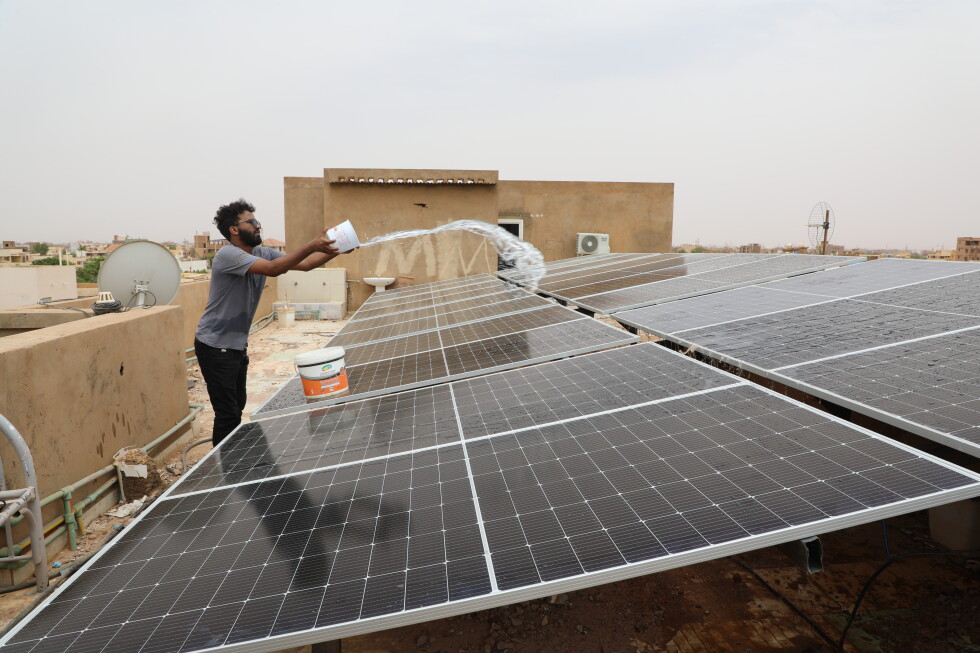
OMDURMAN, Sudan (AP) — For almost a year, Randa al-Mansour, a 31-year-old Sudanese housewife, has relied on solar energy panels installed on the rooftop of her building to survive the recurrent blackouts triggered by the war-torn country’s deteriorating electricity grid. This was reported by Qazaqyia.kz citing Associated Press.
“We are suffering big time,” said al-Mansour, who lives with her three children in Omdurman.
Since the civil war began in April 2023, Sudan's infrastructure, including its power grid, has been severely damaged. Many areas experience power outages lasting for days or even weeks, prompting residents to seek alternative energy sources.
Despite the increased demand for solar panels, their cost remains prohibitive for many families. Installing a solar panel system requires hundreds of dollars, a significant expense for people whose livelihoods have been disrupted by the conflict.
At a solar energy systems store in Omdurman, workers carry panels ready for installation. Technicians adjust battery settings in homes and commission systems.
Al-Hodabi Yassin, a diabetes patient, must keep insulin injections refrigerated. Due to power cuts, he depends on solar energy to store his medication. While teaching his daughter, the electricity went out again.
The war in Sudan continues, and living conditions are deteriorating daily. Solar power offers a temporary solution, but its high cost puts it out of reach for many.